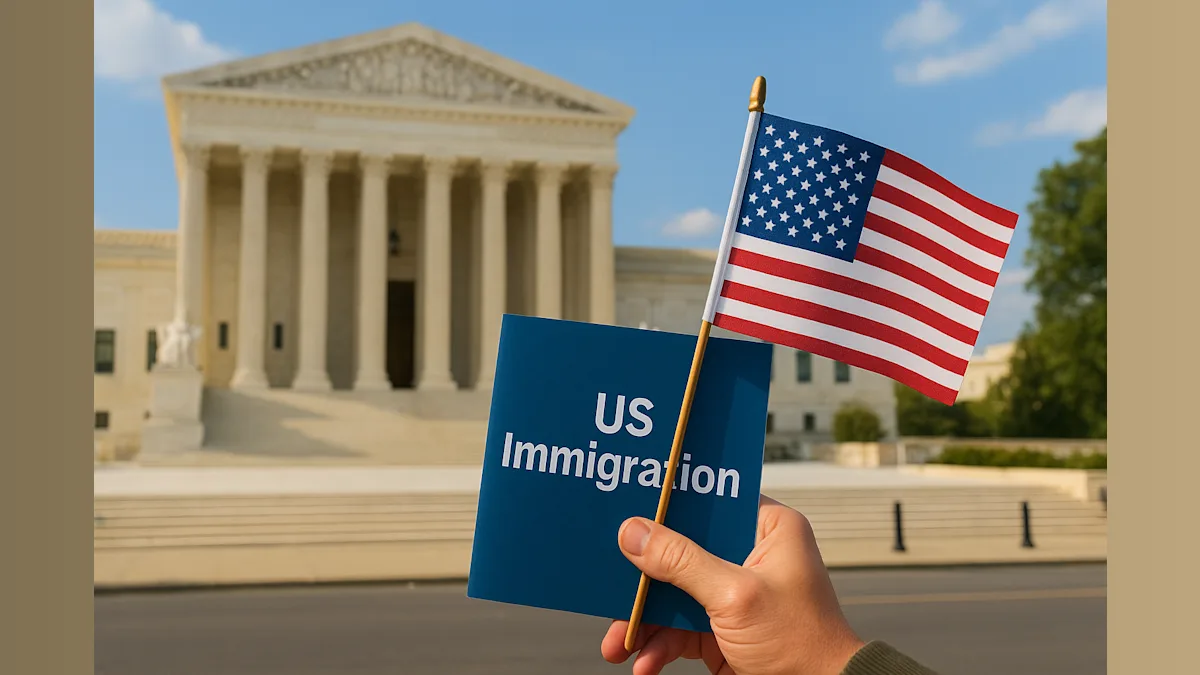
The United States Supreme Court delivered a significant ruling on Thursday that grants the Trump administration authority to begin mass deportations of individuals who have been living and working legally in the country for years, and in some cases, decades. The decision, which split 6-3 along ideological lines, determined that the President possesses virtually unrestrained power to terminate the Temporary Protected Status program.
Congress established the Temporary Protected Status law in 1990 to permit fully vetted and eligible migrants to reside and work legally in the United States when they cannot safely return to their home countries due to natural disasters, armed conflicts, and other extraordinary conditions. The Department of Homeland Security designates which foreign countries qualify for the program.
Justice Samuel Alito, writing for the court majority, concluded that under the TPS law, the president has unreviewable authority to end the program without intervention from the courts. This interpretation marks a departure from how every previous President, both Republican and Democrat, has approached the program since its enactment. President Trump stands alone in his efforts to dismantle temporary protected status for hundreds of thousands of immigrants.
The immediate impact of the ruling affects two countries specifically addressed in the case: Haiti, with 330,000 displaced persons living legally in the United States, and Syria, with approximately 3,800 individuals. The State Department currently issues its strongest warnings advising Americans not to travel to either Haiti or Syria because of dangers including crime, terrorism, kidnapping, unrest, and limited health care.
The practical consequences of the decision are severe. Migrants living legally in the United States from these countries will likely revert to illegal status, resulting in job loss and potential deportation. Many face the prospect of being forced to leave their American-born children behind. The Trump administration has already attempted to strip TPS from 13 of the 17 countries that held the designation before his second term began.
Four countries currently retain their TPS designation: El Salvador, Lebanon, Sudan, and Ukraine. However, these protections may be eliminated when they come up for renewal this fall, according to the pattern established by the administration.
The court's three liberal justices dissented from the majority opinion, though the ruling stands as binding precedent.
Immigrant rights organizations responded swiftly and critically to the decision. Todd Schulte of FWD.us, a bipartisan organization that advocates for immigration reform, characterized the policy shift in stark economic terms. The organization provided data indicating that 200,000 Haitian TPS holders participate in the United States workforce, including 15,000 agricultural workers, 13,000 nursing assistants, and 8,000 caregivers.
According to FWD.us, TPS holders generate an estimated $5.9 billion for the United States economy each year and annually pay a total of $1.5 billion in federal and state taxes. The organization argues that revoking TPS protection represents not only a humanitarian concern but also economic self-sabotage that will extract billions from the economy and destabilize communities nationwide.
The ruling removes judicial oversight from presidential decisions regarding TPS, fundamentally altering the balance of power between the executive branch and the courts on immigration matters. Communities across the nation with significant populations of TPS holders now face uncertainty as the administration moves forward with its deportation plans.