
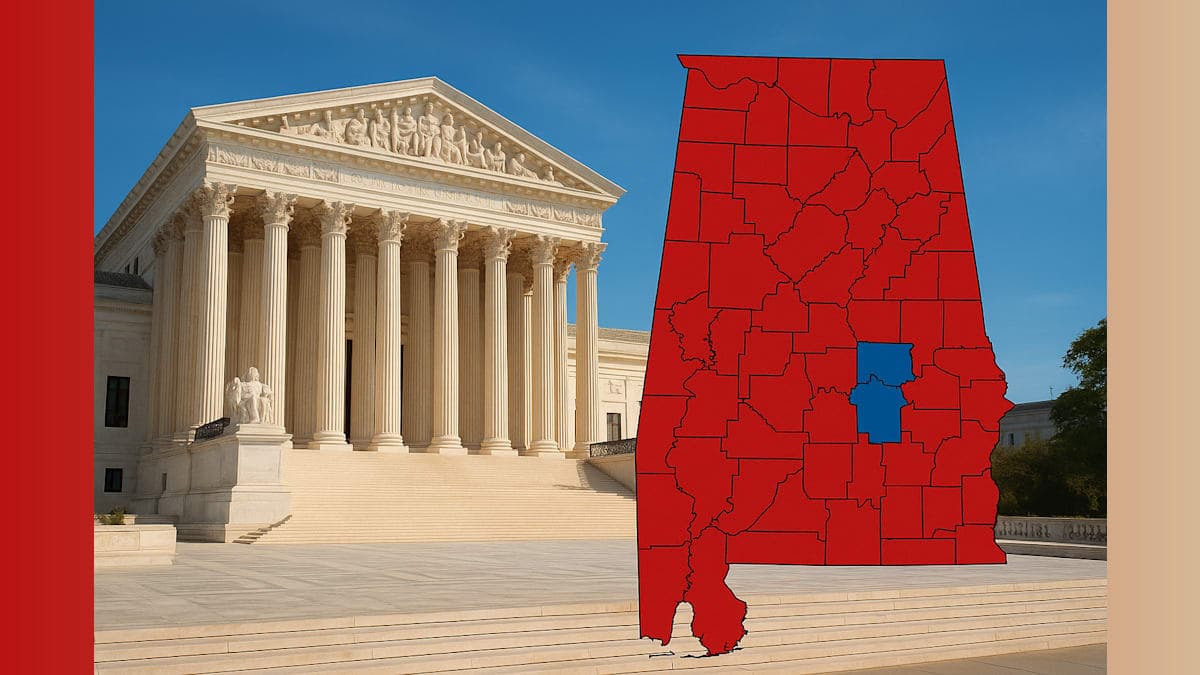
The United States Supreme Court issued a ruling on Wednesday, June 3, 2026, that will significantly shape Alabama's upcoming midterm elections. The decision reinstates a Republican-favored congressional district map that had been under legal challenge, establishing the electoral boundaries that will govern the state's congressional races.
The Supreme Court's ruling means Alabama's midterm elections will feature six districts that lean toward Republican candidates and one district that favors Democratic candidates. This configuration represents a substantial partisan advantage for the Republican Party in a state where congressional representation has been the subject of ongoing legal disputes.
The decision arrives at a critical juncture in the electoral calendar, as candidates and political organizations prepare for the midterm contests. Congressional district maps determine not only the geographic boundaries of representation but also influence the competitive landscape of elections by grouping voters with similar political preferences.
Redistricting battles have become increasingly contentious across the nation, with both major political parties challenging maps they view as unfairly drawn. Alabama's case represents one of several high-profile disputes that have reached the nation's highest court in recent years, reflecting broader debates about voting rights, representation, and the role of partisan considerations in drawing electoral boundaries.
The practical effect of the Supreme Court's decision is that Alabama voters will cast ballots in November using the reinstated district lines. This outcome will influence not only which candidates can compete effectively in each district but also the overall partisan composition of Alabama's congressional delegation following the midterm elections.
The ruling underscores the Supreme Court's continuing influence over electoral processes and voting rights issues across the country. As states navigate the complex legal landscape surrounding redistricting, decisions from the high court establish precedents that extend far beyond individual cases, shaping the democratic process for millions of American voters.