
The United States Supreme Court delivered a significant ruling on Thursday that expands gun rights by striking down state laws requiring firearm owners to secure advance permission before bringing weapons onto private property.
In a 6-3 decision divided along ideological lines, the high court determined that requiring advance permission constitutes an undue burden on the constitutional right to possess and carry firearms. The ruling directly affects five states—Hawaii, California, Maryland, New York, and New Jersey—that had enacted such restrictions.
The regulations at issue are colloquially known as "vampire laws," a reference to Bram Stoker's 1897 novel Dracula, in which the vampire Count "may not enter anywhere at the first, unless there be some one of the household who bid him to come." Under these laws, gun owners were prohibited from bringing firearms onto private property without explicit prior consent from the property owner.
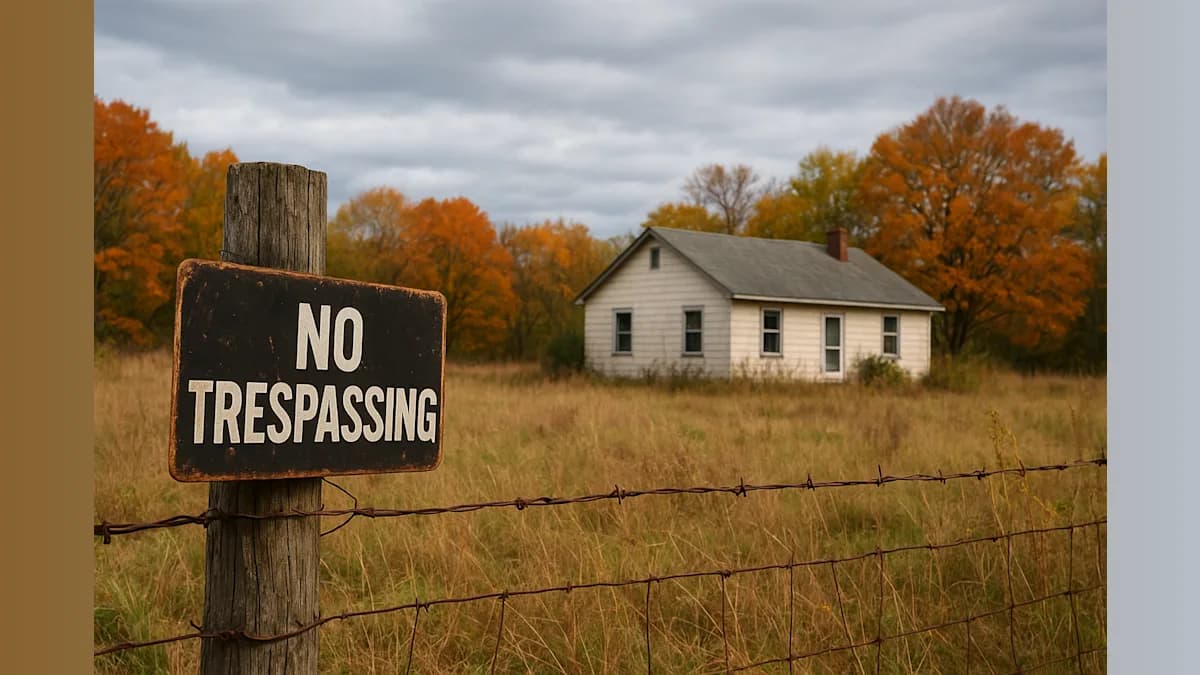
In contrast, most states operate under a default-permissive framework where gun owners may bring firearms onto private property unless the property owner explicitly objects or posts signage prohibiting weapons.
Justice Samuel Alito, writing for the conservative supermajority, concluded that the challenged laws "hobble what the Second Amendment protects: the right of Americans to carry arms for self-defense as they go about their daily lives."
The decision represents the latest application of a constitutional framework established by the Supreme Court in its landmark 2022 ruling, which created a new standard for evaluating gun regulations. Under that precedent, the government must demonstrate that "relevantly similar" regulations existed at the time of the nation's founding for a modern gun law to be deemed constitutional.
This historical test has generated considerable confusion among lower court judges, resulting in inconsistent rulings across jurisdictions. However, the standard has simultaneously facilitated a substantial expansion of gun owner rights in numerous states. According to analysis conducted by scholars at SMU, the Brennan Center, and the RAND Corporation, nearly 100 gun laws were successfully challenged in the year following the 2022 decision.
Historical arguments occupied a central position in Thursday's ruling. Supporters of the vampire laws contended that "at the time of the founding, numerous state laws prohibited entry onto private property without the owner's express consent." Opponents countered that because most property owners do not actively post signs authorizing firearm possession, the practical effect of such laws would render the vast majority of public places hostile to gun owners.
The Supreme Court has addressed multiple firearms cases in recent terms. Two years ago, the court upheld a federal law preventing domestic abusers from owning guns, reversing a lower court decision that had invalidated the statute. Earlier this term, the court unanimously limited the application of a gun law used to prosecute Hunter Biden, though that ruling did not affect Biden, who subsequently received a presidential pardon from his father.
The Thursday decision marks another chapter in the ongoing national debate over the scope of Second Amendment protections and the authority of states to regulate firearms within their borders. For residents of New Jersey and the four other affected states, the ruling eliminates a layer of legal restriction that had distinguished their gun laws from those of most other jurisdictions.