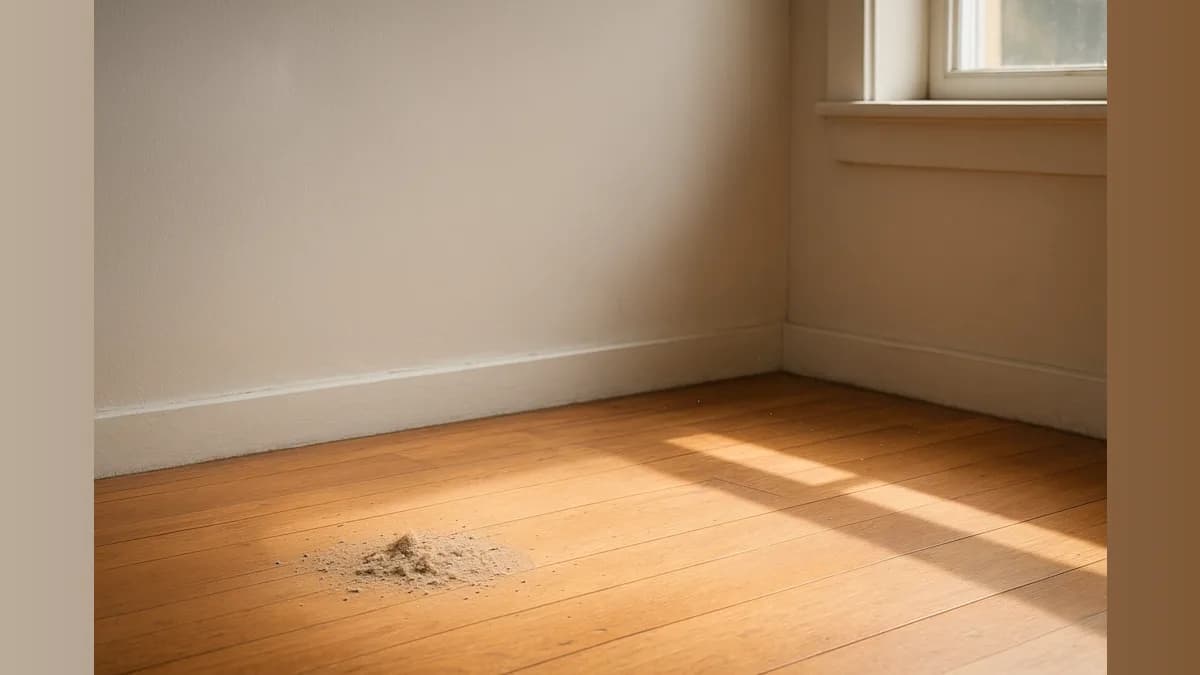
When Shoukei Matsumoto asked participants at a gathering to sweep the floor, he observed a revealing pattern. Nearly everyone experienced the same internal narrative: questioning whether they were performing the task correctly, urging themselves to move faster, fixating on completion. This seemingly mundane exercise exposed a deeper truth about how modern society approaches every activity through the lens of optimization.
Matsumoto identifies optimization itself as an inherently empty concept. The word carries no meaning until directed toward a specific target. When sweeping, the target becomes cleanliness. In professional settings, the target transforms into measurable results. These targets, however, represent arbitrary agreements rather than objective reality. A standard of cleanliness or a numerical benchmark exists only because individuals collectively decided to establish that particular threshold.
The problem emerges when provisional frameworks become mistaken for reality itself. What began as a useful reference point hardens into an absolute standard. Matsumoto emphasizes that no single framework can encompass the entirety of existence. The map, as the saying goes, is not the territory.
To illustrate an alternative approach, Matsumoto draws upon the Japanese concept of shu-ha-ri, a traditional framework for understanding the stages of mastery. The concept challenges Western assumptions about expertise. Rather than viewing mastery as transcendence beyond all frameworks, shu-ha-ri describes it as the capacity to move fluidly among different frameworks without becoming bound to any single one. The master enters and exits various forms with ease, never mistaking the temporary structure for ultimate truth.
Matsumoto employs calligraphy painting as a metaphor for this state of engaged emptiness. The practitioner works with forms while remaining empty of attachment to them. In the most refined expression of this art, the brush lifts from the paper of its own accord. The circle remains open rather than closed. At that moment, the self-conscious observer dissolves completely into the act of creation itself.
This teaching carries profound implications for daily life. The relentless pursuit of optimization creates a perpetual state of dissatisfaction. Each goal achieved immediately reveals another target on the horizon. The circle never closes because closure was never the point. The practice itself, performed with full presence and without rigid attachment to predetermined outcomes, offers a more sustainable path.
Whether sweeping a floor, completing a work project, or engaging in creative expression, the invitation remains consistent: recognize frameworks as useful tools rather than absolute truths. Cultivate the ability to work within structures while maintaining awareness that these structures represent choices rather than inevitabilities. Allow the brush to lift on its own. Leave the circle open.