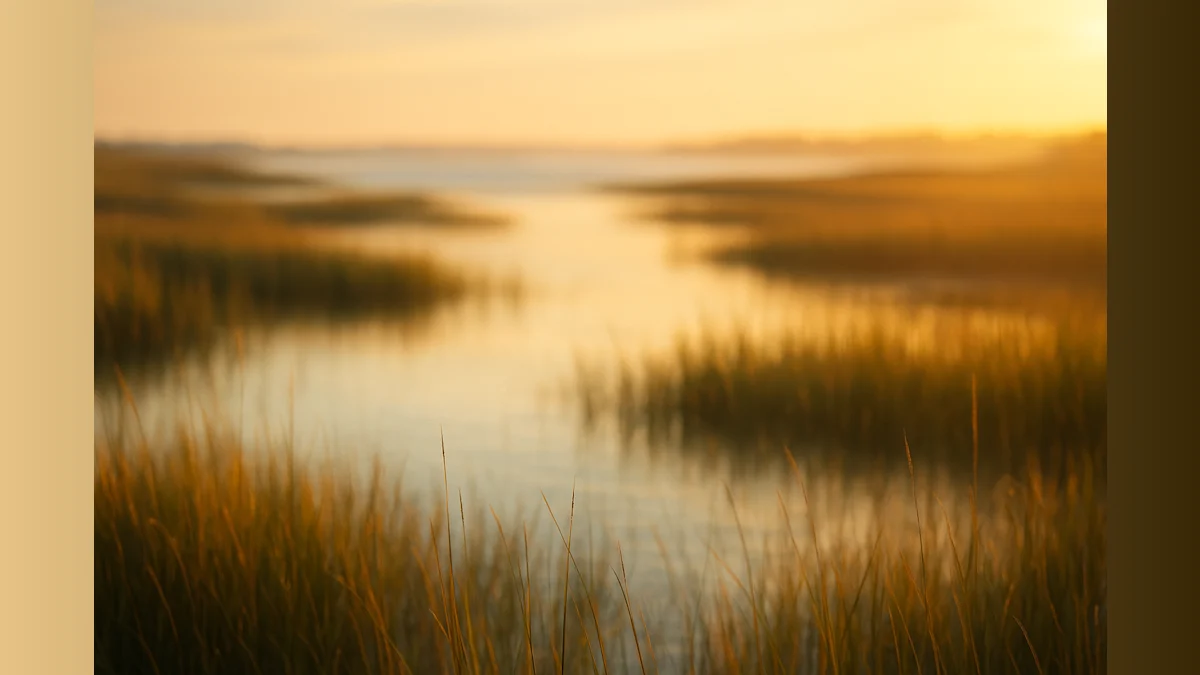
As Claude Monet's eyesight deteriorated in his later years, the legendary painter did not abandon his canvas. Instead, he continued to work, and what emerged from his blurred vision was not a world disintegrating but one revealing its fundamental interconnectedness. This paradox forms the foundation of a compelling meditation by Parker J. Palmer on what he terms "soft eyes" — a mode of perception that may prove essential for navigating contemporary challenges.
Palmer draws inspiration from poet Lisel Mueller's interpretation of Monet's late work, transforming it into an urgent exploration of how we see the world and one another. The concept of soft eyes stands in deliberate contrast to what Palmer identifies as hard eyes — the narrowed, threat-focused gaze of fight-or-flight response. While hard eyes serve a vital function in moments of genuine danger, keeping us alert to immediate threats, they fundamentally limit what we can perceive and understand.
Soft eyes, by contrast, employ an open and diffuse way of seeing that penetrates beneath hard surfaces. Palmer writes that it takes soft eyes to look at another person and see behind their armor to the shy soul that yearns to be seen and heard. This capacity for deeper perception applies equally to frozen winter landscapes, to individuals who present defensive facades, and to democratic systems under considerable strain.
The essay weaves together multiple threads of evidence for this interconnected vision. Palmer references the hidden root systems of trees, which scientists have discovered form vast underground networks of communication and mutual support — invisible connections that sustain the visible forest above. This biological reality mirrors the social and spiritual connections that soft eyes can detect but hard eyes invariably miss.
Palmer extends this framework to examine the vision of Dr. Martin Luther King Jr., whose concept of the Beloved Community required perceiving possibility through the concrete reality of oppression. Such vision, Palmer argues, could only have emerged through soft eyes — a way of seeing that refuses to accept surface conditions as final truth and instead discerns the potential for transformation and connection.
The argument Palmer advances is neither naive optimism nor mere poetic metaphor. He insists that perception itself is an active force — not passive reception but a political and even spiritual practice that shapes what becomes possible. How we choose to look at the world, at one another, and at our shared challenges directly influences what we can create and achieve.
Palmer concludes with words attributed to Monet in Mueller's poem, offering them as both summary and invitation: how infinitely the heart expands to claim this world. This expansion of heart, this willingness to see with soft eyes rather than hard, represents what Palmer characterizes as the finest work the human heart can undertake.
In an era marked by polarization and defensive posturing, Palmer's meditation on soft eyes presents a practical challenge. The question is not whether we can afford to see this way, but whether we can afford not to — whether the survival of genuine community depends on our collective willingness to look beyond armor and threat, to perceive the vulnerable life and hidden wholeness that hard eyes cannot find.