An innovative animal therapy program at a psychiatric hospital in France is demonstrating significant improvements in patient care outcomes, prompting organizers to pursue formal research that could standardize and expand the practice across the country.
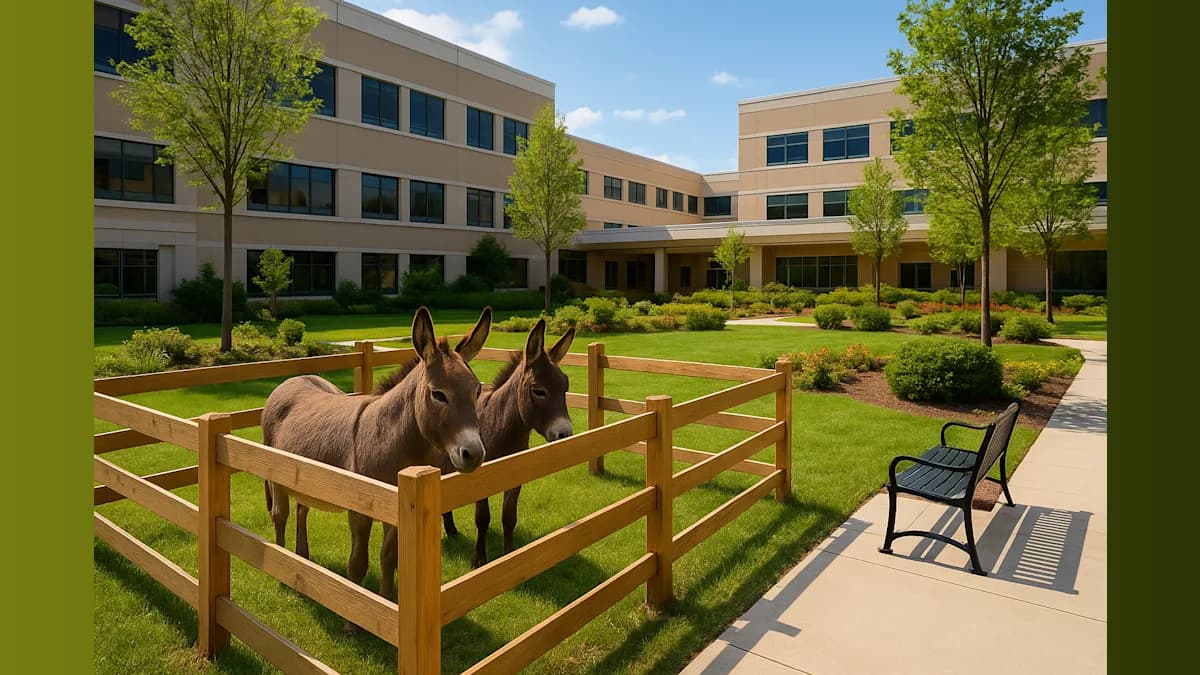
Every Friday at Ville-Evrard hospital complex in Neuilly-sur-Marne, near Paris, patients suffering from psychiatric disorders, anxiety, loneliness, and related conditions visit the hospital's wooded farm sanctuary for therapy sessions with specially trained donkeys. The program, which patients attend free of charge, has earned widespread praise from both participants and medical staff.
The choice of donkeys as therapy animals reflects careful consideration of their unique characteristics. Domesticated approximately two thousand years before horses, donkeys possess gentle, social, and intelligent temperaments developed through millennia of cooperation with humans. These qualities make them particularly well-suited for therapeutic work with vulnerable populations.
The therapy donkeys at Ville-Evrard—named Nono, Pitou, Oscar, Manolo, and Malraux—engage with patients in various ways. Some patients are pulled around in carts, while others clean the donkeys' hooves or simply receive quiet companionship. The animals' naturally calm demeanor proves effective even with patients experiencing severe conditions such as schizophrenia.
"Talking with people, taking part in activities I wouldn't normally do, it helps me in my daily life," said Jérôme, a 52-year-old patient, speaking to Good News Network. "It helps you break away from the routine of treatment and medication. Staying at home isn't good for me."
The program was launched by married couple Ermelinda and François Hadey. Ermelinda, a psychiatric therapy nurse, held a strong conviction in the therapeutic value of animal interaction. François trained the first donkeys, which arrived at the hospital in 2016. Since then, the initiative has expanded to include goats, turtles, rabbits, guinea pigs, chickens, and doves.
The program's benefits extend beyond the patients themselves. Alicia Fabi, an 18-year-old nursing student, told the Associated Press that the activity provides patients with a valuable opportunity to leave the clinical hospital environment. "Every time we come back from the activity, they say they feel good, calm and relaxed, and that they enjoyed the outing. That's really positive," she said.
The positive outcomes reported by patients, observed by hospital staff, and documented by program organizers have generated momentum for expansion. The hospital and the Hadeys are now seeking to have formal scientific research conducted on the donkey therapy program. Their objective is to establish an evidence base that would enable the therapy to be offered more broadly throughout France, potentially setting a new standard of care for psychiatric treatment facilities nationwide.
The initiative represents a growing recognition within psychiatric care of the therapeutic value of animal interaction, offering patients relief from the isolation and routine that can accompany long-term treatment while providing a tangible sense of connection and purpose.