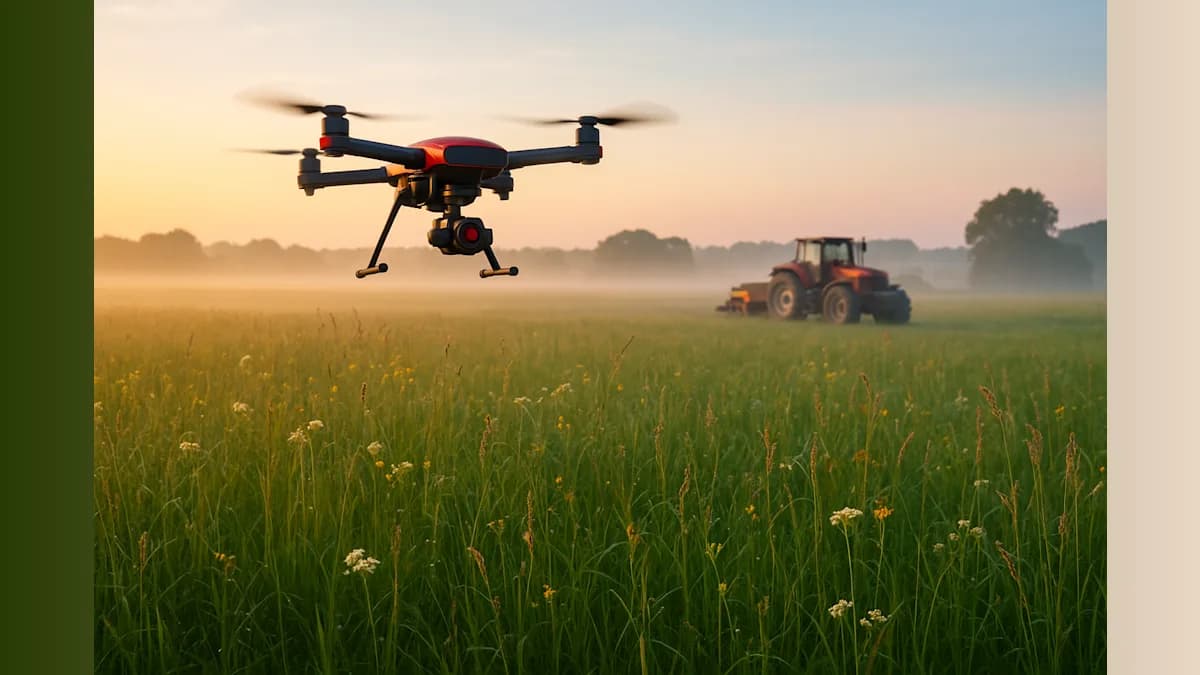
A wildlife rescue organization in Bavaria has revolutionized its approach to protecting vulnerable fawns during the annual mowing season, deploying thermal imaging drones to locate baby deer hidden in tall meadow grass before farm equipment can harm them.
The organization, Rehkitz-Rettung Mangfalltal, founded in 2020, has witnessed a dramatic transformation in its rescue capabilities since integrating drone technology into its operations. The group now saves between 300 and 350 fawns annually, a staggering increase from the 10 to 15 fawns rescued in previous years when volunteers conducted searches on foot.
Every spring across Germany, thousands of fawns fall victim to mowing machinery due to their natural defense mechanism. When threatened, baby deer instinctively freeze in place—a behavior that protects them from predators but renders them fatally vulnerable to farm equipment moving through meadows.
The traditional method of locating these hidden animals required volunteers to walk through meadows in coordinated lines, an extremely labor-intensive process that covered limited ground. The introduction of DJI drones equipped with thermal imaging cameras and artificial intelligence technology has transformed this painstaking work into a precise, efficient operation.
Operators utilize the Matrice 4 Series drones, which feature precision positioning controls that detect heat signatures in vegetation from altitudes of 80 to 100 meters. The AI technology assists pilots in reliably identifying not only fawns but also baby hares and ground-nesting birds that might otherwise be missed.
When the thermal camera identifies a heat source, the drone's GPS system pins the location with centimeter-level accuracy. This information is transmitted instantly to ground teams, who can then navigate directly to the animal's position for safe removal before mowing operations commence.
The German case study documenting this initiative provides a comprehensive video guide detailing the rescue process, including proper drone operation protocols and techniques for handling fawns once located. This systematic approach ensures that volunteers can conduct thorough searches while minimizing stress to the animals.
The program benefits both wildlife and agricultural operations. Farmers can proceed with mowing confident that their fields have been thoroughly cleared of hidden animals, eliminating the risk of accidental harm to wildlife while maintaining their seasonal schedules.
The success of Rehkitz-Rettung Mangfalltal demonstrates how emerging technology can address longstanding wildlife conservation challenges. The nearly thirtyfold increase in rescued fawns represents hundreds of animals that will survive to maturity, contributing to healthy deer populations while preserving the delicate balance between agricultural productivity and environmental stewardship.