In an era when environmental initiatives often measure success by the number of saplings planted, one man who has spent half a century planting 25 million trees is urging a fundamental shift in how society approaches conservation.
Swami Prem Parivartan, known affectionately as "Peepal Baba," has built a 400-person organization that has restored vegetation across 270,000 hectares spanning 226 districts. Yet his most provocative message challenges the very metrics by which environmental work is typically judged.
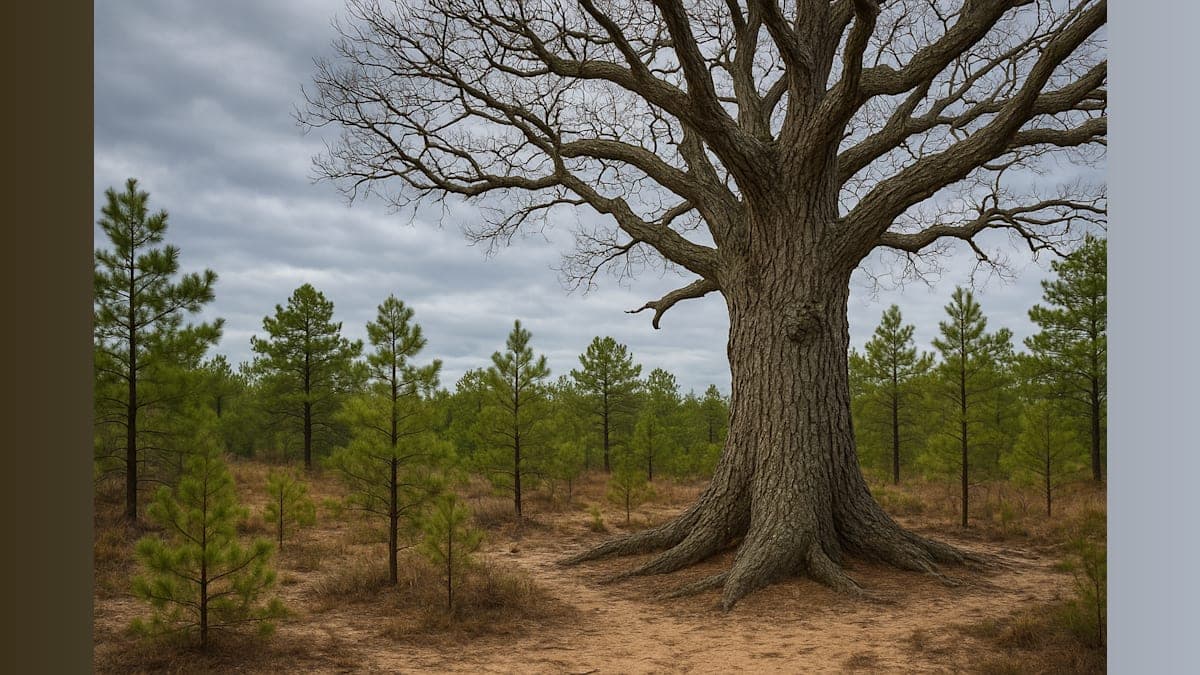
When asked whether he would save a 500-year-old tree or plant one hundred thousand saplings, Parivartan reframes the question entirely. He poses his own inquiry in response: would one save their father, or go and give birth to 500 more children? The comparison transforms conservation from a quantitative exercise into an act of reverence for what already exists.
This perspective represents a departure from mainstream environmental discourse, which frequently celebrates the planting of millions of new trees while mature forests continue to fall to development and deforestation. Parivartan argues that elder trees—those that have stood for centuries—represent irreplaceable ecological and cultural value that cannot be replicated by mass planting campaigns.
The environmental advocate's journey did not begin with grand ideology or formal training. Instead, he traces his path to a grandmother who taught him to make compost at age six, a bicycle, and a childhood talent for avoiding homework. These humble origins underscore his belief that environmental stewardship emerges from personal connection rather than professional ambition.
Indeed, Parivartan offers unexpected advice for young people drawn to environmental work: do not pursue it as a career. Rather, he suggests engaging with conservation efforts during free time, maintaining it as a passion rather than a profession.
His reasoning challenges contemporary assumptions about how social change occurs. When environmental work becomes transactional, he explains, it loses its essential character. The passion dissipates as practitioners begin thinking about deliverables, profit, and loss. The work becomes cold, stripped of the affection that sustains long-term commitment.
This philosophy has guided an organization that has achieved remarkable scale without adopting the corporate structures typical of large environmental nonprofits. The restoration of 270,000 hectares across more than two hundred districts represents significant ecological impact, yet Parivartan emphasizes process over metrics, relationship over results.
What emerges from five decades of ground-level conservation work is a worldview that prizes affection over ambition. Parivartan articulates an understanding that nature carries billions of years of accumulated intelligence—a living archive of adaptation and resilience that human intervention can easily disrupt but rarely improve upon.
In this framework, the deepest human contribution to environmental health may not be ambitious restoration projects or massive planting campaigns. Instead, it may simply be learning not to destroy what is already functioning, already saving humanity from its own excesses.
The perspective offers particular relevance as communities nationwide grapple with development pressures that threaten mature trees and established ecosystems. While new plantings receive ceremonial attention and media coverage, the quiet removal of century-old trees often proceeds with little public notice or resistance.
Parivartan's work suggests that effective environmental stewardship requires a fundamental reorientation—from viewing nature as something to be managed and improved, to recognizing it as an elder system deserving protection and respect. The 500-year-old tree, in this view, is not merely older than a sapling; it is a repository of ecological relationships, a habitat for countless species, and a living connection to centuries of environmental history.
This quieter approach to conservation—less focused on ambitious targets, more attentive to what already exists—may ultimately prove more sustainable than campaigns built on numerical goals and professional incentives. After planting 25 million trees, Swami Prem Parivartan's most important lesson may be that the work of saving the planet begins with honoring what has already survived.