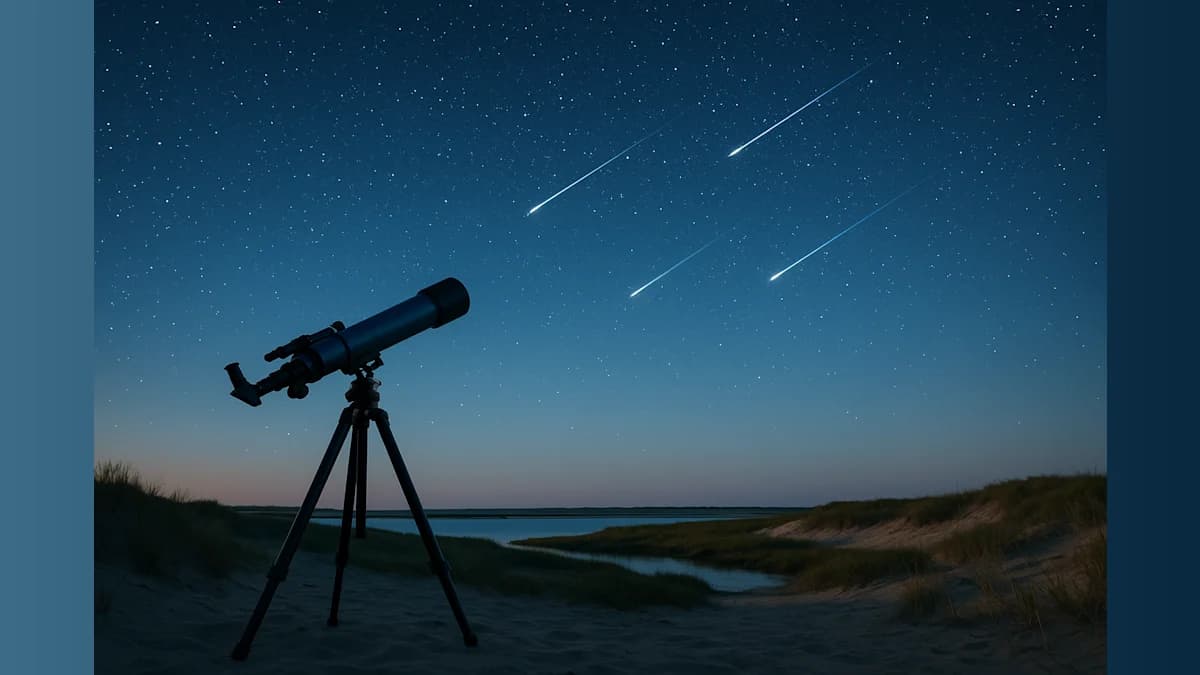
The night sky will offer an impressive display later this month as two distinct meteor showers converge to create a remarkable viewing opportunity for astronomy enthusiasts. The Southern Delta Aquariids and Alpha Capricornids will both reach their peak activity on the nights of July 30th and 31st, providing observers with multiple opportunities to witness shooting stars streaking across the darkness.
The Southern Delta Aquariids represent the more prolific of the two displays, with observers able to expect approximately 20 shooting stars per hour during peak viewing conditions. While this meteor shower can be detected as early as July 12th, the optimal viewing window arrives at month's end. The shower derives its name from the constellation from which the meteors appear to radiate.
Accompanying the Aquariids are the Alpha Capricornids, which produce a more modest five shooting stars per hour. However, what this shower lacks in quantity, it compensates for in quality. The Alpha Capricornids are distinguished by their bright, streaking fireballs that can create particularly dramatic visual displays across the night sky.
Geographic location plays a significant role in viewing conditions for these celestial events. The Southern Delta Aquariids achieve optimal visibility in the Southern Hemisphere, though Northern Hemisphere observers can still witness the display with decreasing clarity the farther north one travels. Notably, successful observations have been documented as far north as Washington state. The Alpha Capricornids offer more equitable viewing conditions across both hemispheres.
Viewing conditions during the peak nights face one significant challenge: lunar interference. The moon, though in its waning phase, will remain sufficiently bright and large to obscure some of the fainter meteors. National Geographic recommends that observers direct their gaze approximately 40 degrees away from the radiant point—the constellation from which the shooting stars appear to emanate—to maximize visibility despite the lunar brightness.
For those seeking alternative celestial viewing opportunities this month, July 11th and July 17th present compelling options. These dates feature the aesthetic alignment of a crescent moon with prominent planetary bodies and stellar formations.
On the morning of July 11th, approximately two hours before sunrise, observers looking eastward will witness the crescent moon forming a triangular configuration with the Pleiades star cluster, with Mars positioned just a few finger widths distant. The Pleiades, also known as the Seven Sisters, consist of seven tightly clustered asterisms that reveal enhanced detail when viewed through basic binoculars. Observers experiencing difficulty locating this cluster should employ peripheral vision, a technique that enhances object identification in low-light conditions.
The evening of July 17th offers a different spectacle. Two hours after sundown, observers should direct their attention westward to locate the crescent moon positioned just a few degrees below Venus, one of the most luminous objects visible in the evening sky. This pairing creates an accessible viewing opportunity for casual observers and experienced astronomers alike.
These astronomical events provide multiple opportunities throughout July for residents to engage with celestial phenomena, whether during the meteor shower peaks at month's end or through the planetary alignments occurring earlier in the period. Clear skies and minimal light pollution will enhance viewing conditions for all these events.