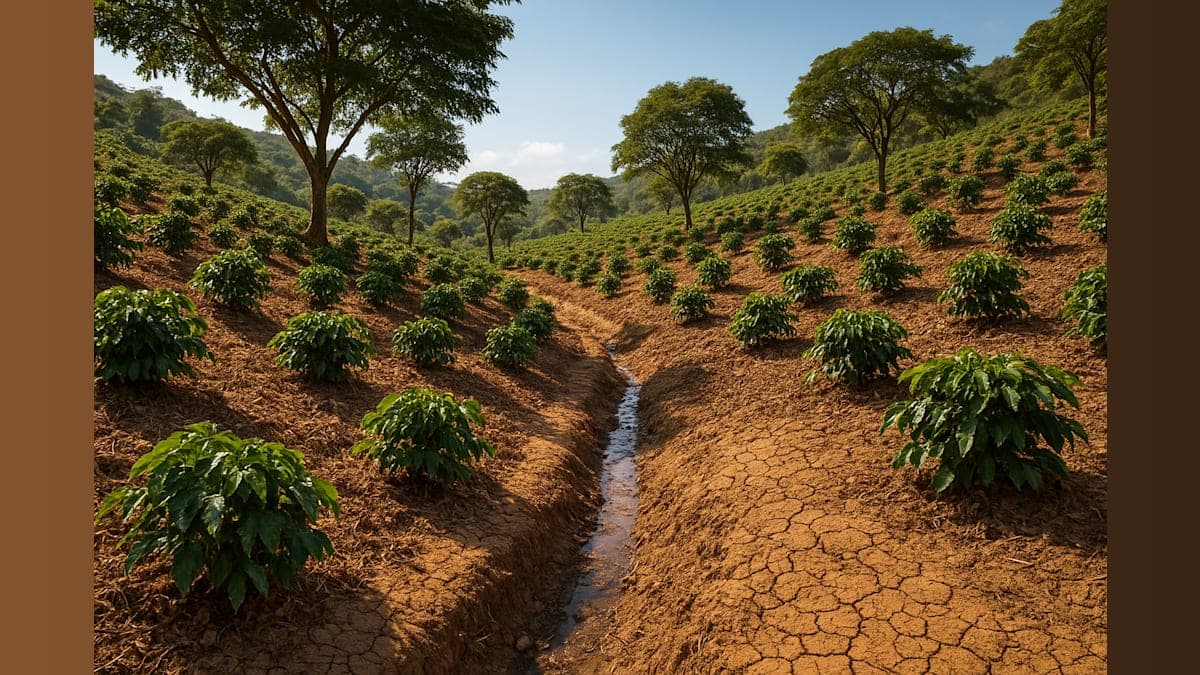
Among the rolling hills of Uganda's Masaka region, a pilot program utilizing regenerative agriculture is helping robusta coffee plants produce larger, tastier yields despite drought conditions and unpredictable rainfall patterns. The initiative demonstrates how sustainable farming techniques can protect both crop productivity and the livelihoods of smallholder farmers in one of the world's critical coffee-growing regions.
Coffee holds central importance to Uganda's economy and the social fabric of growing regions like Masaka. Recognizing the threats posed by climate variability and nutrient-poor tropical soils, the Global Environment Facility brought together an international coalition to establish demonstration farms teaching local growers regenerative farming methods.
The coalition includes Uganda's oldest and largest licensed coffee exporter, Nespresso, and the International Union for the Conservation of Nature. Together, they established 30 model farms where local growers gain hands-on experience with these cultivation techniques. The farms also cultivate known varieties proven to be more resilient, which can then be transplanted into plantations throughout the region.
Nakalisa Mary Fatuma, a smallholder robusta coffee farmer in Masaka, described the challenges facing producers. Insufficient or poorly timed rainfall has become a serious threat to coffee production in the region. However, since applying mulches and planting drought-resistant seedlings, she reports that her coffee farms have become reliably resilient, with stronger plants and more promising yields that translate to improved stability for her family.
The International Union for the Conservation of Nature reports that benefits extend beyond individual observations. Farmers are reporting adoption of regenerative practices, improved yields and quality, healthier trees, and better income stability across the demonstration sites.
Regenerative agriculture encompasses a variety of growing techniques ranging from simple mulching to complex cover cropping systems. The approach proves especially valuable in coffee belts where nutrient-poor tropical soils and heavy rainfall create significant erosion threats to productive crops.
While the term may sound interchangeable with organic farming, regenerative agriculture focuses specifically on building topsoil through mulching and cover cropping—growing complementary, non-food plants throughout fields. This methodology helps retain soil against erosion, replaces nitrogen naturally, and shields beneficial microbes from solar heat. Shade trees planted throughout the acreage provide additional soil protection while contributing organic material through leaf loss. The soil is never tilled, preserving its structure and microbial communities.
Some regenerative farmers pasture livestock in fields between harvests, simulating natural soil disturbances and grazing activity while enriching the soil through animal droppings. One farmer, Munanira Joseph, told the International Union for the Conservation of Nature that erosion was once considered an unavoidable reality. However, after observing how soil remained in place on demonstration plots, widespread interest in adopting the techniques followed.
The timing of this initiative carries particular significance for global coffee consumers. Over the past decade, coffee price inflation has outpaced average price inflation, with particularly disruptive years like 2022 witnessing double-digit increases in roasted coffee prices. Given that billions of people consume coffee nearly every day, making yields more resilient and predictable represents a critical first step toward slowing or reversing that pricing trend.
The success of the model farms in Masaka offers encouraging evidence that regenerative agriculture can address both environmental sustainability and economic stability in coffee-producing regions facing climate uncertainty.