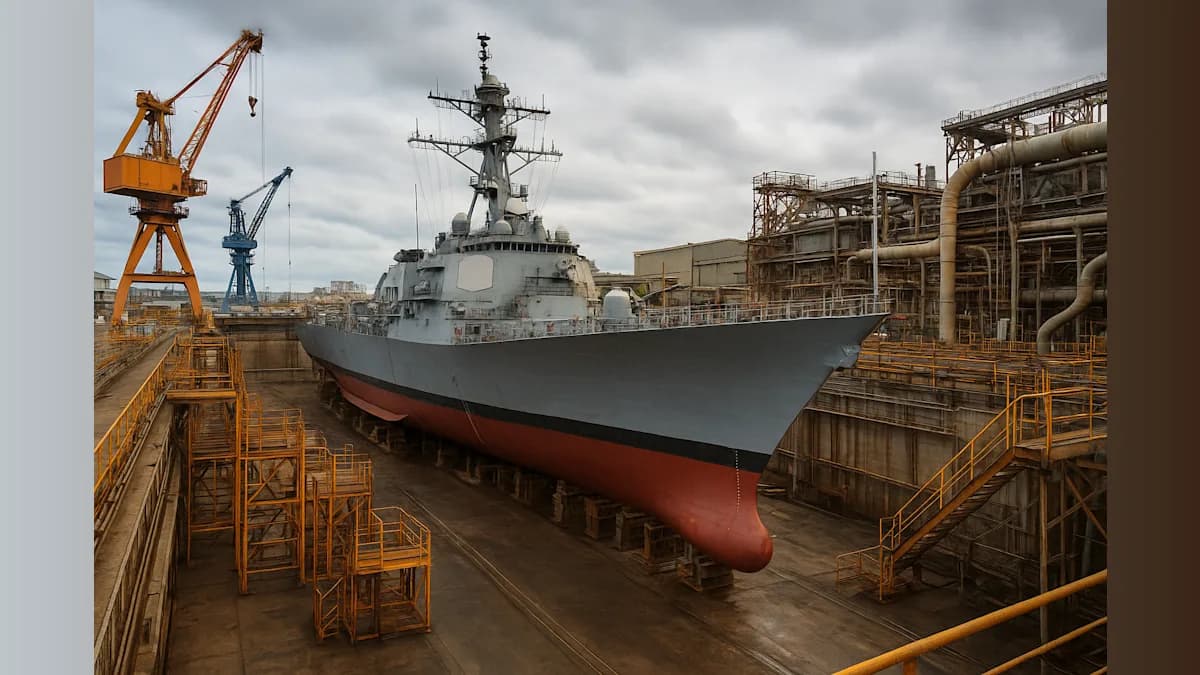
The USS Gerald R. Ford, the Navy's most expensive warship at $13 billion, has returned to Norfolk Naval Shipyard for critical repairs following a deployment that exposed significant flaws in its sewage infrastructure. The aircraft carrier completed a nearly 11-month deployment, the longest for any carrier since the Vietnam War, before arriving at Naval Station Norfolk on May 16.
With 4,600 sailors now home, shipyard crews will address damage from a March fire that originated in the laundry room and spread to sleeping quarters. More significantly, workers will install upgrades to the ship's beleaguered Vacuum Collection, Holding, and Transfer system, a technology unique to the new Ford-class carriers that has proven problematic throughout the vessel's service.
The plumbing system, adapted from cruise ship technology, uses smaller pipes and vacuum suction rather than traditional gravity-based flushing. This design has created persistent maintenance challenges that required constant attention from hull technicians during the Ford's deployment, which began on June 24, 2025, and took the carrier from European waters to the Caribbean for operations around Venezuela before participating in Operation Epic Fury targeting Iran.
Internal emails obtained through a Freedom of Information Act request reveal the extent of the struggles faced by maintenance crews between March and August 2025. A March 18 email from the Master Machinist's Mate, who oversees the ship's complex systems, identified loose hoses on toilet backs as the most common failure point, causing the system to lose critical suction. The message emphasized the urgency of the situation: "WE NEED YOUR HELP TO PREVENT OUR VCHT SYSTEM FROM GOING DOWN AND CREATING UNSANITARY CONDITIONS."
Hull department technicians offered training sessions to educate sailors on proper system use. Despite these efforts, maintenance crews discovered foreign objects including T-shirts, other clothing articles, and a four-foot piece of rope clogging the system, according to an August 26, 2025, memo.
The design of the vacuum system creates cascading failures. An August 15 email from a Ford officer explained the vulnerability: "It's a closed system and thousands of components ship-wide that fail daily. With one commode control valve failure, depending on the location," all toilets in that section could fail, potentially affecting an entire quarter of the aircraft carrier.
Rear Admiral Kavon Hakimzadeh, who oversees Norfolk Naval Shipyard, confirmed that crews will install the same fix previously implemented on the USS George HW Bush, which experienced similar problems with its vacuum system in 2011. "Right now it's essentially in quarters, and the new system subdivides it significantly further, so that a problem in one bathroom doesn't cut off a quarter of the ship," Hakimzadeh said, speaking to NPR.
Chief of Naval Operations Admiral Daryl Caudle defended the carrier's performance during the homecoming in May, suggesting concerns about the sewage system had been exaggerated. "The sanitation systems on board any ship, submarine, destroyer, cruiser, carrier, all have challenges," Caudle said, speaking to NPR. "It's not whether or not that happens, it is when it does. How do we attack it, fix it, get it back online? And the team on Ford is very good at that."
The Navy maintains that the Ford's systems operated within expected parameters for a vessel carrying more than 4,000 personnel. However, the problems were not unexpected. The Government Accountability Office highlighted concerns in a 2020 report, noting that the Ford requires an acid flush costing $400,000 each time to keep sewage systems clear. These flushes cannot be performed during deployment but will be conducted now that the carrier has returned to Norfolk.
The Ford's deployment schedule has been particularly demanding. The carrier completed an eight-month maiden voyage in January 2024, followed almost immediately by the nearly 11-month deployment that just concluded. The extended time at sea, combined with the March 16 fire that temporarily sidelined the vessel during operations against Iran, placed extraordinary stress on both equipment and crew.
The upcoming maintenance period at Norfolk Naval Shipyard represents a critical opportunity to address systemic issues before the Ford returns to operational duty. The repairs and upgrades will test whether the Navy can resolve the fundamental design challenges that have plagued the Ford-class sewage system since before the carrier was completed.