
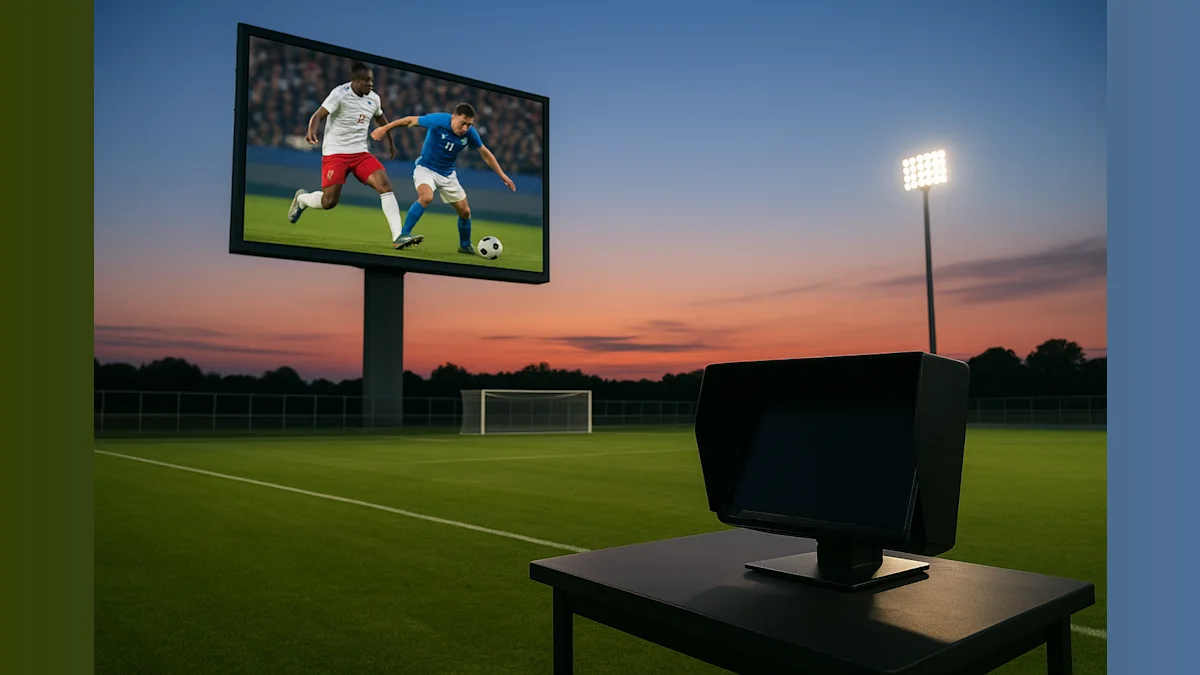
The celebration has become tentative. A goal is scored, fans leap to their feet, but the cheering stops short. Everyone waits as the Video Assistant Referee reviews the play, knowing the goal could be wiped away at any moment.
This pattern has defined the 2026 World Cup, where the widespread deployment of VAR technology has emerged as one of the tournament's most divisive issues. FIFA maintains the system ensures fairness, but mounting criticism from fans and teams suggests the technology may have overstepped its intended purpose.
The system was not always controversial. Its origins trace to a 2009 World Cup qualifier between France and Ireland, when French forward Thierry Henry clearly handled the ball before assisting on a goal. The referee missed the infraction, and the incident reignited longstanding frustrations about missed calls that technology could have corrected. Soccer fans had witnessed similar controversies before, most notably Diego Maradona's infamous hand goal against England in the 1986 World Cup, dubbed "The Hand of God."
FIFA has historically resisted rule changes. The organization did not permit substitutions until 1970, the same year it introduced red and yellow cards to replace verbal warnings. When FIFA does consider innovations, it frequently tests them in the United States, where audiences embrace technological advancement more readily than tradition-bound soccer markets elsewhere.
"A lot of innovations in soccer, just even putting names on the back of jerseys started in the United States," said Professor Chris Davis at Adelphi University, who studies soccer history. Major League Soccer served as the testing ground for VAR in 2014 and 2015 before FIFA officially introduced the system at the 2018 World Cup.
The technology operates through dual crews: referees on the field and a separate team monitoring video feeds with multiple camera angles. Initial reception was positive, Davis noted, because the system corrected obvious errors without excessive interference.
"Clear instances were being corrected, and I think that was the beauty of it: we had clear instances of protecting the integrity of the game," Davis said, speaking to NPR.
The 2026 tournament presents a stark contrast. Referees now routinely halt matches to review potential fouls in the penalty area and offside violations, sometimes multiple times per game. The offside rule itself compounds the problem. More than 150 years old, the regulation spans 45 clauses and approximately one thousand words, making it one of soccer's most complex provisions. The rule prohibits players from positioning themselves closer to the opponent's goal line than both the ball and the second-last opponent when in the attacking half, provided they are involved in active play.
Recent VAR decisions have pushed the boundaries of reasonable enforcement. During the June 21 match between Iran and Belgium in Inglewood, California, officials disallowed an Iranian goal after determining a player's buttocks were offside. Days later, a Colombian goal was nullified when video review showed an attacker's toe had crossed the line.
"It is completely interrupting what the game state is," said Felipe Cardenas, senior writer with The Athletic, speaking to NPR. "One of the best and most special moments in a football match is a goal and the goal celebration. Now there are times when the players have to wait until the referee gets the right decision and he hears from the VAR."
The Egypt versus Argentina match on July 1 in Seattle crystallized the controversy. Egypt controlled most of the game and scored what appeared to be their second goal in the 67th minute. VAR flagged a questionable foul that occurred far from the scoring play, prompting the referee to review the footage and disqualify the goal. Argentina subsequently won the match. Egypt later filed a complaint, claiming the decision robbed them of victory and raising questions about whether the technology is being applied appropriately.
The debate reflects broader societal tensions about technology's role in human endeavors. When technology remains subject to human interpretation, can it truly eliminate bias? Where does assistance end and overreach begin?
Cardenas advocates for balance between technological precision and accepting human judgment.
"As fútbol fans, you should live with human error at times. It's OK for a referee to make a mistake," Cardenas told NPR. "We're getting to the point where it is taboo if a referee makes a mistake."
The solution may require accepting that referees will occasionally err, and that the pursuit of perfect accuracy through endless video review risks undermining the spontaneity and emotion that make soccer compelling. As the tournament continues, the question remains whether FIFA will recalibrate its approach or whether fans must adapt to a new reality where every goal comes with an asterisk until technology renders its verdict.