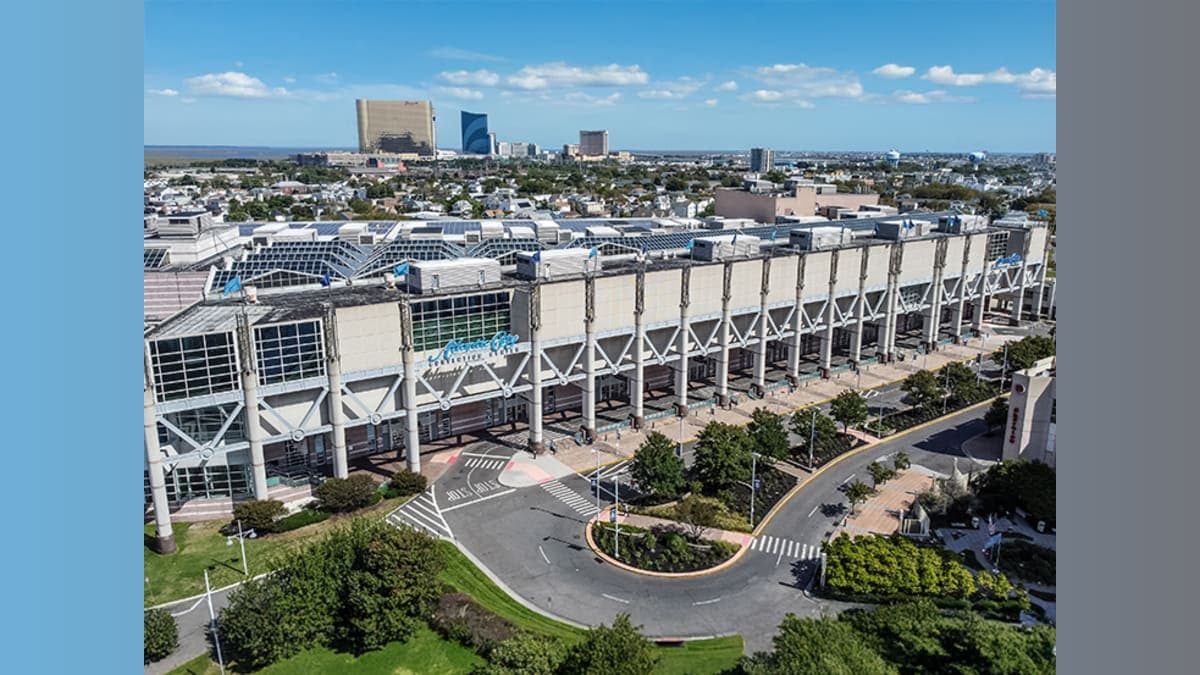
ATLANTIC CITY — Uncertainty surrounding a headquarters hotel next to the Atlantic City Convention Center has already affected convention opportunities representing an estimated $110 million in economic impact, according to Visit Atlantic City President and CEO Gary Musich.
Musich said Atlantic City needs a hotel with at least 500 rooms adjacent to the Convention Center to remain competitive for major conventions, trade shows and meetings — and that reducing the size of the proposed hotel could cost the city business before it even has a chance to bid.

“If we don't have a minimum of 500, you don't even get to bid,” Musich said Thursday during an appearance on Off the Press with Scott Cronick on WOND, with state Assemblyman Don Guardian filling in as host.
Musich said the consequences are already measurable.
“If you look at what we've lost already — opportunities, threats, opportunities or no-bid — it's significant,” Musich said. “Already, it's $110 million in economic impact that had been affected by just the discussion of reducing the size of that property.”
The issue centers on the need for what the convention industry calls a headquarters hotel — a large hotel located at or immediately adjacent to a convention center.
Atlantic City has thousands of hotel rooms, primarily at its casino resorts, but Musich said proximity is crucial to convention organizers because of the way major events generate revenue.
“The conventions and trade shows make their money on sponsorship and exhibit sales,” Musich said. “That's where they make their money.”
Having attendees, exhibitors and sponsors close to the convention floor makes those packages easier to sell.
“That's a convenience buy,” Musich said. “That has to be close to the hotel.”
Guardian raised concerns during the interview about discussions of reducing a proposed 500-room hotel to approximately 250 rooms.
Musich said the original 500-room figure was not arbitrary.
“The reason that was 500 rooms” is tied directly to the requirements Atlantic City encounters when bidding for major events, he said.
Musich pointed to a proposed North Jersey convention development as evidence of the importance the industry places on an adjacent hotel.
“Yes, we have a lot of rooms in Atlantic City, but there's a reason that in that North Jersey facility that had the number two bullet point was a thousand-room headquarters hotel,” Musich said. “There's a reason for that.”
Musich said Atlantic City's Convention Center continues to perform well despite its age.
“You build a convention center in North Jersey, that facility will compete with Atlantic City,” Musich said. “Atlantic City's building performs better than its peers.”
But he said maintaining that position requires continued investment.
“Even though it hasn't had money put into it in 29 years, it still performs better than its peers,” Musich said. “That's all part of this maturing and changing and evolving destination. You have to invest in your assets.”
Rather than viewing the Convention Center, an adjacent hotel and Boardwalk Hall as separate properties, Musich said Atlantic City should treat them as pieces of a larger convention and entertainment district.
“I think you have to look at that whole facility as a campus,” Musich said.
He pointed to other cities that have used convention facilities as anchors for broader development and said Atlantic City could pursue partnerships with major hotel brands.
“There's a lot of cities that are using those as development hubs,” Musich said.
He mentioned Hyatt, Hilton and Omni as examples of hotel brands not currently represented in the market and also suggested potential connections with workforce-training programs.
“There's a lot of ways to do it,” Musich said. “But first and foremost, you have to look at that entire facility and all those facilities — Boardwalk Hall as well. Look at the investment that has to go into it.”
Musich said making those investments would send an important message to meeting planners and the broader convention industry.
“Treat it as a campus and a development hub and tell that business world you're in this game for good by showing them that the investment's going back into those properties,” he said.
The stakes are particularly significant because conventions and meetings generate business during periods when Atlantic City's leisure market is traditionally softer.
Musich said approximately 85% of the city's meetings business takes place during the week, helping fill hotel rooms and restaurants at times when leisure visitors are less likely to be in town.
And while Atlantic City has recently enjoyed success attracting major groups, Musich said the lack of an adequate headquarters hotel limits the business the city can pursue.
“Right now, we've had some successes,” Musich said, “but we've also lost the opportunity in all of that.”

About the Author
Peter Killeen
A 25-year radio news veteran, Peter covers South Jersey for NewsTalk 1400 & 92.3 WOND radio. Known for his concise and impactful delivery, he ensures listeners and readers stay informed without unnecessary filler.