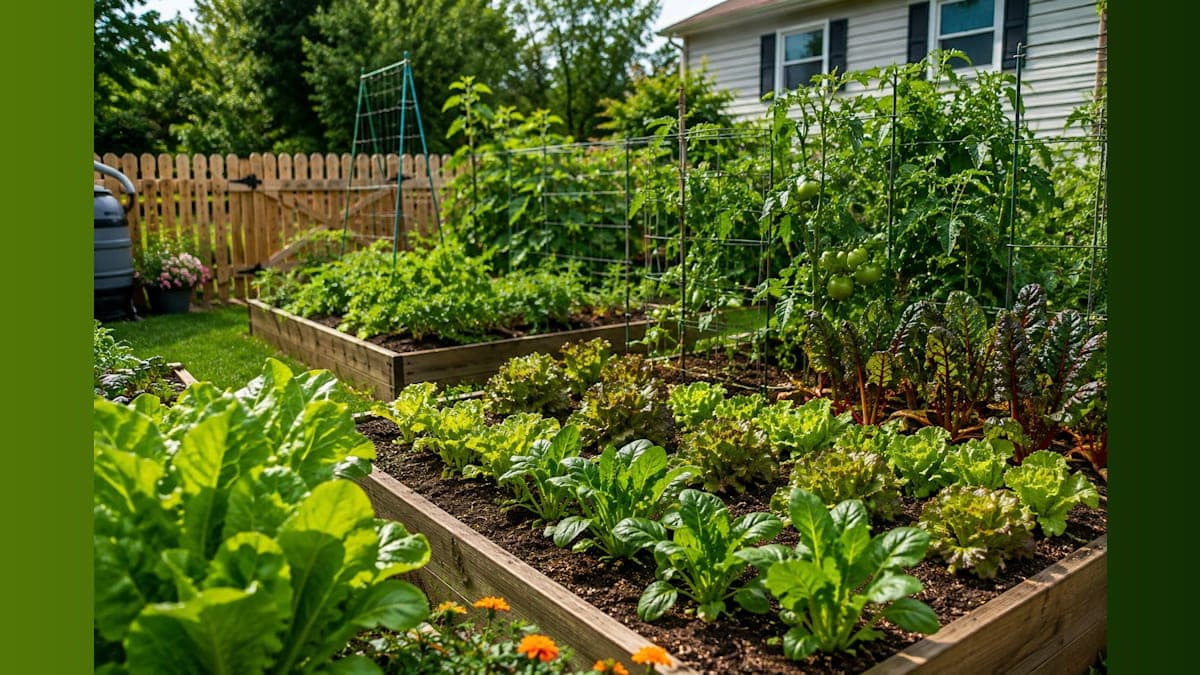
SOUTH JERSEY — You don’t need 40 acres, a barn or a tractor to start producing some of your own food.
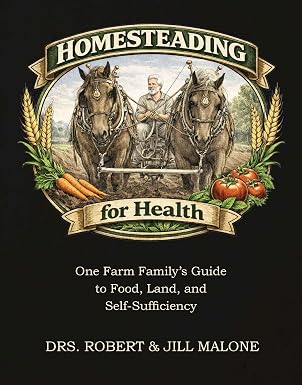
That was the message Dr. Robert Malone delivered Wednesday on The Lorry Young Show on WOND while discussing Homesteading for Health: One Farm Family’s Guide to Food, Land and Self-Sufficiency, the new book he co-authored with his wife, Dr. Jill Glasspool Malone.
Malone said people living in suburban neighborhoods can begin with something as simple as one or two raised garden beds, while those in denser communities can experiment with containers, window gardens or hydroponic growing.
“You can still have small hydroponic gardens that can produce stuff that is good for you to eat,” Malone said. “You can still have something in your window. And if you happen to live in suburbia, you can have raised garden beds.”
And, where local ordinances allow it, Malone said backyard chickens can be another entry point.
“It’s the entry level drug for homesteading, is a chicken,” Malone joked, “because they produce this amazing stuff called eggs.”
For South Jersey residents interested in trying it, Rutgers Cooperative Extension guidance generally supports Malone’s larger point: start with the soil and keep the first project manageable.
First step: Find out what’s in your soil
Malone said the first thing a homeowner should understand is the condition of the soil.
“The first thing is to understand something about your soil,” he said.
Rutgers Cooperative Extension makes the same recommendation.
A soil test can determine pH and nutrient levels and help gardeners avoid adding fertilizer or lime that isn’t needed. Rutgers recommends soil testing particularly when establishing a vegetable garden in a new location and suggests repeating the test about every three years as conditions change.
That can be especially important in South Jersey, where soils can differ considerably from property to property and are often sandier than those found farther north.
Rutgers notes that New Jersey soils are naturally acidic and says most vegetable crops prefer a soil pH around 6.5. The university specifically advises against blindly adding lime before knowing the soil’s pH.
Residents can obtain soil testing through Rutgers’ statewide laboratory and Cooperative Extension system.
Raised beds can solve several problems
If the existing soil is poor, compacted or difficult to work with, Malone recommends raised beds.
“What we do is we build raised garden beds,” he said.
He suggested keeping them narrow enough that gardeners can reach the center without stepping into the soil.
“Something like three or four foot wide so you can lean over it and maybe six to eight feet long,” Malone said.
Rutgers says raised beds can be particularly useful where gardeners encounter poor drainage, contaminated soil or accessibility problems.
For permanent beds, Rutgers recommends using mineral soil amended with modest amounts of well-rotted compost. The compost can improve aeration and the soil’s ability to retain nutrients and moisture.
Malone similarly recommends combining native soil with composted animal manure, leaf mulch or other organic material.
“The best, of course, is a mixture of your native soil together with composted animal manure and leaf mulch and that kind of stuff,” he said.
Rutgers offers one useful South Jersey-specific rule of thumb when a current soil test isn’t available: a raised bed can be filled with roughly one part compost to three parts mineral soil.
Older properties may need an extra precaution
Anyone creating a vegetable garden near an older painted building or a heavily traveled roadway should also think about possible lead contamination.
Rutgers recommends locating vegetable gardens away from older painted structures and busy highways where possible.
If contamination is a concern, raised beds filled with tested, uncontaminated soil can reduce exposure. Rutgers recommends at least 12 inches of imported topsoil over contaminated ground when edible crops are being grown, with a root barrier commonly placed underneath.
That is one place where a raised bed is more than a gardening convenience.
You don’t need an expensive greenhouse
Malone also stressed that beginners don’t need to spend thousands of dollars.
For colder weather, he said gardeners can construct a simple cold frame using old windows.
When insects arrive, he recommended bending inexpensive PVC pipe into hoops over a raised bed and covering them with netting.
“It keeps the bugs out,” Malone said. “And it also keeps your chickens out, by the way.”
He said gardeners can build their skills over time.
“The more you do, the more you learn,” Malone said.
“You’ll get better and better.”
He also suggested another inexpensive trick: flatten cardboard boxes and use them as a weed-suppressing layer around plants.
“You can cut those flat and you can put them on top of the soil in your raised garden bed,” Malone said.
The cardboard, he said, can help retain moisture and suppress weeds while gradually breaking down.
What about backyard chickens?
Malone is enthusiastic about chickens, but South Jersey homeowners should check local rules before buying chicks.
Rutgers notes that residential livestock regulations are primarily handled at the municipal level, meaning the rules can differ from town to town.
Its guidance for residential poultry recommends adequate shelter, protection from predators, sanitary conditions and sufficient space for birds to move normally. Rutgers also recommends keeping outdoor poultry yards away from neighboring property lines and roadways, although individual municipal ordinances may impose different requirements.
So before adding a coop, homeowners should check their municipality’s zoning and animal-control regulations.
The book grew out of life on the farm
Malone said he and his wife were farmers before their careers in medicine, biotechnology and public policy.
Jill Malone, who Robert Malone said was the primary author of the book, initially began writing essays about farm life as a change of pace from heavier political and public-policy subjects.
“People loved it,” Malone said.
Those essays eventually evolved into the book, which Malone said is divided into three broad sections: the couple’s own homesteading history, practical lessons learned through decades of farming and a discussion of food and agricultural policy.
“The middle part has a lot of really practical stuff about animal husbandry, different animal breeds, the way to think about things, soil health,” he said.
For Malone, the objective isn’t necessarily persuading every reader to buy a farm.
It’s getting people to begin.
“Even if you’re in suburbia and you just get one or two raised garden plots in,” Malone said, the experience can build skills that allow someone to gradually produce more of their own food.
And, he said, there can be another benefit beyond what ends up on the dinner table.
People who garden and homestead often begin swapping vegetables, advice and experience with neighbors.
“You start to build a community of like-minded people,” Malone said.
“And that is perhaps the biggest dividend of all.”
For South Jersey residents who have been thinking about trying it, Malone’s advice is considerably simpler than the word “homesteading” might suggest:
Start with the soil. Build one bed. Plant something you’ll actually eat.
Then learn from there.

About the Author
Karen Johnson
With over 30 years of news experience in major markets like Los Angeles, Denver, and Columbus, Karen now covers our area for South Jersey NewsBeat. She also brings her articulate and conversational news delivery to WOND radio listeners every weekday. Her background includes work with the NBC Radio Network, and she thrives in fast-paced news environments.