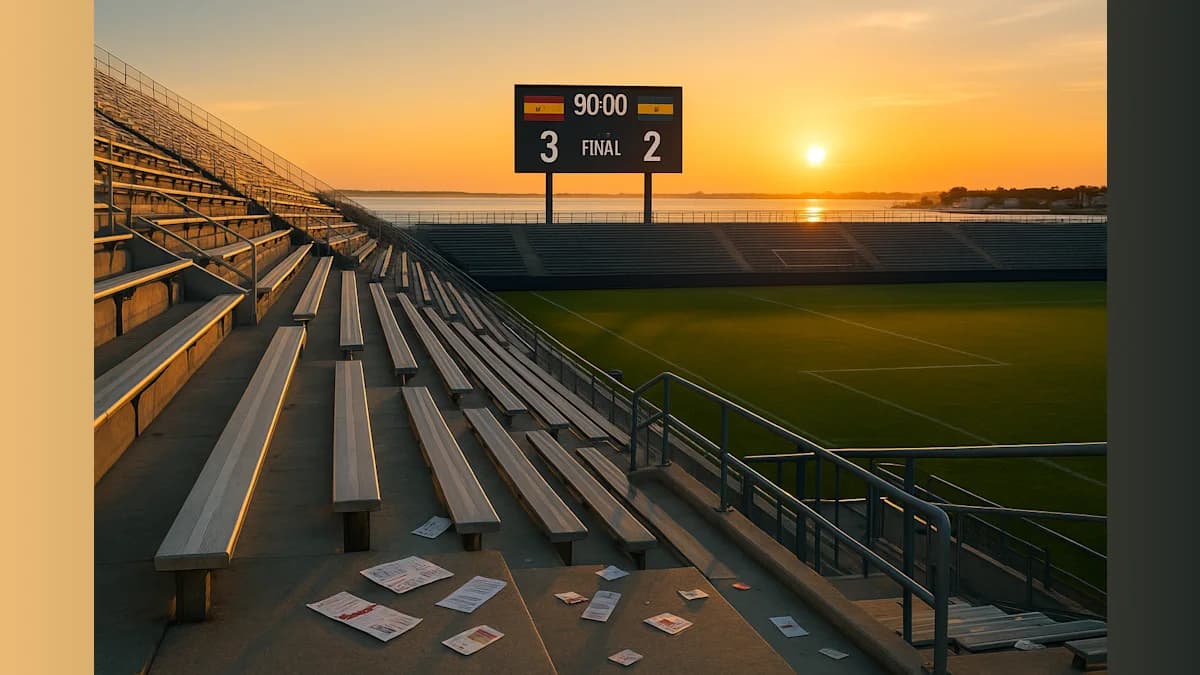
The 2026 World Cup concluded Sunday with Spain defeating Argentina to capture the championship, marking the first time a nation has held both men's and women's World Cup titles simultaneously. The tournament spanned nearly six weeks, featured 104 matches, and took place across venues in the United States, Canada and Mexico.
Despite initial skepticism about FIFA's decision to expand participation from 32 to 48 countries, the tournament delivered compelling competition and drew record-breaking crowds. Critics had predicted poor quality play and lopsided matches, but those fears proved largely unfounded as newcomers and long-absent nations provided memorable performances.
Scotland's return to the World Cup stage after decades away energized fans, while African nations advanced deeper into the knockout rounds than many anticipated. Cape Verde, competing in its first World Cup, showcased 40-year-old goalkeeper Vozinha as one of the tournament's breakout stars. Their round-of-16 match against Argentina in Miami became an instant classic, with the outcome uncertain until the final whistle.
The United States generated significant enthusiasm throughout its run, with crowds in Seattle, Santa Clara, and other host cities creating electric atmospheres. Forward Folarin Balogun and midfielder Malik Tillman delivered key moments that had stadiums erupting. Children across the country wore the team's red-and-white striped jerseys, and casual fans who typically ignore soccer sent messages during matches.
France's Kylian Mbappé dominated the scoring charts with ten goals, earning the Golden Boot award and bringing his career World Cup total to 22 goals, the most in tournament history. His speed proved devastating to opponents throughout the competition, with his fastest recorded sprint exceeding 23 miles per hour.
Argentina's journey to the final followed a familiar pattern for the defending champions, who often started matches slowly before mounting comebacks. Against England in the quarterfinals, Argentina trailed before equalizing in the 85th minute and scoring again in stoppage time. However, that resilience could not overcome Spain in Sunday's final, ending Lionel Messi's likely final World Cup appearance without another title.
The tournament faced criticism on multiple fronts. Ticket prices reached unprecedented levels, with the cheapest group stage seats costing hundreds of dollars and final tickets exceeding ten thousand dollars. Yet stadiums remained full, validating FIFA's pricing strategy despite concerns about accessibility.
Video assistant referee technology, known as VAR, drew widespread complaints for slowing matches and overturning goals on marginal offside calls. A Colombian goal against Portugal was disallowed because a player's toenail was ruled offside, while an Iranian goal against Belgium was wiped away for a similar infraction involving a striker's positioning.
Political controversies shadowed portions of the tournament. Iran's national team relocated its training camp from Arizona to Tijuana, Mexico, citing security concerns, and the U.S. government restricted the team's entry to single-day visits before matches. President Donald Trump attended only the final match in East Rutherford, New Jersey, where he was booed by spectators.
The most significant controversy involved Trump's personal call to FIFA president Gianni Infantino requesting review of a red card issued to Balogun. While FIFA maintained the call did not influence its decision to allow Balogun to continue playing, the White House intervention troubled many supporters. U.S. Soccer CEO J.T. Batson later addressed the matter, stating that the president is able to do what the president wants to do and expressing gratitude for fan support.
The tournament included mandatory hydration breaks for all matches, including those in climate-controlled domed stadiums, and featured a first-ever halftime show during the final. These additions frustrated traditionalists but did little to dampen overall enthusiasm.
Major League Soccer resumed its season following the World Cup's conclusion, hoping to capitalize on heightened interest in the sport. The National Women's Soccer League and USL Championship are also underway. The U.S. Women's National Team, ranked second globally, will face top-ranked Spain in tune-up matches this fall ahead of next year's Women's World Cup in Brazil.