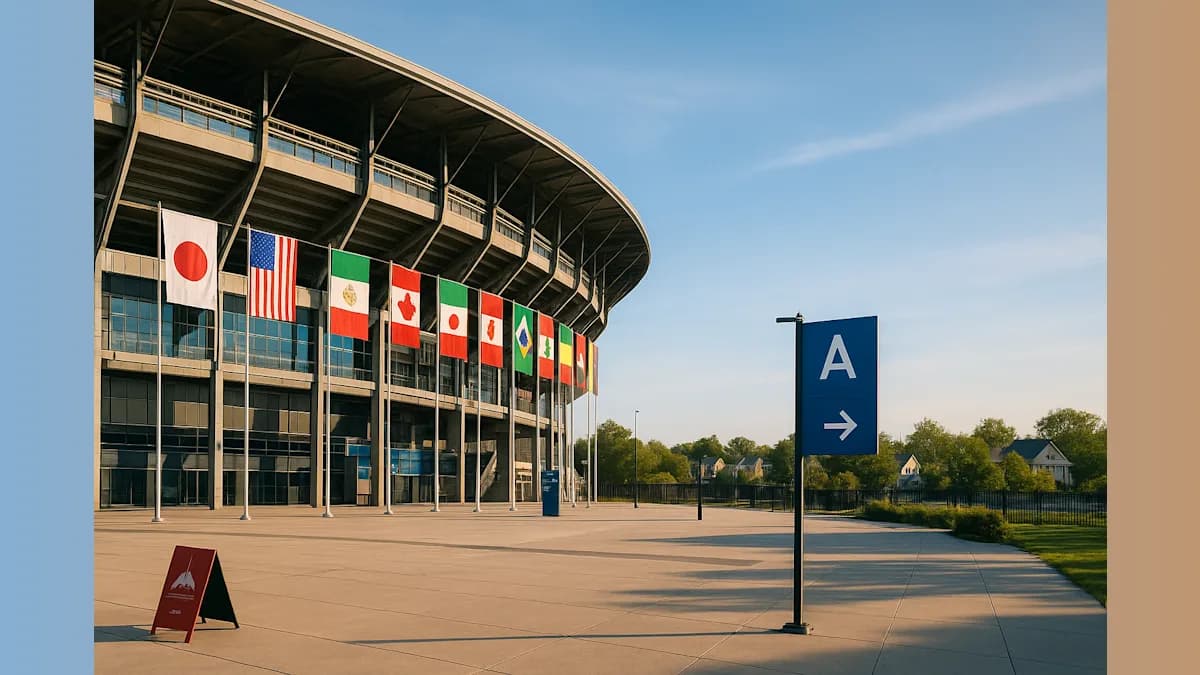
The 2026 FIFA World Cup has officially commenced across North America, bringing the planet's largest sporting event to 11 host cities in the United States. With an unprecedented 48 teams and 1,248 players competing over the next six weeks, this tournament represents a significant expansion of the global competition.
The tournament showcases remarkable demographic diversity among its participants, from seasoned veterans competing in their final World Cup to teenage athletes making their debut on the global stage.
Age Extremes Define Tournament Roster
Scotland's Craig Gordon enters his first World Cup at 43 years old, making him the oldest footballer competing in the tournament and the second oldest in World Cup history. Gordon represents one of seven players in their 40s participating in the competition as of Thursday, June 11.
Among the notable quadragenarians is Portugal's Cristiano Ronaldo, 41, who will compete in his sixth World Cup while still seeking the major trophy that has eluded him throughout his illustrious career. Croatia's Luka Modrić and Mexico's Guillermo Ochoa, both 40, also bring veteran experience to their respective national teams. Uruguay's Fernando Muslera will join the 40s club on Sunday, June 16.
At the opposite end of the age spectrum, Mexico's Gilberto Mora, 17, claims the distinction of youngest player in the tournament. Mora becomes the youngest player ever to represent Mexico at the World Cup, though he remains approximately six months older than Northern Ireland's Norman Whiteside, who has held the record as the youngest footballer ever to appear on the global stage since 1982.
United States World Cup History
The United States national team has competed in 12 World Cups, beginning with the inaugural tournament in 1930, where the country placed third out of 13 participating nations. The team's strongest performance came in 2002, when the United States advanced to the quarterfinals after defeating Portugal and Mexico before falling to Germany and finishing in eighth place.
Most recently, the United States finished 14th at the 2022 World Cup after a 3-1 defeat to the Netherlands in the Round of 16.
Historical Tournament Statistics
The low-scoring nature of soccer manifests clearly in World Cup results. The most common scoreline in tournament history is 1-0, occurring in 182 matches — approximately one-fifth of all games played. The second most frequent result is 2-1.
The highest-scoring match in World Cup history occurred in 1982 when Hungary defeated El Salvador 10-1 in an opening group game, establishing a record that remains unmatched.
Disciplinary Records
Brazil leads all nations with 11 red cards issued across nine different matches since 1930, though the team has not received a red card since 2010. Red cards result in immediate dismissal from the field and suspension from the subsequent match.
Only two players have received multiple red cards in World Cup competition: Cameroon's Rigobert Song and France's Zinedine Zidane. Zidane's second red card gained particular notoriety during the 2006 finals when he headbutted Italian defender Marco Materazzi in the chest, reportedly in response to insults directed at his mother and sister.
Club Representation
English Premier League club Manchester City contributes the most players to the tournament with 19 athletes representing 12 national teams across three continents. These players will compete for Algeria, Belgium, Croatia, Egypt, England, France, Ghana, Netherlands, Norway, Portugal, Spain, and Uzbekistan.
The concentration of Manchester City players across diverse national teams underscores the club's global recruitment strategy and the international nature of elite soccer competition.