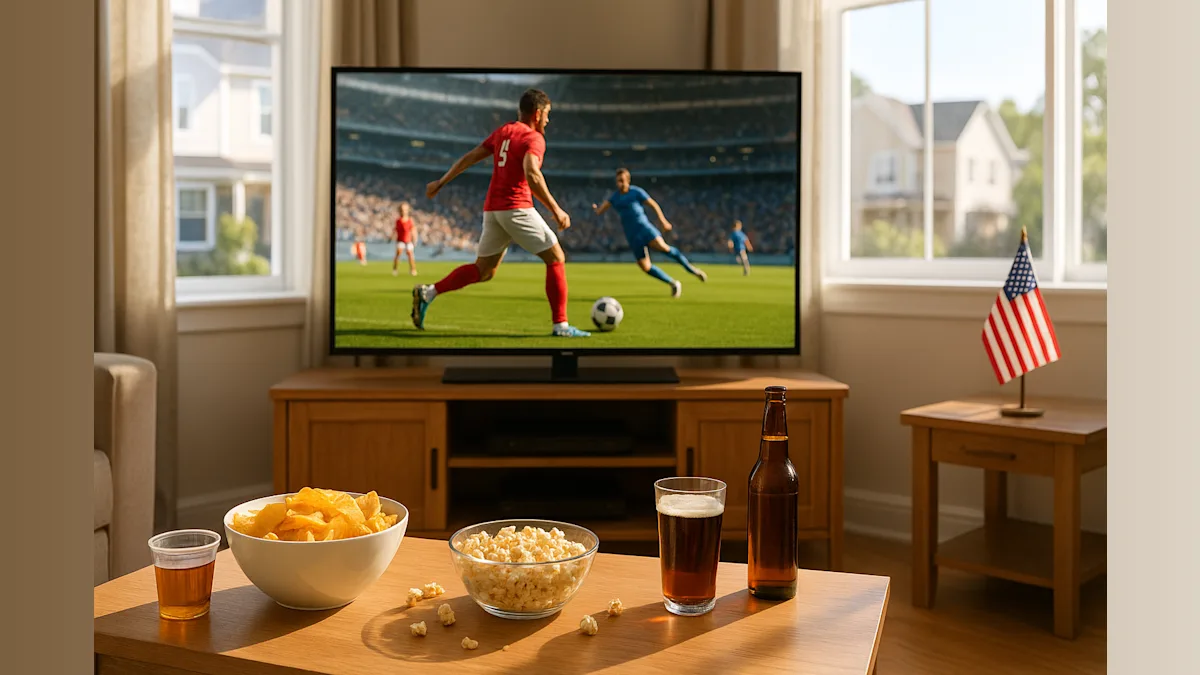
The 2026 World Cup has reached its halfway point, and Americans are embracing the global tournament with unprecedented enthusiasm. From packed sports bars to sprawling fan festivals, the nation is demonstrating that soccer has firmly established itself in the American sports landscape.
The numbers tell a compelling story. The United States men's national team's opening match against Paraguay on June 12 drew an average of approximately 25 million viewers across Fox, Telemundo, and their streaming platforms, making it one of the most-watched soccer games ever broadcast in the United States, according to data released by Nielsen, the media analytics company.
That figure represents a dramatic increase from the 2022 World Cup in Qatar, where the USMNT's first group stage game against Wales drew a total audience of 11.7 million people in the United States. The comparison is particularly striking given that the Qatar match took place on a Monday afternoon, while the Paraguay game aired on a Friday night.
Viewership has remained robust for Team USA throughout the tournament, reaching over 22 million in subsequent matches against Australia and Turkey. These figures rival the averages at the most recent NBA finals and the MLB World Series, though they remain approximately 100 million viewers shy of a Super Bowl. For context, the 2026 Winter Olympics in Milan averaged 23.5 million viewers in the United States.
Perhaps more significant is the sustained interest in matches beyond the American team. Fox reported an average of 5 million viewers across 72 matches during the group stage, setting a new record for the network despite concerns that the World Cup's expanded format would dilute audience engagement. Telemundo recorded an average of 4.6 million viewers.
Mike Mulvihill, the president of insights and analytics for Fox Sports, noted on X that the average Fox viewer has already consumed more games through last Tuesday than they did during the entire 2022 World Cup.
The enthusiasm extends beyond television screens. According to FIFA, approximately 4.6 million fans attended the group stage matches, filling 99.7 percent of available seats. This attendance figure has already established a new record, surpassing the previous high set during the 1994 tournament in the United States. Fan festivals across the United States, Mexico, and Canada have attracted 5.5 million attendees.
In Boston, over a thousand fans gathered for the city's last fan festival at City Hall Plaza, cheering in unison with every goal scored during England versus Panama. "To be honest, I had no expectations. But I didn't know how great it was gonna be," Jason Jusino, of Medford, Massachusetts, told NPR. "The city hasn't felt this kind of electricity in so long."
The tournament began amid criticism over sky-high ticket prices and concerns about the United States as a host nation. While those issues remain unresolved, they have been overshadowed by the overwhelming public response.
"Soccer has won," Bret Myers, who teaches sports analytics at Villanova University's School of Business, told NPR. "In the sense of, it has kind of drowned out any potential issues or any of the controversies that were bubbling before the tournament."
The strong turnout reflects years of growth in American soccer. Major League Soccer has expanded in attendance, viewership, and number of teams. Both the Premier League and Liga MX have cultivated loyal followings in the United States. The nation's soccer fan base is younger and more diverse than audiences for other major leagues, with the Hispanic community at the heart of fandom, according to Nielsen.
The USMNT's performance has also fueled enthusiasm. After years of middling results on the global stage, the team's success has rekindled hope among American fans. "It helped tremendously that they won that first game," Myers told NPR. "It maintains that excitement level."
All attention now turns to the United States as it heads into its knockout stage match against Bosnia and Herzegovina on Wednesday at 8 p.m. ET. The team is seeking its first World Cup knockout win since 2002.
Myers believes that regardless of how Team USA performs, Americans will continue to follow the tournament in record numbers. For fans like Eddy Balcarcel from Attleboro, Massachusetts, who has attended several watch parties and two games at Gillette Stadium, known as Boston Stadium during the World Cup, the tournament has exceeded expectations, partly eclipsing his concerns about high ticket prices.
"Every year I get more excited about soccer and hope that it gets better here in this country," he told NPR.
Jusino, who has been following the World Cup since it came to the United States in 1994, sees the growing soccer fandom as emblematic of American progress. "It's just nice to look at them and be like, 'Oh yeah, this is what America's about,'" he told NPR. "You know, growing and persevering."