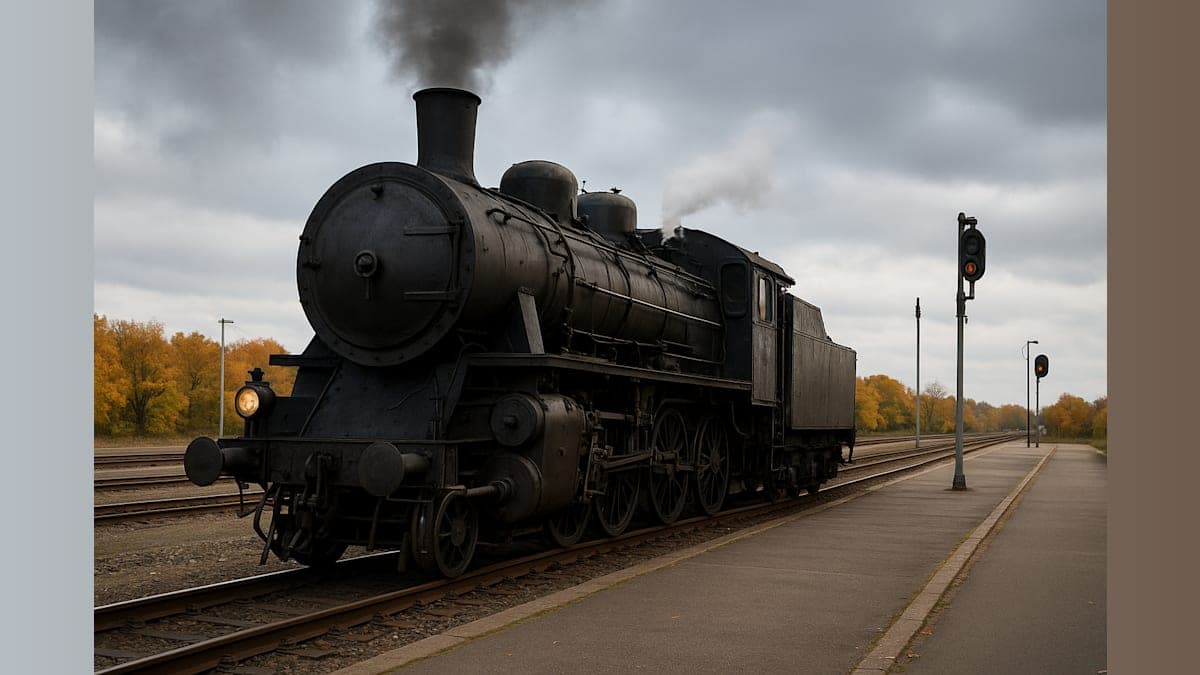
A massive piece of American railroad history is making its way across the nation, drawing tens of thousands of spectators eager to witness engineering prowess from a bygone era. Union Pacific Railroad's Big Boy No. 4014, recognized as the world's largest operating steam locomotive, has embarked on a coast-to-coast tour to commemorate America's 250th anniversary.
The locomotive's recent stop in Philadelphia over the July 4th weekend demonstrated the enduring fascination with steam-powered rail travel. Nearly 100,000 people visited the Big Boy during its two-day stay at Philadelphia's Navy Yard, where the public could examine the behemoth up close.
The spectacle began even before the train arrived at its display location. On Saturday, July 5, 2026, dozens of enthusiasts gathered alongside the tracks at Valley Forge National Historical Park, enduring extreme heat to catch a glimpse of the locomotive in motion. Temperatures reached 102 degrees that day, with a heat index climbing to 112 degrees, yet dedicated railroad fans came prepared with camp chairs and coolers.
Among those waiting trackside was John Seibert, who attended with fellow members of a model railroad club. The group tracked the train's progress via smartphone application as it approached their viewing location. From miles away, the distinctive whistle announced the locomotive's arrival before it came into view.
When Big Boy No. 4014 finally thundered past, measuring 133 feet in length and weighing 1.2 million pounds, the experience proved overwhelming. The locomotive's bells rang and steam whistle blared as it barreled down the tracks. Seibert described the moment as transformative, noting how the whistle's blast seemed to reverberate through spectators' bodies.
The stationary display at the Navy Yard allowed visitors a more intimate encounter with the engineering marvel. Brandon Westerfield, a fifteen-year-old train enthusiast from Leonardo, New Jersey, attended with his mother Alethea. Despite having viewed numerous locomotives previously, Alethea Westerfield acknowledged this experience surpassed all others, describing the sight as absolutely incredible.
The Big Boy locomotives represent a significant chapter in American railroad history. Union Pacific Railroad Company commissioned twenty-five of these engines between 1941 and 1944, specifically designed to haul freight through the challenging terrain of the Wasatch Mountains in Utah and Wyoming. The locomotives featured an innovative articulated design enabling them to navigate curves, with two sets of pistons driving eight wheels each, generating 7,000 horsepower.
The era of Big Boy locomotives concluded in 1962 when diesel engines replaced the entire fleet. Of the original twenty-five, eight were preserved for posterity. However, only Big Boy No. 4014 remains in operating condition, thanks to an extensive restoration effort.
Ed Dickens, senior manager of Union Pacific Heritage Operations, led the restoration project and now serves as the locomotive's engineer. Dickens, who typically operates the manually controlled engine during its cross-country journey, has become something of a celebrity among railroad enthusiasts. Matt Zollers, who traveled from Hatboro, Pennsylvania, to view the locomotive, praised Dickens as an exceptional ambassador for Union Pacific, noting his willingness to engage with every visitor.
The engineer expressed profound satisfaction with the public response to the tour. Standing before the massive engine, Dickens reflected on the spectacular nature of witnessing such large crowds and their evident happiness.
Following its Philadelphia appearance, Big Boy No. 4014 and the eighteen-car train it pulls departed for its home base in Wyoming. The return journey includes scheduled stops in Pennsylvania, Ohio, Illinois, Missouri, Kansas, and Colorado, offering additional communities the opportunity to experience this rolling monument to American industrial achievement.
Dickens emphasized safety considerations for those planning to view the locomotive as it passes through their communities, urging spectators to maintain a distance of at least twenty-five feet from the tracks. For those who venture too close, the Big Boy's powerful whistle serves as an unmistakable warning.
The tour represents more than mere nostalgia for steam-powered transportation. It offers Americans a tangible connection to the nation's industrial heritage during a year of national celebration, demonstrating how technological achievements from previous generations continue to captivate and inspire contemporary audiences.