
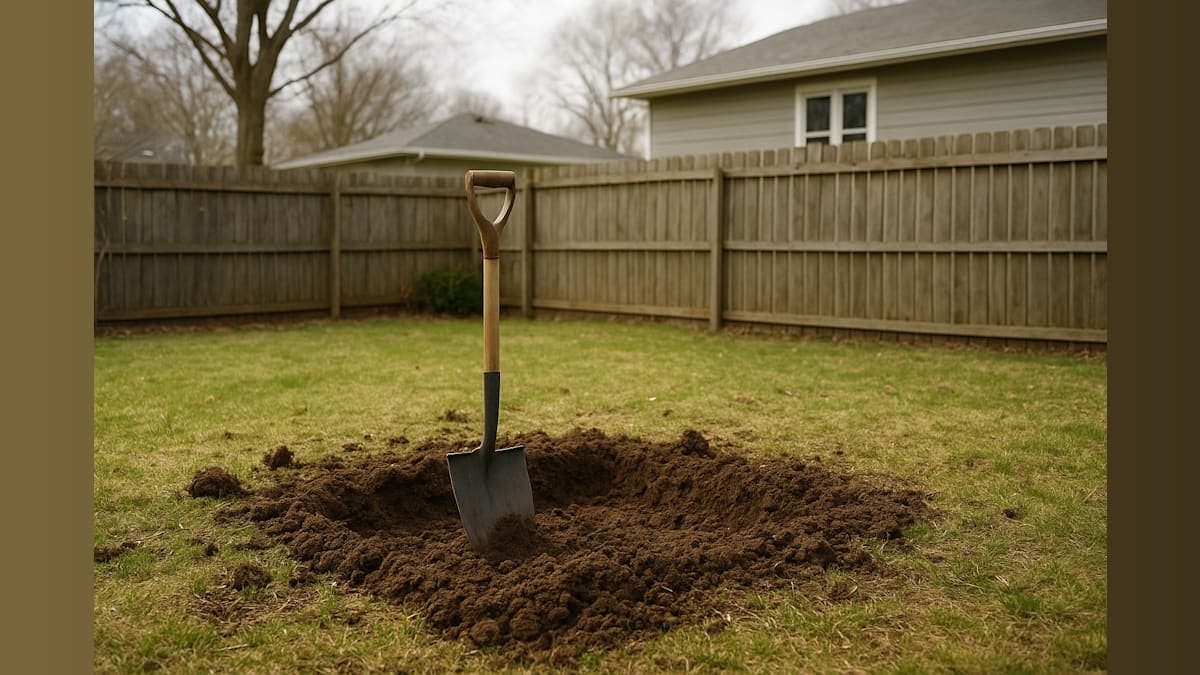
What began as a simple weekend project to install a new terrace transformed into a discovery of historic proportions when a Danish homeowner unearthed the largest Viking Age silver hoard ever found in Denmark.
The remarkable find occurred in the Rebild municipality, where the property owner had planned to spend a few hours removing grass, stone, and gravel from his backyard. Instead, just 30 minutes into the excavation work, his spade struck something that would rewrite the record books for Danish archaeological discoveries.
The hoard weighs more than 40 pounds and contains 700 individual objects, making it nearly three times larger than what was previously Denmark's most significant Viking Age silver discovery. The collection includes bracelets, 47 coins, bars, additional jewelry pieces, and an amulet shaped like Thor's hammer.
"It should have just been a few hours of hard work removing stubborn grass, stone and gravel [...] but it became the biggest surprise of my life," the landowner said in a statement translated from Danish, according to Good News Network. "After half an hour of digging, my grip hit something that made a strange sound. First, I thought it was old iron or fence wire as well as some pot cuts, but when I started digging with my hands, I could suddenly fish one metal object after another out of the ground. After a short time of cautious work, it dawned on me that it was jewelry, coins, and silver bars."
The discovery provides significant insight into the Viking Age economy, which historians have long understood to be powered by silver. The sheer volume and variety of objects underscore the metal's central role in trade and commerce during this period.
Among the most intriguing elements of the collection are coins bearing Arabic lettering, evidence of the extensive trade networks that connected Viking territories with distant civilizations. The presence of English coins dating to between 899 and 924 helps establish the hoard's timeline within the accepted Viking Age chronology.
The timing of the hoard's burial corresponds with the Christianization of Denmark, an era marked by significant political and religious upheaval. During such turbulent periods, burying valuables was a common practice among those seeking to protect their wealth.
One particularly fascinating artifact is a silver bar engraved with runes that appear to spell "Hutu." Researchers speculate whether this represents the owner's name or perhaps functioned as a maker's mark, similar to modern luxury brands.
The hoard also contained a notably large quantity of silver weights. According to a statement from the North Jutland Museums, which assumed custody of the collection for cataloguing and study, these weights correspond very closely with the weight of some jewelry items in the hoard. This correlation suggests the weights may have represented standardized measures used by metalworkers when casting and forming jewelry pieces.
The North Jutland Museums has expressed interest in permanently exhibiting the hoard at the Viking Museum Fyrkat, where it would join other significant artifacts from Denmark's Viking heritage and provide visitors with an unprecedented window into the economic systems and material culture of the era.
The discovery serves as a reminder that extraordinary historical treasures can lie just beneath the surface of ordinary landscapes, waiting for an unsuspecting homeowner's spade to bring them back into the light after more than a millennium underground.