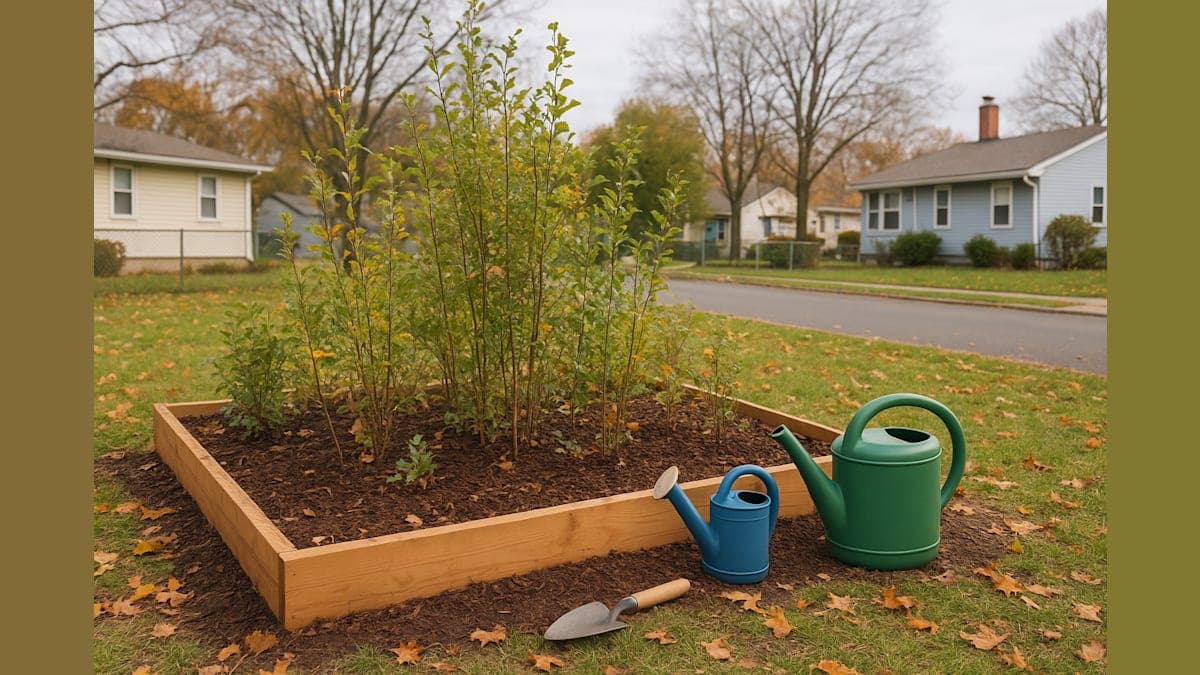
A planting technique pioneered in Japan five decades ago is gaining momentum in communities throughout the United States, turning neglected urban spaces into dense, self-sustaining woodlands. The method, developed by botanist Akira Miyawaki, is being adopted not through industrial-scale reforestation contracts but through the efforts of local residents who gather on weekends to plant seedlings in carefully prepared soil.
The Miyawaki approach departs from conventional reforestation by bypassing the slow process of natural forest succession. Instead of waiting for pioneer species to gradually give way to mature trees over centuries, the method combines climax species with the supporting plants that sustain them, allowing a functioning ecosystem to establish itself within decades. The result is a compact, fast-growing forest capable of thriving with minimal human intervention after the initial planting.
What distinguishes the miniforest movement from other environmental initiatives is the communal ritual embedded in the planting process. According to DailyGood, one organizer recalled that Miyawaki "would take each plant, and the community had to say its name," adding that "it was about restoring relationships between humans and non-humans." The practice underscores a philosophy that treats planting as an act of connection rather than mere landscaping.
For local communities, the appeal lies in the modest commitment required and the tangible benefits returned. Participants need only show up for a Saturday planting session, yet the payoff extends beyond greenery: a renewed sense of belonging to a place and a stake in its future. Vacant lots, schoolyards, and parking strips — spaces often overlooked — become sites of shared purpose and long-term environmental value.
As the movement spreads across the United States, it offers a model for neighborhoods seeking low-cost, high-impact ways to address vacant land and strengthen community ties. The Miyawaki method's emphasis on native species and dense planting also aligns with broader ecological goals, though its most enduring contribution may be the relationships it cultivates among the people who plant together.