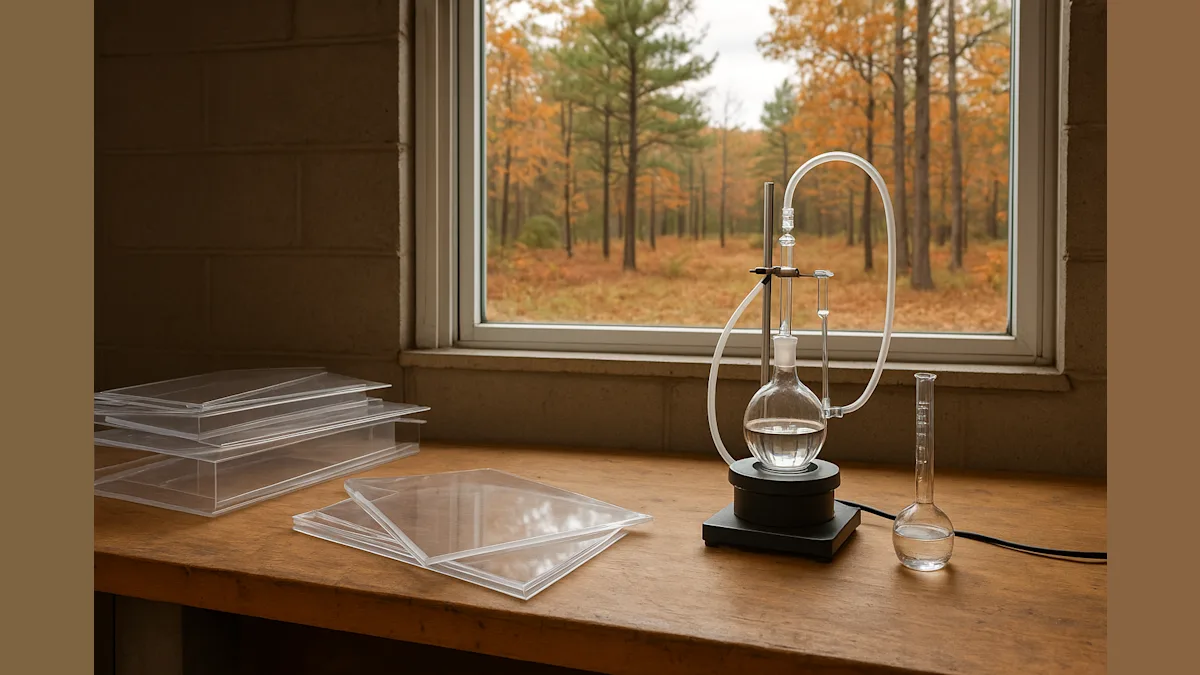
Researchers at ETH Zurich have identified a practical new method for breaking down acrylic glass, better known as Plexiglas, into nearly all of its original building blocks. According to reporting by Good News Network, the approach makes high-quality recycling of the material realistic and affordable for the first time.
Acrylic glass is a familiar material in daily life. It appears in windows, car taillights, furniture, and protective barriers, among other products. Despite its ubiquity, most of the material has historically not been recovered at high quality, leaving a significant share of acrylic waste without a circular end-of-life pathway.
The ETH Zurich method is notable for its low energy requirements, a factor that matters for both cost and environmental impact. By recovering the material's original building blocks rather than degrading it into lower-grade output, the process opens the door to producing brand-new acrylic material from discarded products.
The significance for local communities is straightforward. Acrylic glass is common in storefronts, signage, vehicle components, and household goods, meaning that improved recycling infrastructure could eventually divert a widely used material from landfills and reduce demand for virgin production. The research, first reported by Good News Network, represents a step toward closing the loop on a material that has long been difficult to recycle at high quality.