
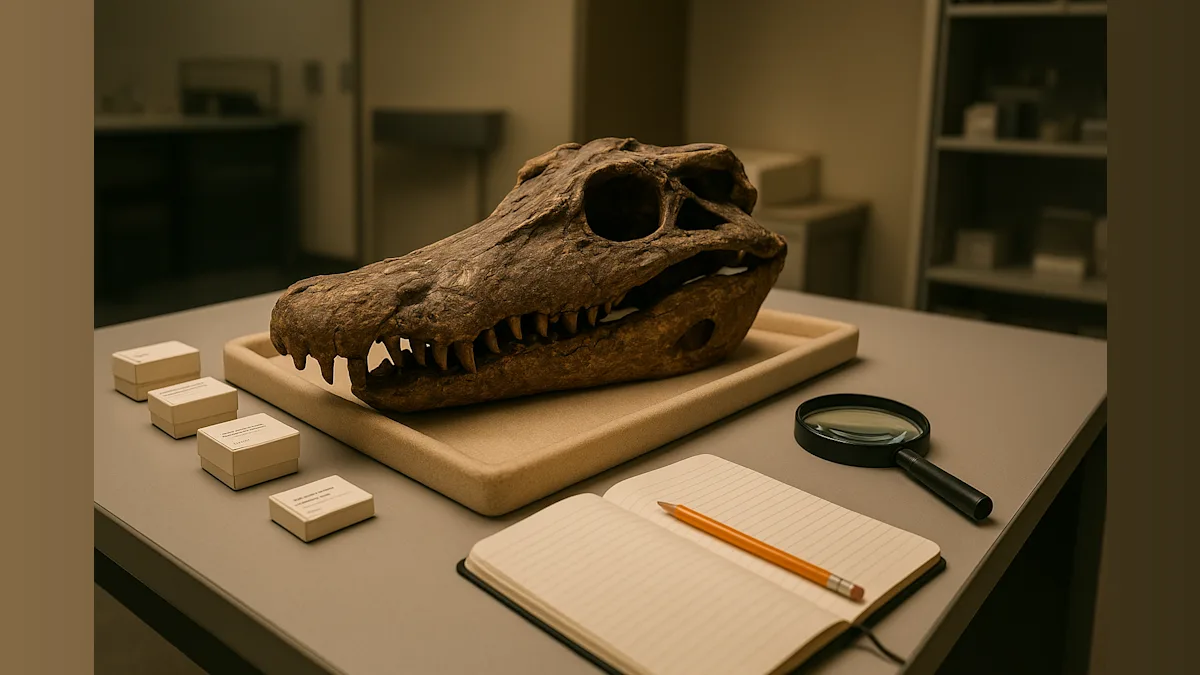
A new species of crocodilian has been identified from fossils recovered from a rock layer that ancient Egyptians harvested to construct the Sphinx, according to reporting by Good News Network. The fossilized reptile, like the iconic Egyptian landmark itself, is missing the tip of its snout.
The fossils were recovered in the 1920s from the 45-million-year-old Mokattam Formation in Egypt. That same geological formation supplied the stone used to build the Sphinx, linking the ancient monument to a creature that lived tens of millions of years before it was carved.
The identification of the new crocodilian species adds to the understanding of the region's prehistoric ecosystems. The Mokattam Formation has long been recognized as a rich source of fossil material, and the recovery of these specimens nearly a century ago continues to yield new scientific discoveries.
The parallel between the fossil's missing snout tip and the Sphinx's famously absent nose has drawn attention, though the two losses occurred under entirely different circumstances separated by millions of years.