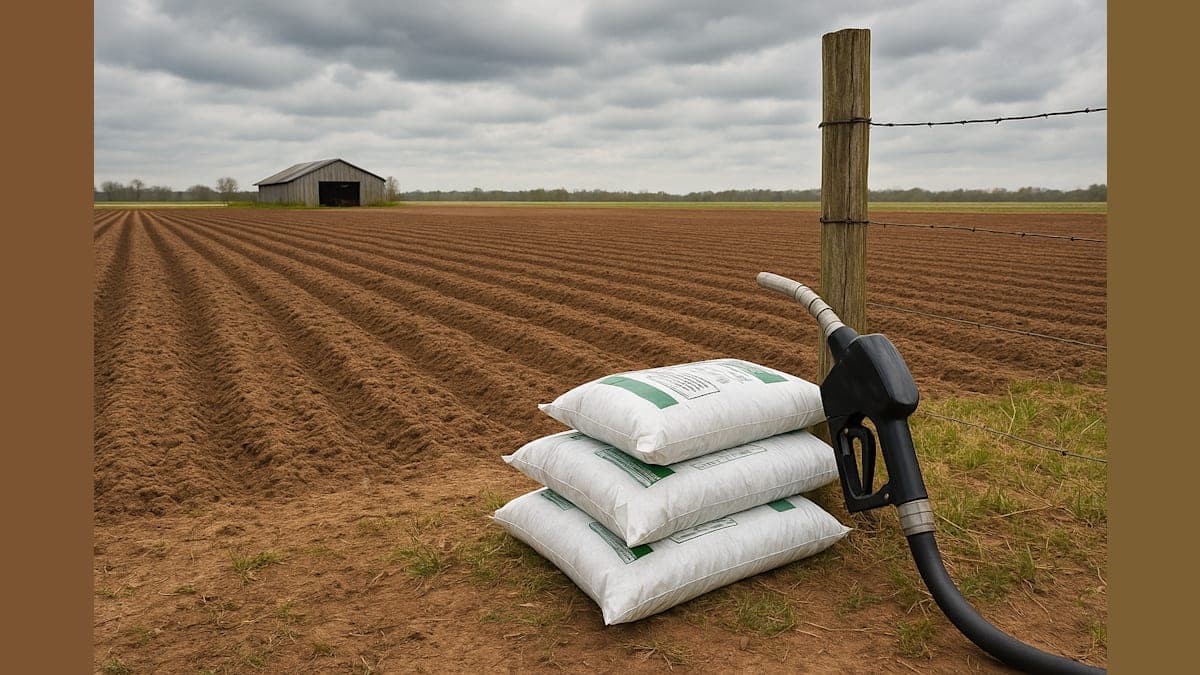
Fertilizer prices have begun declining this week following news of a tentative peace deal with Iran and the reopening of the Strait of Hormuz. Yet for farmers across the American heartland, the relief remains largely theoretical rather than practical.
Ryan Poe, a fifth generation wheat farmer in Hartline, Washington, expressed skepticism about the immediate impact of falling global prices. "Maybe a global supplier of fertilizer sees that kind of instant price change," Poe told NPR. "But for me on the farm there's been no change in fertilizer price."
The disconnect stems from timing. Poe already purchased most of his fertilizer for the year, spending approximately 23 percent more this spring than before the war. This week, he continues applying what remains to fields he must keep clear of weeds before fall planting begins.
"It's the sticker shock of, okay, yeah this is definitely higher than last year," Poe told NPR.
Limited Relief Expected Through 2027
An updated United States Department of Agriculture commodities forecast released last Thursday predicts that energy and fertilizer prices will not decrease substantially until 2027. This projection places additional strain on agricultural communities already grappling with multiple financial pressures.
Before the turmoil in the Middle East disrupted global supply chains, farmers were already contending with flat wheat prices and rising equipment costs driven by inflation and President Trump's second trade war in a decade. The cumulative effect has created a challenging environment for agricultural operations.
"It's just not a fun time to be in ag," Poe told NPR. "It's hard when you see people around you that are at that point of giving up."
Regional Variations in Impact
Geographic location and crop selection have created varying degrees of financial impact across farming regions. Many Midwest farmers managed to lock in fertilizer prices before the Strait of Hormuz closure, benefiting from fortunate timing and access to Canadian suppliers.
Kevin Deinert, a grain farmer in Mount Vernon, South Dakota, reported relative stability in his operation. "In all, things are looking better supply chain-wise. Things seem to have stabilized, or at least we've come to a new normal of what to expect," Deinert told NPR.
Additional relief has emerged from a recent tentative agreement between the Trump administration and China, resulting in substantial soybean purchases resuming. This development has prompted farmers like Deinert and his neighbors to enter what he describes as full-blown speculation mode regarding fertilizer purchases for next year.
The decision involves weighing whether to purchase now during falling prices against uncertainty about whether the Iran deal will hold or if unforeseen crises such as weather disasters might emerge.
Rapid Market Fluctuations Create New Challenges
"Say, within the last 10 to 15 years I don't think we have seen things fluctuate as rapidly as we see now," Deinert told NPR. To adapt, he has adopted aggressive buying and marketing strategies while becoming accustomed to making rapid decisions.
In Iowa, soybean farmer Dave Walton has responded by purchasing less fertilizer this year, attempting to stretch his supply through year's end. "Every time I pull a tractor into a field it just cost more because everything has gone up," Walton told NPR. "The squeeze on our margin is real."
Walton believes he can sustain his operation partly due to recent federal relief aid. However, he expressed concern that many neighboring farms may not share the same fortune, potentially creating devastating effects on rural economies.
"I don't think that it's hyperbole to say that there could be quite a number of operations that are basically one bad year away from getting out of business," Walton told NPR.
Record Costs Projected for 2027
Regardless of the Iran peace deal, numerous farmers across the heartland entered 2026 already facing significant financial vulnerability. The recent USDA report also predicted that overall business and production costs for farmers will reach record highs next year, suggesting continued pressure on agricultural operations throughout the region.
The combination of delayed price relief, ongoing trade uncertainties, and escalating operational expenses has created a precarious situation for American agriculture. While global markets may show signs of stabilization, the benefits have yet to materialize at the farm level where decisions about survival and sustainability must be made.