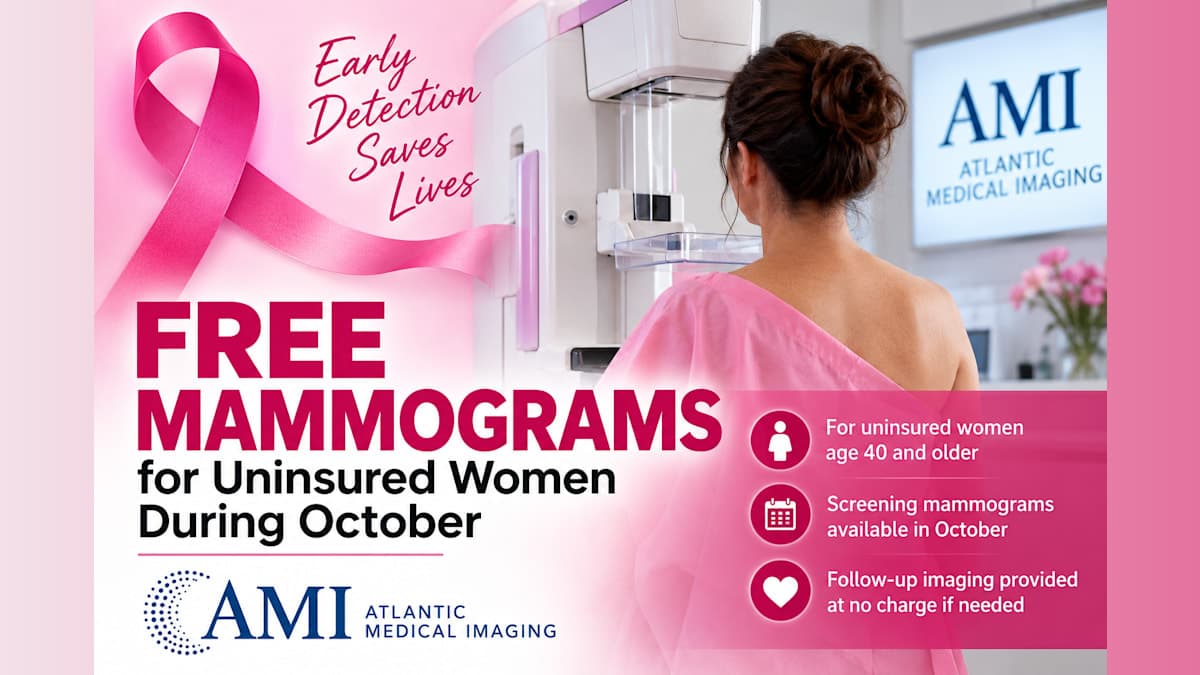
Atlantic Medical Imaging's Dr. Peggy Avagliano urges women not to delay breast cancer screenings because of cost, fear or lack of insurance.
ATLANTIC COUNTY, N.J. — For South Jersey women who have put off getting a mammogram because they don't have health insurance, Atlantic Medical Imaging has a message: Financial concerns should not stand in the way of potentially lifesaving breast cancer screening.
Throughout October, the AMI Foundation is providing free screening mammograms to uninsured women age 40 and older who have no current or previous breast issues.
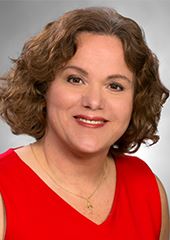
Dr. Peggy Avagliano, a board-certified radiologist and head of women's imaging at Atlantic Medical Imaging, discussed the program during an October 13 appearance on The Lorry Young Show on News Talk 1400 & 92.3 WOND.
"No insurance is no reason to not get screened in South Jersey," Avagliano said.
The physician emphasized that early detection remains one of the most important tools in reducing deaths from breast cancer, particularly because the disease may develop before a woman notices any symptoms.
Free Screenings and Follow-Up Care
The AMI Foundation's October program is available to uninsured women age 40 and older who qualify for routine screening mammograms.
According to AMI's official announcement, appointments began being scheduled October 1, and convenient evening and weekend appointments are available.
Avagliano said the foundation's assistance goes beyond the initial mammogram.
"If that person who comes in for a free screening mammogram needs a diagnostic workup because we find something at the time of the screening, we'll do the diagnostic workup for free," she said.
That additional assistance can be particularly important for women who might otherwise avoid screening because they are concerned about the cost of follow-up testing.
Avagliano said the foundation has been providing free mammograms for uninsured women for approximately 20 years.
She also discussed New Jersey's Cancer Education and Early Detection program, commonly known as NJCEED, which helps eligible uninsured and underinsured residents access cancer screenings, diagnostic follow-up and assistance connecting with treatment resources.
According to the New Jersey Department of Health, NJCEED generally serves eligible residents whose income is at or below 250% of the federal poverty level. Separate eligibility requirements apply to programs that may help cover cancer treatment.
Why Women Delay Mammograms
During the interview, host Lorry Young asked Avagliano why some women postpone mammograms, even when they understand the importance of breast cancer screening.
Avagliano identified several barriers, including lack of insurance, fear of receiving bad news and concerns about discomfort during the examination.
She explained that the compression used during mammography serves an important medical purpose.
"The most important thing is that the compression only lasts for a few seconds," Avagliano said.
She explained that compression helps reduce motion, improves image quality and allows radiologists to identify tiny calcifications that can sometimes be early signs of cancer.
Avagliano also addressed concerns about radiation exposure, emphasizing that mammograms use relatively low doses of radiation.
While acknowledging that some patients find the procedure uncomfortable, she urged women not to let those concerns prevent them from getting screened.
"Don't be afraid. We've seen everything," she said. "Come in and get screened. Come in if you have a palpable lump. Talk to your doctors about it."
When Should Women Begin Screening?
Avagliano recommends annual screening mammograms beginning at age 40 for women at average risk of developing breast cancer.
The American College of Radiology also recommends annual screening beginning at 40, while the U.S. Preventive Services Task Force recommends mammograms every two years for women ages 40 through 74.
Women with a family history of breast cancer, inherited genetic mutations or other significant risk factors may need screening earlier or additional imaging.
Avagliano emphasized that younger women should not ignore unusual breast changes simply because they are below the typical screening age.
Symptoms that warrant medical evaluation can include a persistent or growing lump, nipple discharge, particularly if bloody, or changes in the breast's skin.
Women experiencing symptoms should contact a healthcare professional for an evaluation rather than wait for a routine screening appointment.
Understanding Dense Breast Tissue
Another important topic during the interview was breast density, which can make some cancers more difficult to detect through mammography alone.
Avagliano explained that dense breast tissue and certain abnormalities both appear white on a mammogram, making suspicious findings harder to distinguish.
She compared the challenge to trying to find a snowball in a snowy field rather than on black pavement.
Women with dense breasts may benefit from supplemental screening, depending on their individual risk factors.
Those additional tests can include breast ultrasound or MRI.
Avagliano said mammography remains the primary screening tool for most women, while ultrasound and MRI serve important roles in evaluating specific findings or screening patients at higher risk.
She also discussed federal breast density notification requirements, which help patients understand whether their mammograms show dense breast tissue.
Men Can Develop Breast Cancer, Too
Although breast cancer is overwhelmingly diagnosed in women, Avagliano reminded listeners that men can also develop the disease.
She said some men delay seeking medical attention because they do not realize breast cancer is possible or feel embarrassed about changes around the nipple.
A lump or other unusual breast change in a man should be evaluated by a healthcare professional.
"I think that the biggest problem with men is that most men don't think that they could get breast cancer," Avagliano said.
Making Mammograms Less Intimidating
AMI is also using social events to encourage women who might otherwise avoid screening.
During the interview, Avagliano discussed the foundation's Girls Night Out initiative, which combines breast health education with refreshments, activities and opportunities to connect with medical professionals.
An event was held October 13 at AMI's Egg Harbor Township location, and another is scheduled for October 20 from 5 to 8 p.m. at 864 Route 37 West in Toms River.
Avagliano said the events are designed to encourage women to bring friends or relatives who may be reluctant to schedule a mammogram.
The goal, she explained, is to make breast screening feel less intimidating while reinforcing the importance of early detection.
How to Schedule a Free Mammogram
Uninsured women age 40 and older who have no current or previous breast issues can contact Atlantic Medical Imaging to inquire about the AMI Foundation's October free screening mammogram program.
Appointments can be scheduled by calling:
609-677-9729
732-223-9729
856-459-3855
Additional information is available at:
https://amifoundation.net/free-screening-mammogram-in-october/
Women should confirm their eligibility and appointment availability when calling. Those experiencing breast symptoms should explain their concerns so they can be directed to appropriate diagnostic care.
Residents who need additional help accessing cancer screenings can contact New Jersey's NJCEED program at 1-800-328-3838.
For Avagliano, the message of Breast Cancer Awareness Month is one that should continue throughout the year.
"Early detection is your best prevention," she told Young.
And for women who have been delaying an appointment because of insurance concerns, she offered a straightforward reminder:
"No insurance is no excuse to not get screened."

About the Author
Karen Johnson
With over 30 years of news experience in major markets like Los Angeles, Denver, and Columbus, Karen now covers our area for South Jersey NewsBeat. She also brings her articulate and conversational news delivery to WOND radio listeners every weekday. Her background includes work with the NBC Radio Network, and she thrives in fast-paced news environments.