
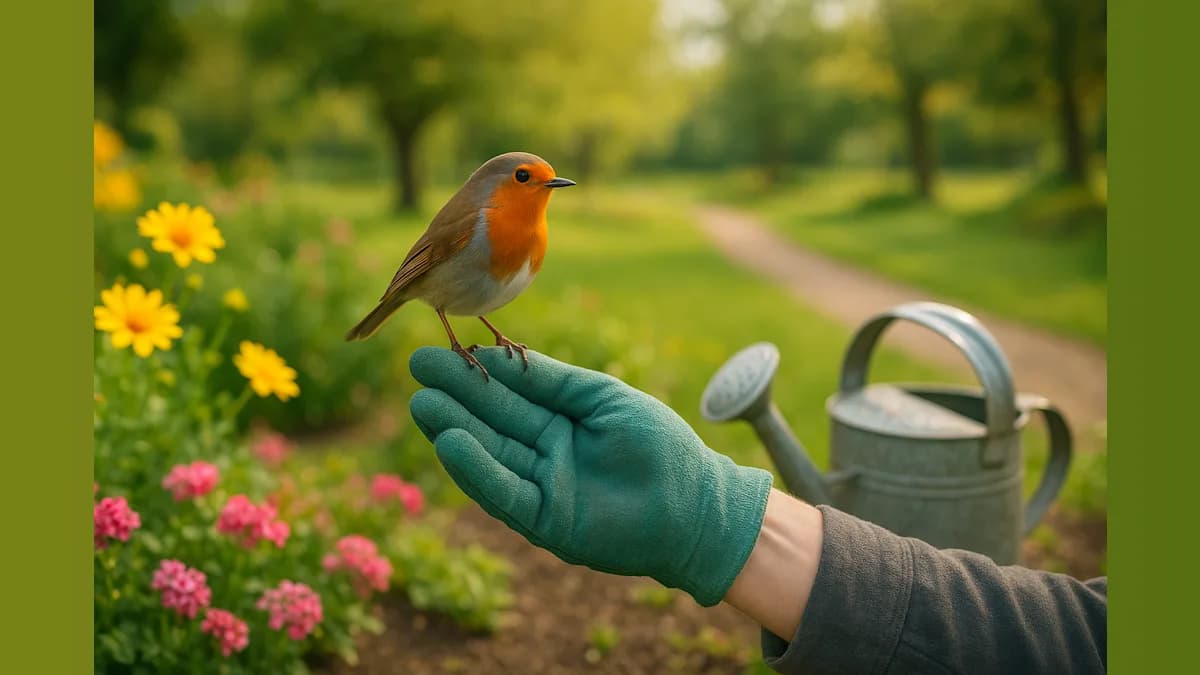
A routine morning of tending to flowers transformed into an unforgettable wildlife encounter for a Somerset park ranger when a brilliantly colored kingfisher chose her hand as a perch—and stayed for ten minutes.
Laura O'Brien, a 24-year-old park maintenance ranger employed by the Frome Town Council, was watering flowers when a flash of blue streaked toward her. The bird, a Eurasian Kingfisher—also called the common or river kingfisher—approached within meters of where she stood.
The timing of the encounter struck O'Brien as particularly meaningful. "I had just asked for a sign, then just moments later this happened," O'Brien told SWNS news.
Concerned the bird might be injured as it darted around, O'Brien extended her gloved hand. The kingfisher immediately hopped onto her finger and settled there, allowing her to continue her watering duties with an unexpected companion.
The encounter proved especially remarkable given the species' reputation for shyness. Eurasian Kingfishers typically avoid close human contact, often appearing as nothing more than a fleeting blue blur near waterways. O'Brien described herself as "amazed" by the bird's willingness to remain so close.
"It was such a magical moment that I will never forget. I felt like Snow White!" O'Brien told SWNS news.
The proximity allowed O'Brien to observe details rarely visible to casual observers. She noted the bird's bright orange chest and described the experience as a treat compared to the typical glimpse of blue most people see when kingfishers pass by.
After ten minutes, the kingfisher flew back toward the river from which it had emerged. When O'Brien shared the story with fellow rangers, they expressed envy at the rare interaction.
O'Brien captured video footage of the encounter, documenting the bird perched calmly on her hand. She indicated she might return to the river to see whether the kingfisher recognizes her during future visits.
The Eurasian Kingfisher inhabits rivers and streams throughout Europe and Asia, feeding primarily on small fish and aquatic insects. Their vibrant blue and orange plumage makes them among the most visually striking birds in Britain, though sightings remain relatively uncommon due to their cautious nature and specific habitat requirements.