
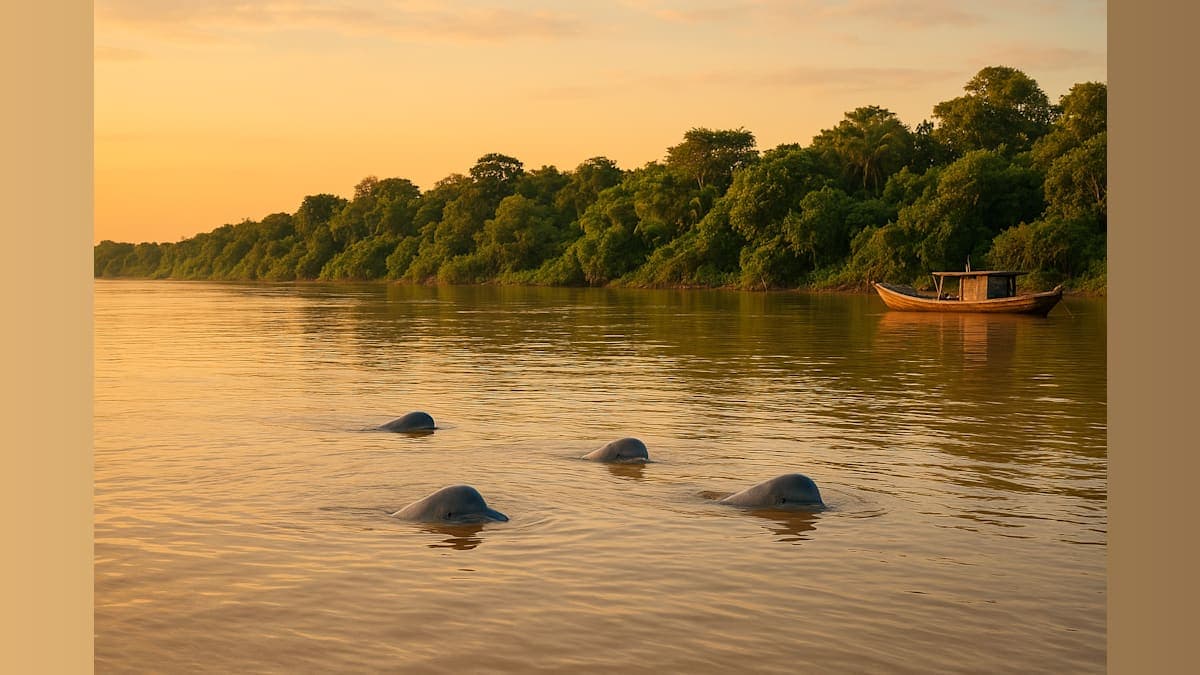
Cambodia's population of Irrawaddy dolphins (Orcaella brevirostris) has increased to 118 individuals following a productive breeding season that yielded six calves, according to conservationists monitoring the species along a 75-mile stretch of the Mekong River in the country's northeast.
The Irrawaddy dolphin is classified among the world's most endangered species, with modern civilization having fragmented its populations into isolated groups across several countries. Some populations continue to face hunting, while others are killed as bycatch in fishing operations. However, the animals are increasingly recognized as valuable ecotourism attractions.
In Laos and Cambodia, local communities hold deep cultural and religious reverence for the dolphins. Both folk tradition and Buddhist belief hold that the Irrawaddy dolphins are reincarnations of ancestors. Some villagers maintain that the dolphins have rescued drowning people and shielded them from crocodile attacks. These convictions have fostered peaceful coexistence between the communities and the dolphins for generations, and the Cambodian population remains the world's largest river-dwelling group of the species.
Local conservationists view the arrival of the six calves as evidence that the cetacean can recover when environmental pressures are reduced. The most significant threat is gillnet fishing, which poses particular danger to calves that may not yet recognize the hazards of boats and fishing activity. Mongabay reported that such fishing continues within protected areas, though apparently on a limited scale.
The Mekong, Southeast Asia's largest river, hosts approximately 160 dams that have modified the river's ecology in regions inhabited by the Irrawaddy dolphins. Despite these alterations, the recent calving season suggests that food sources remain adequate to support population growth.
Since 2014, the Cambodia chapter of World Wildlife Fund has operated a joint initiative aimed at strengthening Mekong dolphin conservation. The program works to diversify community livelihoods, reducing reliance on fishing as a primary income source.
A pioneering study of conservation methods recently determined that community support and local attitudes are the most influential factors in helping a species recover from endangered status. The Irrawaddy dolphin appears well-positioned in this regard, given the reverential local attitudes toward the animal and residents' willingness to confront illegal fishing operations in protected zones, even at personal risk.