The trade conflict between the United States and Canada has created measurable economic consequences for communities along Michigan's northern border, where cross-border commerce has long sustained local businesses and tourism.
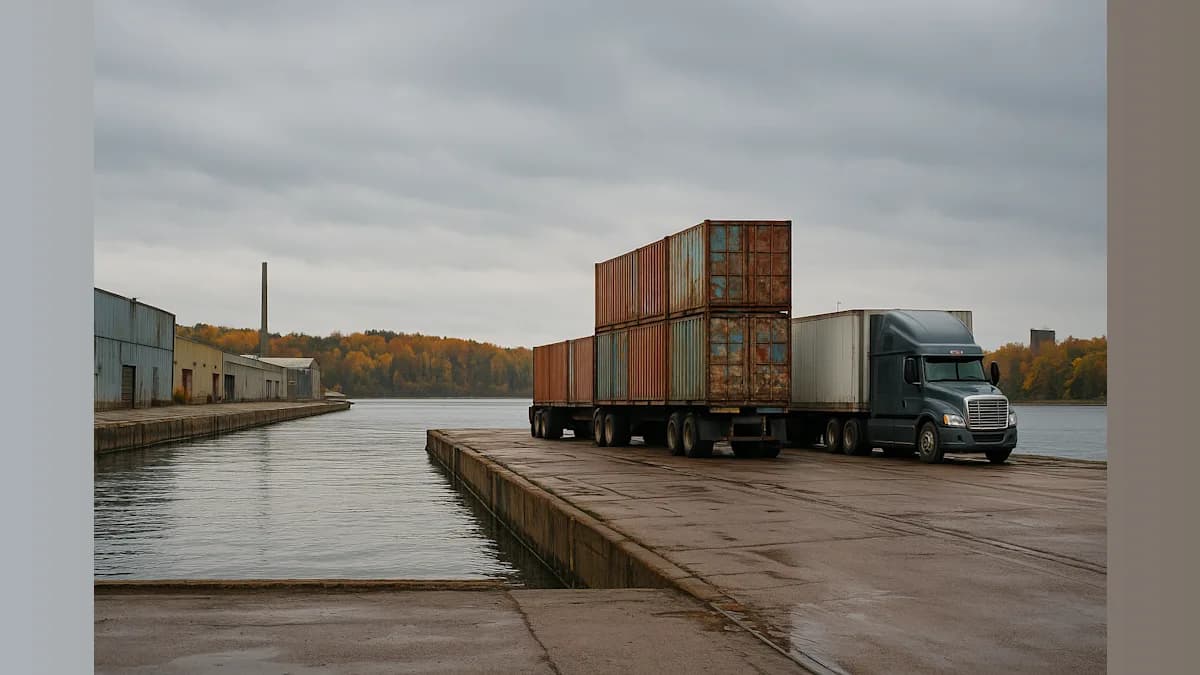
President Trump's decision to impose a 50% tariff on nearly $20 billion in Canadian goods has reduced traffic across the International Bridge connecting Sault Ste. Marie, Michigan, to its sister city in Ontario. Commercial and passenger crossings have declined by approximately 25% since the start of Trump's second term, according to bridge administration data.
The International Bridge Administration, utilizing per-trip estimates from the Canadian government, calculates that businesses on the Michigan side are losing $62.7 million in revenue due to decreased border traffic.
Tony Haller, executive director of the Sault Area Chamber of Commerce, acknowledged the strain on local commerce. "Speaking from Sault Michigan's point of view, you know we're pretty solid all year round, but because of the bridge traffic being down, I know our businesses aren't quite as busy as they should be, and so we're hoping that when this all gets settled, that we'll go back to some sort of normalcy," Haller told NPR.
The federal government reports that over one-third of all Michigan exports are destined for Canada, totaling more than $21 billion last year. This dependency makes the state particularly vulnerable to trade disruptions.
In Newberry, a former logging town approximately 60 miles west of the Canadian border, business owner Ben Rahilly operates an appliance store, gift shop, furniture store, and concrete business. The village's primary employers are a prison, a hospital, and a wood siding mill, serving a county population of around 5,300 residents.
Rahilly described mounting financial pressures on his operations. "Prices are going up. Our shipping charges are getting more and more every day. The cost of just goods is going up, so it's making it tougher on our profit margins," he told NPR. "Trying to keep it small town, small prices … so people can afford to keep shopping with us."
The Upper Peninsula, known regionally as the UP, faces inherent logistical challenges that compound tariff-related costs. The region is accessible only by two bridges and a land border with Wisconsin, resulting in elevated shipping and transportation expenses during a period of record-high diesel fuel prices.
Residents must travel 100 miles west to Marquette, the largest town in the UP, to access major retail chains that compete with local merchants.
Rahilly, who identifies as conservative, expressed frustration with the administration's approach. "You got, right now, our president in a pissing match with Canada. Well, we do a lot of business with Canada, surprising enough," he told NPR. He added that while he voted for Trump, he does not agree with all presidential decisions. "Yes, we need goods made in America, but we don't have a workforce either, so we're not going to get it. So we have to bring in some stuff. We just have to be able to work with them countries."
The political implications extend beyond local commerce. Michigan is home to a competitive United States Senate race, though the Upper Peninsula has consistently supported Republican candidates in recent elections. The last Democrat to represent the UP in Congress was Bart Stupak, who left office in 2011.
Visitors to the region are also weighing the trade dispute's impact. Todd Campbell, who owns a trucking company near Knoxville, Tennessee, was visiting the Soo Locks with his wife Debbie when he shared his perspective. "I'm not real happy about that. I'm a more conservative person, but I'm not happy with the way that's going to be honest with you," Campbell told NPR.
Despite his concerns about tariffs, Campbell stated he would not vote for Democratic candidates, saying he believes the party has been "hijacked" by the far left on issues including abortion rights.
Homer Coleman, an Independent voter and trucker from Metro Detroit vacationing in the UP, questioned the wisdom of the trade conflict. "I mean, Canada and the United States are sort of like I would say brothers, you know," Coleman told NPR. "He [Trump] seemed like he wants to pick a fight with everybody, and he shouldn't be picking a fight with Canada of all people."
Don Laban, a retired engineer from Muskegon who describes himself as a middle-of-the-road voter, offered a contrasting view. He praised the president for addressing trade imbalances with Canada and criticized Democrats for lacking substantive policy proposals. "What did the Democrats have to offer me, other than Orange Man bad? That's all they could say last time. You know, don't tell me who not to vote for. Tell me why I should vote for you," Laban told NPR.
Canada is scheduled to impose counter tariffs on the United States later this month, potentially escalating the economic impact on border communities.
Haller noted a prevailing sense of frustration in both Sault Ste. Marie communities. "Yeah, I think there's certainly a sense of frustration between both communities," he told NPR, while characterizing the local economy as stable but never reaching extreme highs or lows.