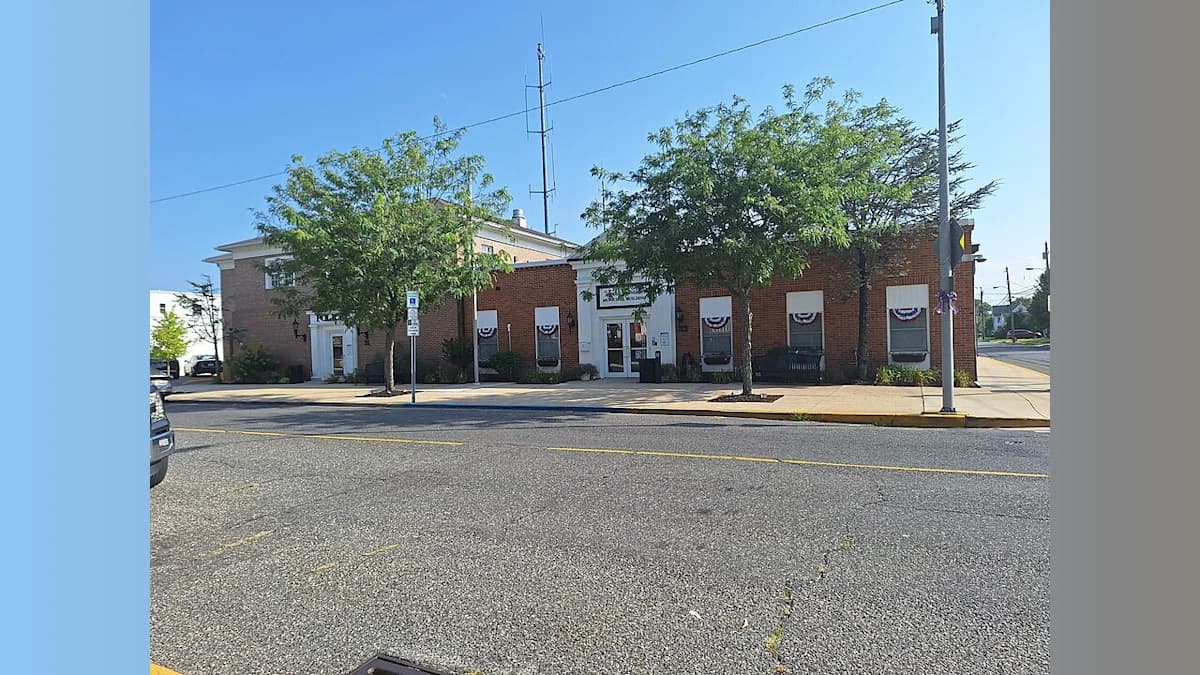
WHITESBORO, N.J. — A Middle Township woman's fight to keep 2.4 acres of land targeted for a major housing development is continuing after mediation failed to produce an agreement, while a recent New Jersey Supreme Court decision is raising new questions about the use of eminent domain to acquire private property.
Dawn Robinson has been fighting Middle Township's effort to acquire property she owns in Whitesboro as part of the Indian Trail Redevelopment project, a planned housing development involving NVR Inc., the parent company of Ryan Homes.
Robinson and the township recently participated in mediation in an effort to resolve the dispute, but no agreement was reached, according to WHYY News. Township attorney James Maley Jr. told the news organization that discussions nevertheless remain ongoing.
“We're still in discussions,” Maley told WHYY. “I've spoken to her attorney and the mediator, even though we're not in the same room, we're still having discussions.”
If the two sides cannot reach an agreement, the condemnation case could return to Cape May County Superior Court, where a judge would ultimately determine whether Middle Township has the authority to acquire Robinson's property through eminent domain.
Robinson has maintained that she does not want a larger financial settlement. She wants to keep the land.
“I just want to keep my land, I'm hoping I can walk away and I get to keep my land,” Robinson told WHYY. “The township can use the other, whatever hundred acres they have, to do whatever they need to do and not include mine.”
Township Records Show Ryan Homes Agreement
Middle Township records reviewed independently by South Jersey NewsBeat provide additional details about the redevelopment plan and the township's relationship with the private developer.
Minutes from an October 2024 Township Committee meeting show the township authorized a letter of intent with NVR Inc., also known as Ryan Homes, involving approximately 101.44 acres within the Indian Trail Redevelopment Area.
According to the township resolution, Middle Township and other property owners had been negotiating with NVR and determined that entering into the letter of intent was in the township's best interest.
The resolution authorized further discussions involving the sale of the approximately 101-acre area to NVR for redevelopment.
The documents are significant because Robinson has questioned why the township should be permitted to take her privately owned property when the land is ultimately part of a redevelopment involving a private homebuilder.
Middle Township officials, however, argue the project serves important public purposes.
Mayor Christopher Leusner has described the proposed 340-home development as a transformative project that would provide needed housing, help Middle Township meet its affordable-housing obligations, generate millions of dollars in new revenue and turn long-vacant and fragmented properties into a residential community.
Township Previously Discussed Eminent Domain
South Jersey NewsBeat also reviewed minutes from a December 2024 Township Committee meeting showing Robinson was already publicly questioning officials about the Indian Trail project and property values.
At that meeting, Maley discussed the potential use of eminent domain if needed.
At the time, township officials stressed that eminent domain was not then being used against properties containing homes.
The dispute later moved to Superior Court.
During a May court appearance, Robinson argued that the development could proceed without her property.
“They could build around me,” Robinson said, according to WHYY's earlier coverage of the proceeding. “I would like to keep my land, I would love to keep my land and develop it myself. I bought this land from the township. They didn't tell me there was an expiration on it.”
Robinson said she purchased the property from Middle Township in 2003 for approximately $40,000.
She said the township later offered her $47,000 for the property.
During a July court proceeding, the possibility emerged that a settlement might involve property rather than simply additional money. Maley indicated that other lots outside the proposed development potentially could be considered as part of an exchange.
Robinson subsequently agreed to mediation, but that process has not resulted in a settlement.
New Supreme Court Decision Enters Debate
Robinson's case is unfolding against the backdrop of a significant new ruling from the New Jersey Supreme Court involving the limits of eminent domain.
On July 20, the court unanimously ruled against Jackson Township in Township of Jackson v. Getzel Bee LLC.
In that case, Jackson Township condemned privately owned parcels with plans to transfer them to a private developer. In return, the developer was to give other property to the township that would be preserved as open space.
The Supreme Court concluded that New Jersey law did not permit the township to condemn someone's land solely to exchange it for another property that would then be devoted to public use.
Chief Justice Stuart Rabner, writing for the unanimous court, emphasized that government possesses eminent-domain authority to take private property for a public use but cannot take private property simply for a private use.
The court found that the parcels Jackson actually condemned were going to the developer without restrictions requiring them to serve a public purpose.
The Supreme Court ruling does not automatically determine the outcome of Robinson's case. Middle Township's redevelopment project involves different facts and potentially different legal authority, and New Jersey law allows municipalities to exercise significant powers in properly designated redevelopment areas.
But Robinson believes the ruling strengthens her argument that Middle Township should not be able to take her land as part of a project involving a private developer.
“Eminent domain is supposed to be for public use,” Robinson told WHYY. “Everyone knows that is not happening in this case.”
Whether a court agrees remains unresolved.
The Jackson decision could nevertheless become an important issue if Robinson's case returns to Superior Court and Middle Township proceeds with its effort to condemn the property.
For now, the two sides apparently still have an opportunity to reach an agreement.
If they cannot, the next major chapter in the dispute could come in a Cape May County courtroom, where the central question will be one Robinson has been asking for months: Can Middle Township legally take her property even though she doesn't want to sell it?

About the Author
Karen Johnson
With over 30 years of news experience in major markets like Los Angeles, Denver, and Columbus, Karen now covers our area for South Jersey NewsBeat. She also brings her articulate and conversational news delivery to WOND radio listeners every weekday. Her background includes work with the NBC Radio Network, and she thrives in fast-paced news environments.