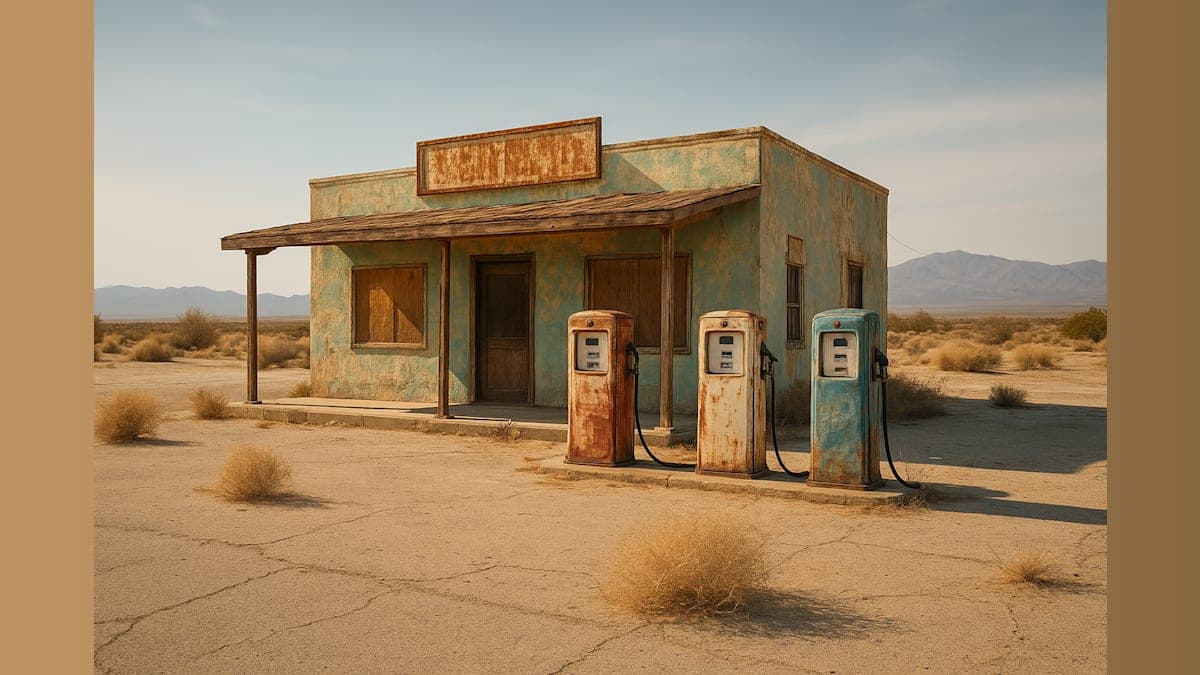
Primm, Nevada, once a bustling gateway to gambling and entertainment on the California-Nevada border, has deteriorated into what residents now describe as a ghost town. The community that thrived for decades on Interstate 15 traffic between Southern California and Las Vegas faces an uncertain future as its founding family launches an ambitious rescue operation.
The dramatic decline of this border community illustrates the broader challenges facing destination gambling towns across America. Where travelers once flooded into Primm for affordable accommodations, casino gaming, rodeos, boxing matches, and concerts featuring performers like Aretha Franklin, the town now echoes primarily with the sounds of cawing crows and highway traffic.
Gaming historian David Schwartz of the University of Nevada, Las Vegas attributes the town's struggles to fundamental shifts in the gambling landscape. The proliferation of tribal casinos in Southern California during recent decades fundamentally altered travel patterns for gamblers who previously made Primm their first stop across the Nevada border.
"A lot more convenience. Instead of having to drive all the way to Primm, you could just drive a much shorter distance right up the road," Schwartz told NPR, explaining how closer gambling options eliminated the need for the longer journey to Nevada.
During its peak years in the 1990s and 2000s, Primm offered a comprehensive entertainment destination. The town featured three casino-hotels, a roller coaster known as the Desperado, a monorail system connecting properties, and a log flume ride designed to attract families alongside traditional gamblers. The Prizm Outlets, formerly known as the Fashion Outlets of Las Vegas, ranked among the top outlet shopping destinations in the nation with stores including Coach and Michael Kors.
"That was a time of big dreams," Schwartz told NPR. "And when Vegas itself was thriving so much and just expanding and exploding, why not? Because it seemed like this would last forever."
The optimism proved unfounded. Two of the three hotels, Buffalo Bill's and Whiskey Pete's, have closed in recent years. The roller coaster and monorail sit frozen on their tracks. The outlet mall now houses only a single tenant: a thrift store called Sanithrift. Artists have transformed empty storefronts into canvases for murals, a creative response to commercial abandonment.
The situation reached a critical point several months ago when Affinity Interactive, the company operating the remaining casino-hotels in Primm, announced plans to close the third and final property, the Primm Valley Resort & Casino. The closure would have eliminated hundreds of jobs and effectively ended Primm as a functioning community.
That announcement prompted the Primm family, which retains ownership of the land underlying the town, to intervene. The family has partnered with Terrible's, a Nevada-based convenience store chain, in an effort to prevent complete abandonment of the community bearing their name.
Cory Clemetson, grandson of town namesake Ernie Primm, frames the challenge in ambitious terms. "We've got to make one of the greatest comebacks in Nevada history," Clemetson told NPR. "If you can turn a ghost town into greatness again, there's not anything you can't do. And so why not go for the challenge, why not us?"
The rescue effort may draw inspiration from Las Vegas itself, which continues to attract near-record tourism numbers despite the nationwide expansion of casino gambling. Las Vegas has maintained its appeal through continuous reinvention and massive capital investments in distinctive attractions.
"What Vegas did differently was they invested a lot of money in buildings, things like the Venetian, like Mirage, like Sphere, sports teams coming here now, Allegiant Stadium, T-Mobile Arena," Schwartz told NPR. "All that stuff gives people a reason to come to Vegas instead of going to a casino closer to where they live."
Whether Primm can replicate that model on a smaller scale remains uncertain. The town lacks the resources and scale of Las Vegas, and the fundamental challenge of competing with conveniently located tribal casinos persists. The partnership between the Primm family and Terrible's represents a final effort to preserve a community that once symbolized the promise of Nevada gaming but now stands as a cautionary tale of changing economic realities.
The outcome will determine whether hundreds of workers retain their employment and whether a town can survive when its original economic purpose has been rendered obsolete by competition and shifting consumer preferences.