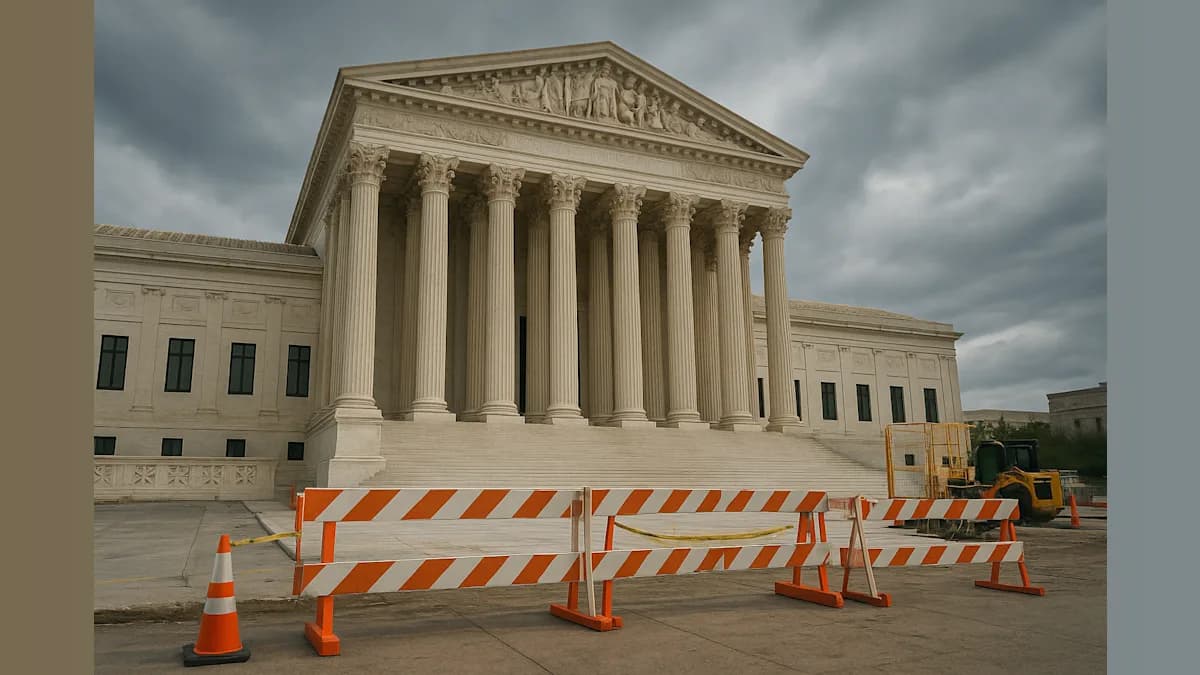
A divided Supreme Court ruling issued Monday allowing construction of a White House ballroom to continue has raised concerns among constitutional scholars about the balance of power between the executive and legislative branches of government.
Georgetown Law professor Stephen Vladeck warned that the decision carries significance beyond the immediate construction dispute, potentially establishing a precedent that could limit congressional authority over federal spending.
"I think, unfortunately, it sets a bigger precedent," Vladeck told NPR's Morning Edition. The professor noted that the Trump administration has made repeated attempts to spend money that Congress has not appropriated, while the Supreme Court has simultaneously erected barriers making it more difficult to challenge such spending in court.
The case centered on a challenge brought by the National Trust for Historic Preservation against the ballroom construction project. The Supreme Court majority determined that the organization lacked standing to sue because it had not demonstrated a concrete injury resulting from the construction.
According to Vladeck, the constitutional implications are substantial. The separation of powers functions as a reciprocal system, he explained. When presidents spend funds that Congress has not authorized, they do more than expand executive authority—they diminish one of the legislature's fundamental constitutional powers.
Vladeck indicated that the court's reasoning, rather than the outcome itself, proved most surprising. The ruling establishes obstacles for plaintiffs attempting to base legal challenges on aesthetic injuries, despite the Supreme Court having recognized such claims in a 1992 opinion authored by Justice Antonin Scalia.
The professor characterized the dispute as fundamentally an appropriations conflict that only Congress possesses the authority to litigate. Given that the current Congress has shown no inclination to challenge the administration regarding its spending authority, such disputes may only reach the courts during periods when different political parties control the White House and Capitol Hill.
Construction crews are currently working 20 hours per day, seven days per week on the ballroom project, according to the administration.
Vladeck identified what he views as a systemic problem in how the Supreme Court handles emergency cases. Although the justices characterize such rulings as temporary measures, these decisions can determine outcomes on the ground before the underlying legal questions receive full consideration and resolution.
The ruling represents the latest development in ongoing tensions between the executive and legislative branches over spending authority, with potential ramifications for how future administrations may exercise financial discretion without explicit congressional approval.