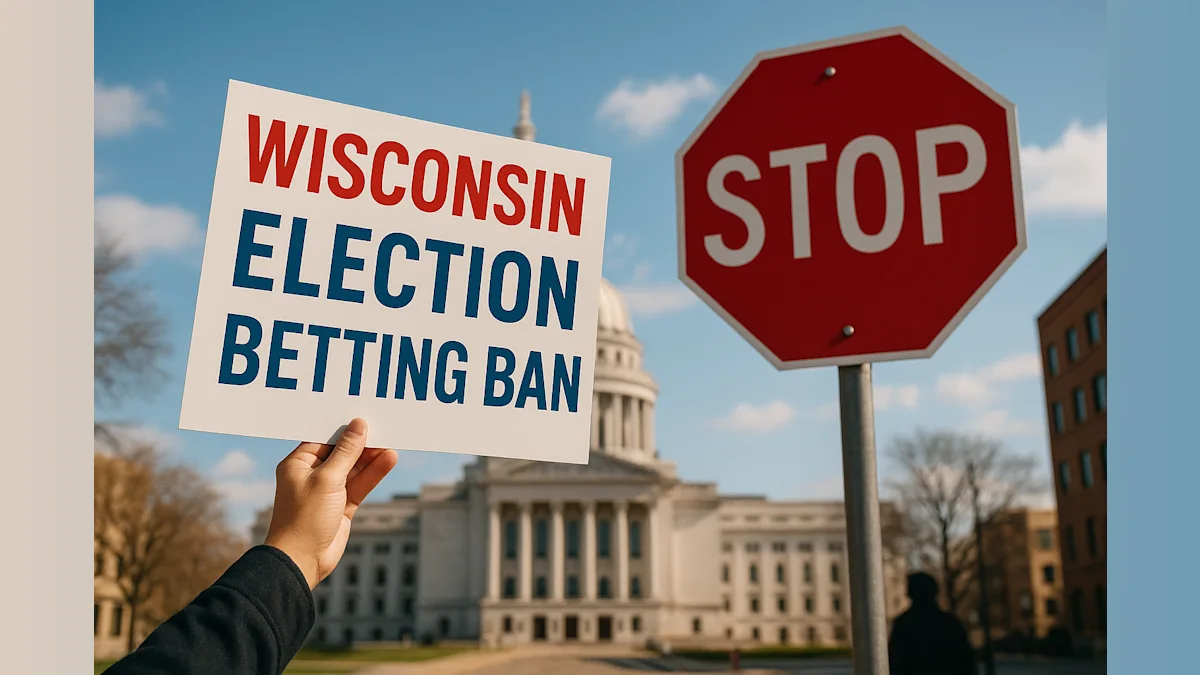
Wisconsin election officials found themselves at the center of a social media firestorm after reminding voters that state law prohibits betting on elections in which they participate — a statute that has been on the books since 1849.
The Wisconsin Elections Commission issued an advisory warning that placing wagers on races where voters cast ballots could disqualify those ballots or trigger referrals to state prosecutors. The guidance prompted fierce backlash from Kalshi, a prediction market company that has characterized the law as voter suppression and illegal.
Ann Jacobs, a commissioner with the Wisconsin Elections Commission, described the unexpected reaction to what she considered routine election guidance. The commission's statement simply reiterated existing law, she noted, placing betting restrictions in the same category as prohibitions on voting by felons under active supervision or minors.
"We want people voting for the person they think will do the best job at the position they are being elected to. We don't want people voting for someone who isn't the best person for the job simply because it is going to line a voter's pocket," Jacobs told NPR.
The controversy highlights the growing tension between the booming prediction market industry and state regulators. Wisconsin is among nearly half of all states engaged in legal battles with Kalshi over regulatory authority. States argue these platforms function as gambling operations subject to state gaming laws, while Kalshi and the Trump administration contend the federal government should oversee prediction markets as financial instruments.
Despite ongoing litigation, billions of dollars trade weekly on prediction market sites Kalshi and Polymarket. Major sporting events have generated tens of billions of dollars in wagers, and companies anticipate the midterm elections will drive similar volume.
That expectation collides with legal reality in much of the country. According to the National Conference of State Legislatures, election betting remains illegal in some or all circumstances in 32 states.
Election integrity experts have raised multiple concerns about allowing wagers on democratic contests. Matt Barreto, director of the UCLA Voting Rights Project, argued that financial incentives have no place in electoral participation.
"There should be absolutely no money involved in the outcome of our democracy. We should be voting on candidates for their positions and policies to represent us, not because we can make a buck," Barreto told NPR.
Potential threats include foreign actors or partisan groups manipulating prediction markets to create false impressions of candidate popularity and influence turnout. Insider trading has already plagued the industry, with individuals ranging from President Trump's teleprompter operator to a special forces soldier facing accusations of trading on confidential information. Kalshi has acknowledged blocking dozens of political campaign staffers who attempted to bet on their own candidates since May.
Barreto outlined a scenario where a poll worker with financial stakes in an election outcome might deliberately slow vote counts or conduct intentional undercounts to influence results and secure profits. He compared such potential misconduct to the 1989 scandal that saw baseball legend Pete Rose banned from the sport for betting.
Charles Stewart, who runs MIT's Election Data and Science Lab, acknowledged that most states maintain vote-counting safeguards against such manipulation. However, he warned that the mere possibility could fuel conspiracy theories in an already polarized political environment.
"If you are looking for a reason to be skeptical about election results, election officials trying to manipulate them for financial gain becomes another straw to grasp at," Stewart told NPR. "However, these people don't need prediction markets to concoct some conspiracy theory to explain away why their candidate lost."
Kalshi has defended its operations by claiming election betting engages citizens who might otherwise ignore politics. The company frames state restrictions as voter suppression, arguing that some individuals motivated to wager on races might also be inspired to vote when they would have otherwise stayed home.
Barreto rejected that rationale, noting that Kalshi does not fund voter mobilization efforts despite its professed concern about suppression. The company recently launched a midterm election dashboard enabling traders to monitor and place money on dozens of races simultaneously.
For Jacobs and the Wisconsin Elections Commission, the advisory represented straightforward communication about existing law ahead of the midterms. The social media backlash from a multi-billion-dollar company targeting a statute older than the Civil War struck her as disproportionate to what she characterized as responsible government work.
Kalshi declined to comment for this story.