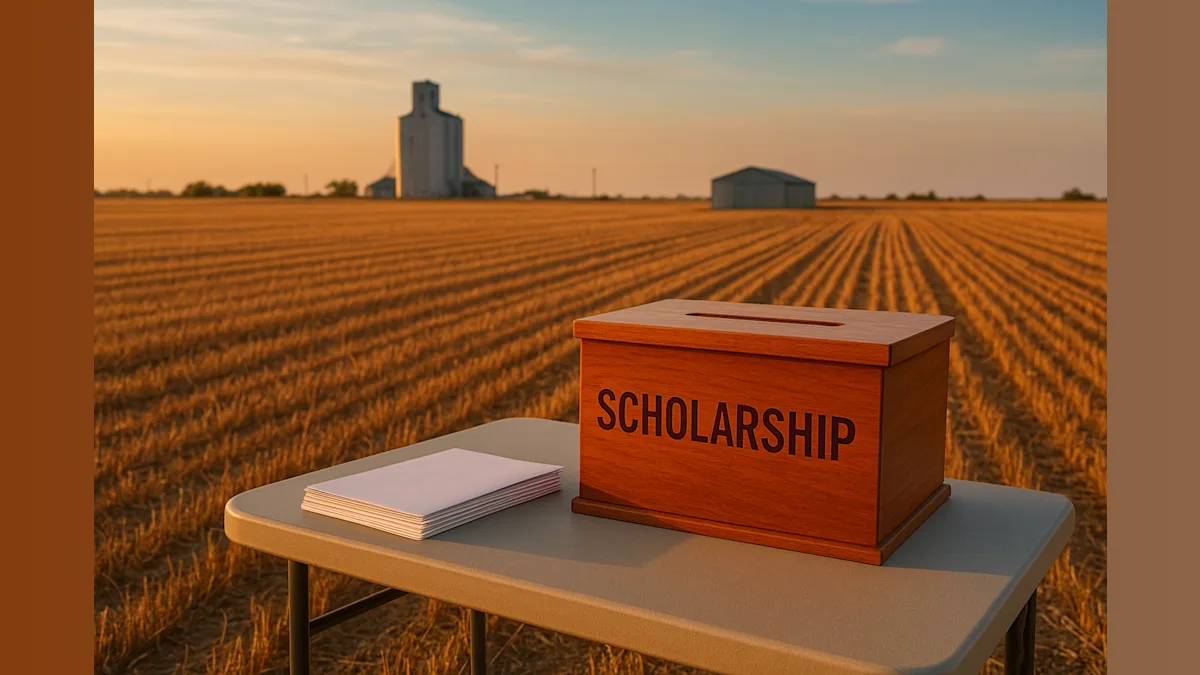
GRUVER, Texas — In the Texas panhandle, a farming community has turned an unexpected inheritance into one of the most unusual scholarship engines in the country. Nearly 1,000 residents of Gruver work 640 acres of land they do not own — the Gruver school district's farmland — without pay, raising roughly $400,000 each year to send local teenagers to college. Over 15 years, the effort has distributed $3 million in scholarships to hundreds of high schoolers.
The story begins in 1984, when the longtime owner of the 640 acres left the property to the Gruver school district rather than to family, friends, or a trust. For years, the district leased the land to generate income for classroom needs such as chemistry beakers and textbooks. About 15 years ago, school board members decided to substantially increase what the land could produce.
The plan required an extraordinary bet on community spirit: some 1,000 local agriculturalists would cultivate the land for free, and the crop would be sold to fund scholarships. Residents plant one crop of spring corn and one of winter wheat. Students are briefed from the earliest grades that excelling in school, volunteering, and extracurricular activities earns them a larger share of the crop profits to pay for college.
Local farmer Derik Grotegut described the community's approach to the land, telling the Washington Post, "We just treat it like it's ours—like it's another one of our farms."
Troy Seagler, Gruver High School's former principal who helped devise the idea, told the Post, "It is unbelievable, the fact that the community will be willing to do this."
The results have been swift. According to the Post, the first decade of the program saw 48 children become the first in their families to attend university, with each annual harvest yielding around $400,000. A Gruver-based feed yard purchases the crop at a premium specifically to enlarge the scholarship fund.
Fifteen years in, the effects are circling back to town. Gruver graduates are returning with their degrees, opening businesses, and taking positions that match their new skills. Many scholarship recipients ultimately return as farmers, continuing the tradition for the next generation.