New housing and private investment support Evan Sanchez’s optimism, but falling casino profits, employment pressures and unfinished megaprojects show significant challenges remain
ATLANTIC CITY — After more than a decade of casino closures, job losses, redevelopment promises and attempts to reinvent its economy, Atlantic City may be approaching another turning point.
At least that's what Atlantic City Community Fund President Evan Sanchez believes.
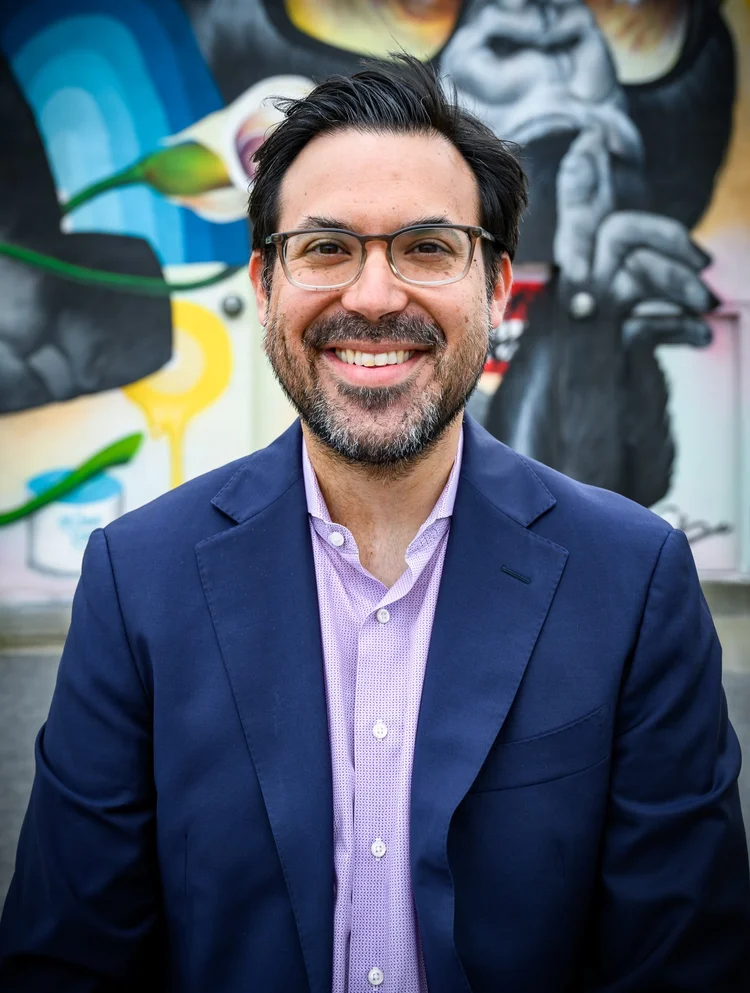
“I think we're at that next tipping point,” Sanchez said during an appearance on The AC Mike Lopez Show on WOND.
Sanchez has a useful perspective on the city's trajectory. He returned to Atlantic City in 2015, when the resort was still reeling from a wave of casino closures and thousands of lost jobs.
“I moved back to Atlantic City in 2015 and there was a bottoming happening then with casinos closing and massive layoffs, like just scaled layoffs, 10,000-plus kind of layoffs,” Sanchez said.
Since then, he said, Atlantic City has undergone a “slow and steady rebuilding,” interrupted by the COVID-19 pandemic.
Now Sanchez believes something different is happening.
“I'm as bullish as I've ever been after over a decade being back in Atlantic City and investing in Atlantic City and supporting a lot of different causes,” he said.
But do the numbers — and the construction cranes — support that optimism?
The answer is complicated.
There are tangible signs of a residential building boom and renewed private investment. At the same time, Atlantic City's traditional casino economy is facing profitability pressures, regional employment numbers remain concerning and some of the city's most ambitious redevelopment proposals remain just that — proposals.
Housing may be the strongest evidence
Perhaps the most visible argument supporting Sanchez's optimism can be found in Atlantic City's neighborhoods.
Developers are building market-rate housing in areas that went years without significant new residential construction.
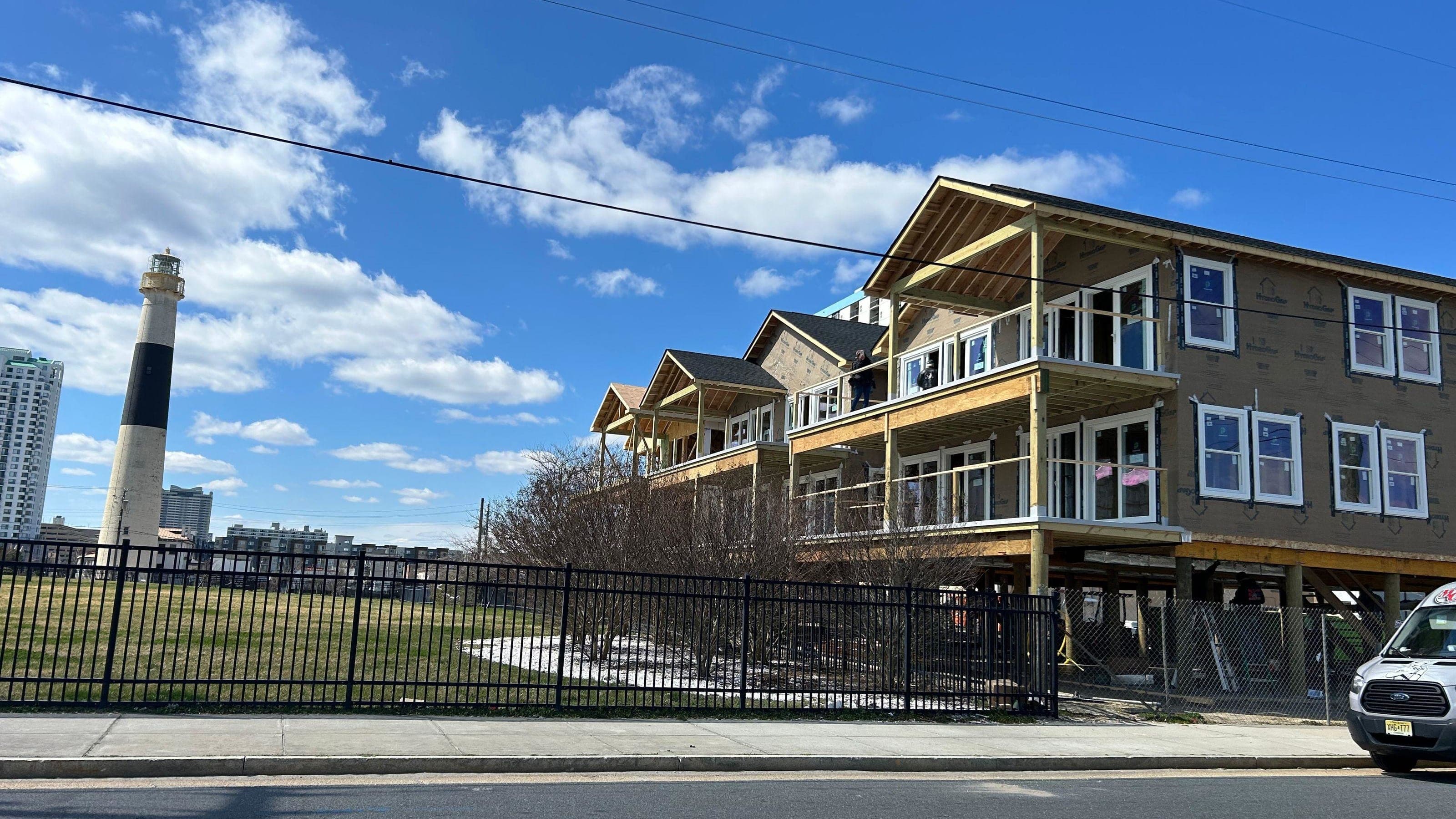
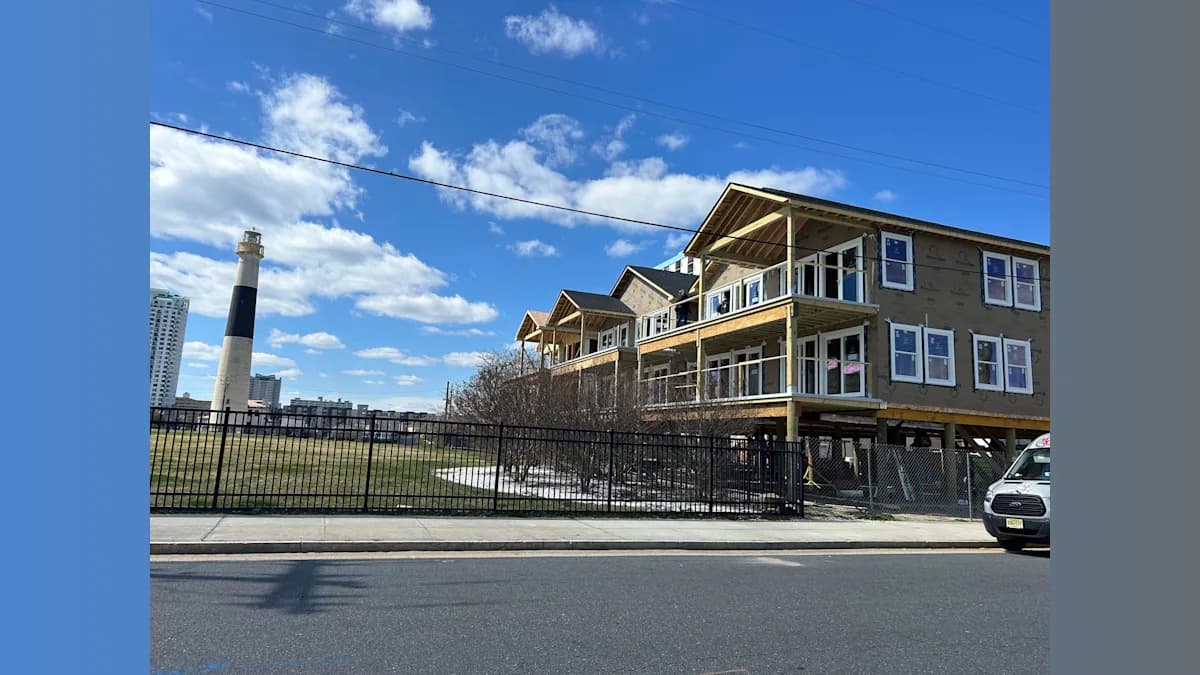
Developer Keith Groff recently told South Jersey NewsBeat that construction on the second phase of Lighthouse Row in the Inlet represents something fundamentally different from replacing an occasional house.

“This is an entire city block being built from nothing,” Groff said. “It's a massive change to the neighborhood.”
Groff said the effect extends beyond the buildings themselves.
“The energy of the neighborhood, the vibe, the safety feel with people walking around, people out on balconies and decks all the time from nothing — it's a massive shift,” he said.
Seven of the eight homes in Lighthouse Row's first phase sold, with Groff retaining the other property. A second phase of seven homes is under construction.
And Groff is no longer alone.
National homebuilder K. Hovnanian Homes broke ground last month on the Terraces at Absecon Inlet, a 38-townhome waterfront development at Pacific and New Hampshire avenues.
The company's return to Atlantic City after years away is significant.
“After many years away from Atlantic City it feels great to say we're back,” K. Hovnanian Division President Nikki Mallozzi said at the groundbreaking.
Mallozzi said the company is seeing “new residential development, continued investment, new energy throughout the city.”
The first homes could be ready by summer 2027.
‘It's no longer speculation’
Developer Bart Blatstein, whose Atlantic City holdings include Showboat, recently made an even stronger case during an interview on Off The Press with Scott Cronick on WOND.
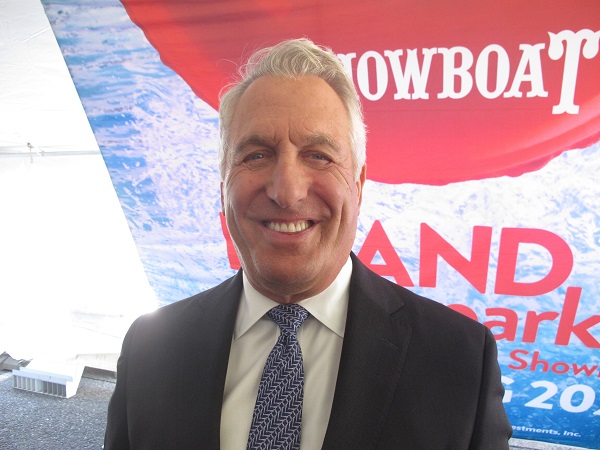
“It's really, really happening,” Blatstein said of Atlantic City's housing growth. “It's no longer speculation. It's here and now.”
Blatstein specifically cited K. Hovnanian's groundbreaking as evidence.
“K. Hov has broken ground,” he said. “It's really, really happening.”
That distinction matters in Atlantic City, where ambitious redevelopment plans have historically been plentiful but completed projects have sometimes been much harder to find.
Groff similarly told South Jersey NewsBeat that the arrival of national builders gives the current housing movement additional credibility.
“When K. Hov comes in and Ryan Homes — which are national builders, publicly traded on the stock exchange — that adds a lot of validity,” Groff said. “It's not just Keith Groff doing his dream. This is people coming in to make money and they know how to market.”
From a place to visit to a place to live
The larger bet behind those projects is that Atlantic City can attract more year-round residents rather than functioning predominantly as a tourism destination.
Approximately 1,000 residential units were in some stage of development in Atlantic City earlier this year, according to reporting by The Philadelphia Inquirer.
The Census Bureau's latest available estimate also offers a modestly encouraging sign. Atlantic City's estimated population was 38,787 on July 1, 2025, compared with a 2020 estimates base of 38,491 — an increase of about 0.8%.
That's hardly a population boom.
But after decades in which population loss was often part of Atlantic City's story, stabilization matters.
Sanchez sees residential development as part of something larger.
“We talk about ground-up construction on the podcast, ground-up construction of community, ground-up construction in the physical world of new buildings, new apartments, all that stuff,” Sanchez said.
Casino economy presents a reality check
Atlantic City's recovery, however, cannot be measured solely by houses going up in the Inlet.
Casinos remain the city's economic engine, and their 2026 financial results provide reason for caution.
Through the first half of the year, Atlantic City's casino hotels generated approximately $1.55 billion in net revenue, up just 0.5% compared with the same period in 2025.
Gross operating profit, however, dropped 14.9%, from approximately $311.9 million to $265.3 million, according to state gaming regulators.
That means casinos were generating roughly the same revenue but keeping considerably less of it as operating profit.
It's one of the reasons state Sen. Vince Polistina recently warned in a South Jersey NewsBeat interview that Atlantic City faces a critical period.
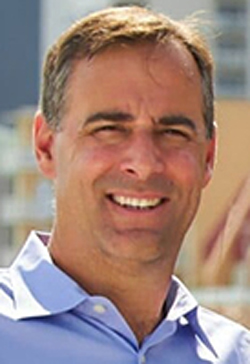
“It is a frightening time right now,” Polistina said. “We really need to get together and get some things done.”
Polistina cited competition from New York, declining casino profitability and the growth of online gambling and prediction markets as threats to the resort's traditional business model.
His conclusion, however, isn't that Atlantic City is doomed.
It's that Atlantic City must become something more than a gambling destination.
“We need it to transform from just a gaming destination, as we needed for a long time, into more of a college town atmosphere, walkable atmosphere,” Polistina said.
That vision overlaps considerably with what Sanchez, Groff and Blatstein are describing.
Jobs remain a warning sign
Employment numbers provide another reason to temper the optimism.
The latest preliminary federal figures for the broader Atlantic City-Hammonton metropolitan area showed unemployment at 5.4%, while total nonfarm employment was down 4.1% from a year earlier.
Leisure and hospitality employment — the sector at the heart of the region's tourism economy — was down 7.8% year over year.
Those numbers don't negate the construction occurring around Atlantic City, but they illustrate why declaring the city's turnaround complete would be premature.
Sanchez himself isn't arguing that everything is fixed.
“I see things relatively clear-eyed,” he said. “But it feels rational to be optimistic.”
Then there is Bader Field
Atlantic City's long history of ambitious redevelopment proposals also provides reason for caution.
Perhaps no current project illustrates that better than Bader Field.
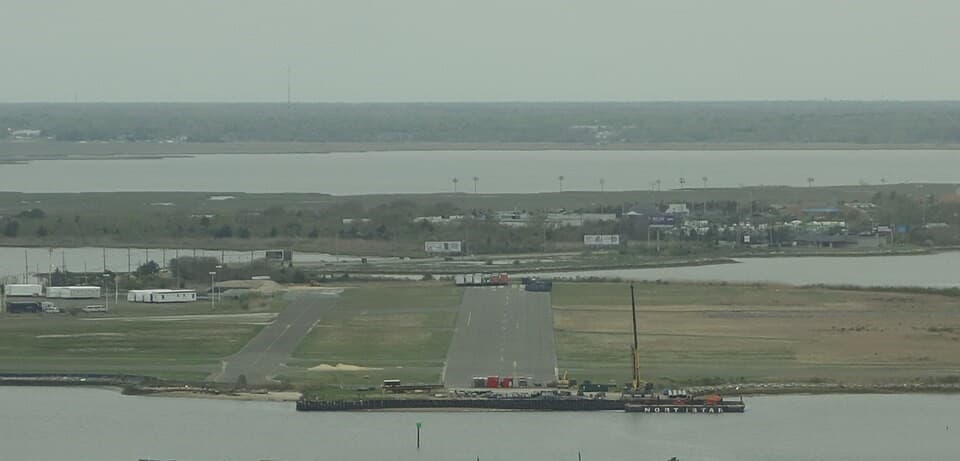
DEEM Enterprises has proposed transforming the former municipal airport into a roughly $3.4 billion residential, commercial and automotive development featuring housing, retail, restaurants, entertainment, a hotel and motorsports components.
When Atlantic City signed a memorandum of understanding with DEEM in March 2023, Mayor Marty Small Sr. described the potential impact in enormous terms.
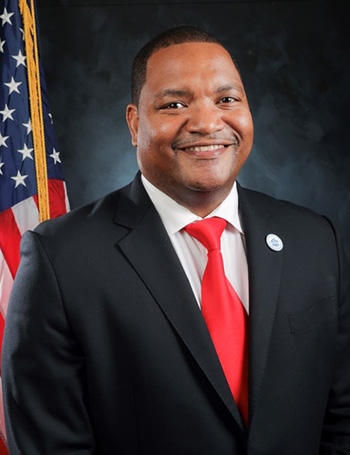
“This project won't just change the landscape of Atlantic City, but it will give our taxpayers relief like never before,” Small said. “The ratable base will nearly double.”
At the time, Small said DEEM had six months to demonstrate what it could deliver.
More than three years later, construction has not begun.
A recent South Jersey NewsBeat review of city and state records found that 20.32 acres of Bader Field remain subject to Green Acres restrictions, and Atlantic City has been working through the state diversion process necessary to potentially convert that property to private development.
The project remains active, and the city continues taking steps related to it. But no final redevelopment agreement has surfaced publicly.
That history illustrates the difference between announced investment and completed development.
It also helps explain why projects such as Lighthouse Row and K. Hovnanian carry particular weight: construction is actually occurring.
Stockton represents another piece of the transformation
Polistina has also pointed to Stockton University's Atlantic City campus as part of the effort to diversify the resort beyond casinos.
“The dedication and the commitment that Stockton has shown to Atlantic City, incredibly important for the city,” Polistina recently told South Jersey NewsBeat.
But even that investment comes with complications.
Stockton is dealing with a roughly $19 million structural deficit, declining enrollment pressures and reduced state support. Polistina said the university's Atlantic City academic building and residential facilities have added costs.
“Those campuses, the academic building and the two dorms cost money,” he said.
Still, Polistina believes those investments are important to Atlantic City's long-term transformation.
Sanchez: Don't forget the community underneath the development
Sanchez adds another dimension to the debate.
As president of the Atlantic City Community Fund, he argues that a city's resurgence cannot be measured solely by construction permits, casinos, apartments or development dollars.
Physical investment has to be accompanied by investment in people and neighborhoods, he said.
“It's really, really important that we don't lose sight of the philanthropic nonprofit community,” Sanchez said. “We cannot move away from these great people doing the work.”
“We've got to accelerate the support.”
The Community Fund supported 40 nonprofit and community organizations in its 2026 grant cycle, Sanchez said, ranging from youth and senior services to arts, beautification and workforce programs.
For Sanchez, that grassroots activity and the cranes appearing over Atlantic City's neighborhoods are parts of the same recovery.
“Our approach is ground up,” he said. “We know the people that are making impact in their community, in the community of Atlantic City, are oftentimes under-resourced, but very deserving.”
A tipping point — or another promising moment?
So is Atlantic City really at a tipping point?
There is more tangible evidence supporting that argument than there has been at many points in the city's recent history.
Homes are being built. National developers are investing. Private market-rate housing is appearing in neighborhoods where little existed before. The city's population has shown signs of stabilization.
But casino profitability is under pressure. Regional employment indicators remain soft. Stockton faces its own financial challenges. And Bader Field demonstrates how much distance can exist between a transformative proposal and an actual transformation.
Sanchez's optimism therefore may be best understood not as a declaration that Atlantic City has arrived, but as an argument that it finally has an opportunity.
“We're at a next tipping point,” Sanchez said. “And so I'm doing everything I can to push through that.”
For Polistina, the stakes extend well beyond the city's borders.
“The region depends on the city,” he said, “and we better get our act together quickly.”
And for Sanchez, after watching Atlantic City climb back from the casino closures of a decade ago, the direction now looks more promising than it has in years.
“I'm as bullish as I've ever been,” he said.
Evan Sanchez made his comments on “The AC Mike Lopez Show” on WOND. Additional comments cited in this story came from previous South Jersey NewsBeat interviews and reporting.

About the Author
Karen Johnson
With over 30 years of news experience in major markets like Los Angeles, Denver, and Columbus, Karen now covers our area for South Jersey NewsBeat. She also brings her articulate and conversational news delivery to WOND radio listeners every weekday. Her background includes work with the NBC Radio Network, and she thrives in fast-paced news environments.