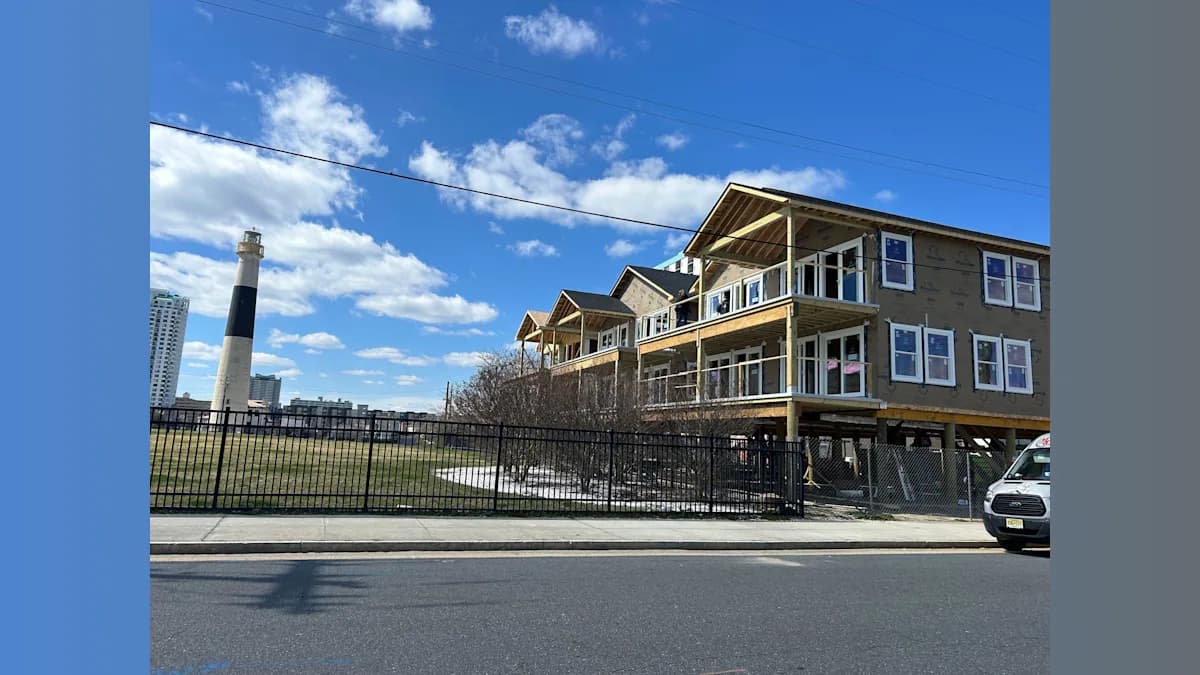
From luxury townhouses in the Inlet to plans for potentially hundreds of homes near the casinos, developers are making a bet on Atlantic City that would have seemed unlikely a decade ago
ATLANTIC CITY — For decades, some of Atlantic City's most valuable undeveloped property came with an assumption attached to it: Maybe someday somebody would build another casino there.
Today, developers are increasingly asking a different question.
Would people want to live there?
Across Atlantic City, new homes are being completed, others are under construction and hundreds more are moving through various stages of planning and approval. Luxury townhouses have sold for more than $800,000. A major national homebuilder has returned to the city. New residences are rising near the Boardwalk, and MGM Resorts has discussed residential development on Marina District property once viewed as potential casino land.
Former Atlantic City Mayor and current Assemblyman Don Guardian believes something fundamental has changed.

Once people saw that new homes could be built in Atlantic City — and buyers were willing to pay substantial prices for them — other developers took notice.
“You can see that there must be 20 projects going on in Atlantic City,” Guardian said Wednesday during an appearance on The Lorry Young Show on WOND.
The numbers are more complicated than that — not every development project underway in Atlantic City is residential — but Guardian's larger point is supported by a growing list of projects that range from completed homes to ambitious proposals still awaiting construction.
And developers who have invested in the city say the current activity feels different from previous redevelopment cycles.
“It’s really, really happening,” developer Bart Blatstein recently told South Jersey NewsBeat. “It’s no longer speculation. It’s here and now.”
Lighthouse Row helps prove the market
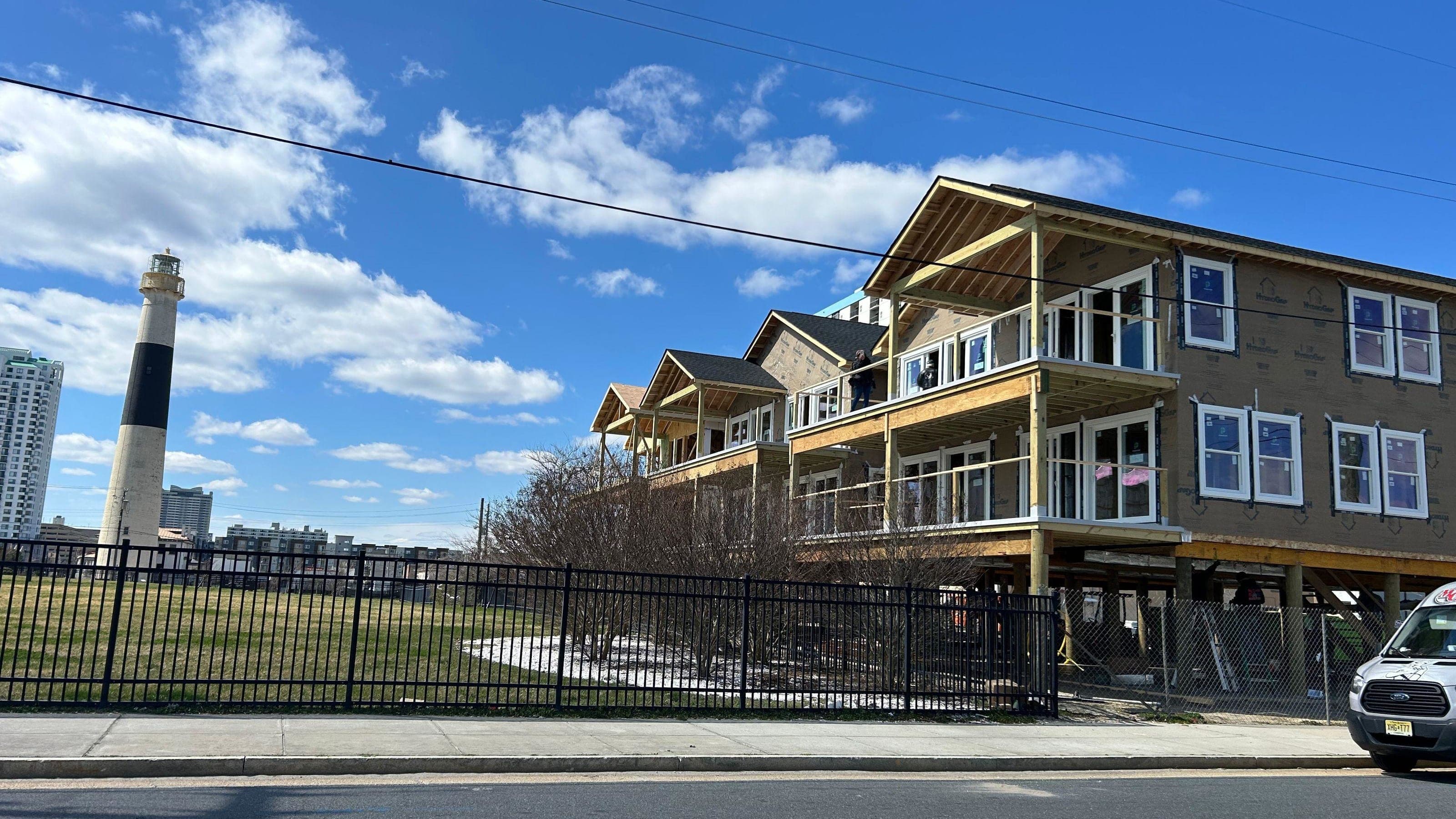
One of the clearest examples can be found near the Absecon Lighthouse.
Developer Keith Groff built the first eight luxury homes at Lighthouse Row, a project that became an important early test of whether buyers would pay premium prices for newly constructed housing in Atlantic City.

According to the city, seven of the original eight homes sold for between $630,000 and $825,000, with one retained by the developer. A second phase is adding seven more luxury homes.
Guardian believes those sales sent an important signal to other developers.
“I have to give credit to Keith Groff,” Guardian said.
Groff, he said, demonstrated that people were willing to spend $600,000, $700,000 and even $800,000 for a new Atlantic City townhouse.
“He kind of started the concept,” Guardian said. “And then I have to be honest, once people saw that he was able to build housing and that people were willing to pay $600,000, $700,000, $800,000 for a townhouse, you can see that there must be 20 projects going on in Atlantic City.”
Groff himself made a similar argument during an earlier interview on The AC Mike Lopez Show.
He pointed specifically to the arrival of large homebuilders as evidence that the Atlantic City residential market was gaining credibility.
“When K. Hov comes in and Ryan Homes — which are national builders, publicly traded on the stock exchange — that adds a lot of validity,” Groff told South Jersey NewsBeat.
More importantly, Groff said, people no longer have to take developers' word for it.
“We’ve got multiple blocks getting brand new homes built as we speak right now,” he said. “Not down the line, not in the future, but right now.”
K. Hovnanian returns to Atlantic City
Perhaps no project better illustrates the changing market than Terraces at Absecon Inlet.
K. Hovnanian Homes broke ground in August on the first 38 waterfront townhouses near Pacific and New Hampshire avenues.
The four-story homes are planned at approximately 1,848 square feet, with three bedrooms, 3½ bathrooms, two-car tandem garages and upper-level balconies. The first homes could be delivered as early as summer 2027, according to the city.
For Guardian, the developer's name carries particular significance.
“Hovnanian was very exciting,” he said, recalling the company's previous residential development in the Northeast Inlet decades ago.
“I was glad to see Hovnanian, which is a major housing developer in the state of New Jersey,” Guardian said.
Guardian said he expects the Hovnanian development ultimately to grow substantially beyond the first 38 units.
For now, however, 38 homes are the portion of the project publicly documented as under construction, and South Jersey NewsBeat is not treating a larger potential buildout as finalized.
That distinction matters in a city with a long history of ambitious redevelopment proposals that never reached the finish line.
More than one neighborhood
The residential activity isn't confined to the Inlet.
The Residences at Orange Loop brought new luxury townhouses to Kentucky Avenue, just off the Boardwalk. Ten units were completed in the initial portion of a development envisioned to eventually include 66 townhomes.
Another major proposal would add more than 150 townhouses near Ocean Casino Resort.
Plans associated with Trax Partners call for approximately 152 townhouses on roughly 6.4 acres assembled from dozens of parcels in the Southeast Inlet. The Casino Reinvestment Development Authority approved site and subdivision plans earlier this year, although a construction timetable has not been announced.
And residential development is not limited to high-priced townhouses.
The planned redevelopment of the Sheraton Atlantic City Convention Center Hotel includes an age-restricted residential component with 130 apartments, including 26 affordable units, as part of a roughly $100 million redevelopment.
Taken together, the projects represent different kinds of bets on the same idea: that Atlantic City can support substantially more permanent residential development.
What happens when casino land becomes housing land?
Potentially the biggest change is occurring in the Marina District.
MGM Resorts has been considering residential development on vacant land near Borgata and Harrah's, with city officials previously describing several possible concepts ranging from hundreds of homes to a much larger development.
Mayor Marty Small said earlier this summer that MGM was considering three concepts ranging from approximately 500 to 1,800 residential units. The company has not announced a final plan.
Guardian sees the potential transformation of that land as symbolic of a much larger shift in Atlantic City's development market.
He recalled that the property was once discussed as potential land for several additional casinos.
“They now realize no one’s building casinos anymore,” Guardian said. “But this probably would make a whole lot of sense for some housing.”
Guardian said he could envision a mix of mid-rise housing, townhouses and possibly private homes in the area.
“I think it’s a marketable piece of property,” he said.
Nothing approaching 1,800 units should be considered a done deal. MGM's concepts remain proposals.
But the fact that major casino-controlled property is even being discussed for residential development demonstrates how much the assumptions surrounding Atlantic City real estate have changed.
A prediction from 10 years ago
Remarkably, developer Waseem Boraie was talking about exactly this phenomenon a decade ago.
When Boraie Development was moving ahead with the $81 million Beach at South Inlet apartment project in 2016, Boraie discussed one of the unusual obstacles that had historically faced residential developers in Atlantic City.
Landowners often valued property based on the possibility that a casino might eventually want it, he told NJBIZ.
That made land too expensive for conventional residential development.
As expectations for additional casinos diminished, Boraie said, land prices could become more realistic for other types of projects.
Most notably, he argued that Atlantic City needed residential developers to establish a “proof of concept.” If someone could demonstrate that quality housing could be successfully built and occupied in the city, others could follow.
Boraie subsequently developed the 250-unit Beach at South Inlet, providing one of Atlantic City's first major privately financed market-rate apartment developments in years.
A decade later, the proof-of-concept theory appears to be getting another test — this time on a considerably broader scale.
'People bring people'
Blatstein, whose Atlantic City holdings include the Showboat Resort, recently told South Jersey NewsBeat that he believes residential growth could eventually solve another longstanding Atlantic City problem: the lack of neighborhood-oriented retail.

For years, residents and political leaders have complained that Atlantic City lacks amenities that would ordinarily be expected in a community of its size, most notably a full-service supermarket.
Blatstein's theory is straightforward.
“People bring people,” he told South Jersey NewsBeat. “Development brings more people. Then the retail will follow.”
His argument is that businesses such as supermarkets, coffee shops and neighborhood retailers need a sufficient concentration of permanent customers before they will invest.
Build enough housing, he believes, and those businesses become more viable.
That means the importance of Atlantic City's housing push could ultimately extend well beyond the number of homes constructed.
A development pipeline bigger than housing
The residential projects are unfolding amid a broader surge in development activity.
Atlantic City reported earlier this year that more than 40 development projects had been fully approved and issued city building permits, with construction underway or expected to begin.
That figure did not mean 40 housing developments. It included projects across different sectors.
But city officials said at the time that the count also excluded several anticipated major projects involving developers including K. Hovnanian, Odin Properties, Trax Partners, Pat Fasano and Renaissance Properties.
For Guardian, the amount of activity is significant enough that Atlantic City's redevelopment will be featured during the state's Governor's Conference on Housing and Economic Development.
Guardian said he and Assemblywoman Claire Swift have been asked to participate in a bus tour highlighting housing and building redevelopment around Atlantic City.
Housing, Guardian said, is critical to the city's future.
“Yeah, it’s good to see,” he said. “We’re optimistic. Housing is real important.”
Boom — or another collection of plans?
There is reason for caution.
Atlantic City residents have seen countless renderings, announcements and redevelopment proposals over the decades that never materialized.
Even within the current housing pipeline, the projects are at dramatically different stages.
Lighthouse Row has sold homes. The Orange Loop has completed homes. K. Hovnanian is building.
Other projects have received approvals but haven't begun construction.
Still others — including MGM's potentially enormous Marina District development — remain conceptual.
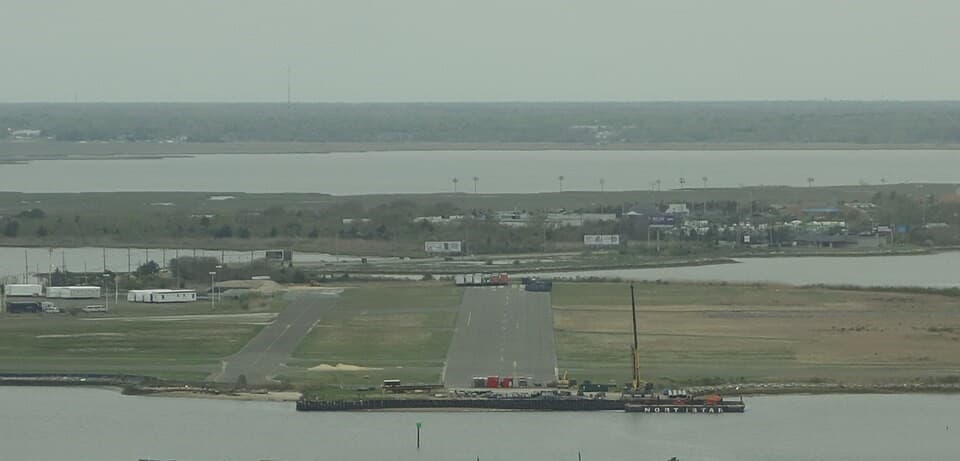
And then there is Bader Field, where an even larger proposed mixed-use redevelopment faces regulatory and other hurdles that South Jersey NewsBeat recently detailed after reviewing public records.
Guardian himself acknowledged that major Atlantic City projects can take years — or decades — to fully develop.
But unlike some previous redevelopment waves, proponents can now point to something more tangible than architectural renderings.
They can point to homes.
They can point to buyers.
And they can point to a national builder putting shovels in the ground.
That may be why a prediction made a decade ago suddenly seems particularly relevant.
Atlantic City needed someone to prove that people would invest in living there.
Now the question isn't simply whether that market exists.
It's how big it can become.

About the Author
Peter Killeen
A 25-year radio news veteran, Peter covers South Jersey for NewsTalk 1400 & 92.3 WOND radio. Known for his concise and impactful delivery, he ensures listeners and readers stay informed without unnecessary filler.