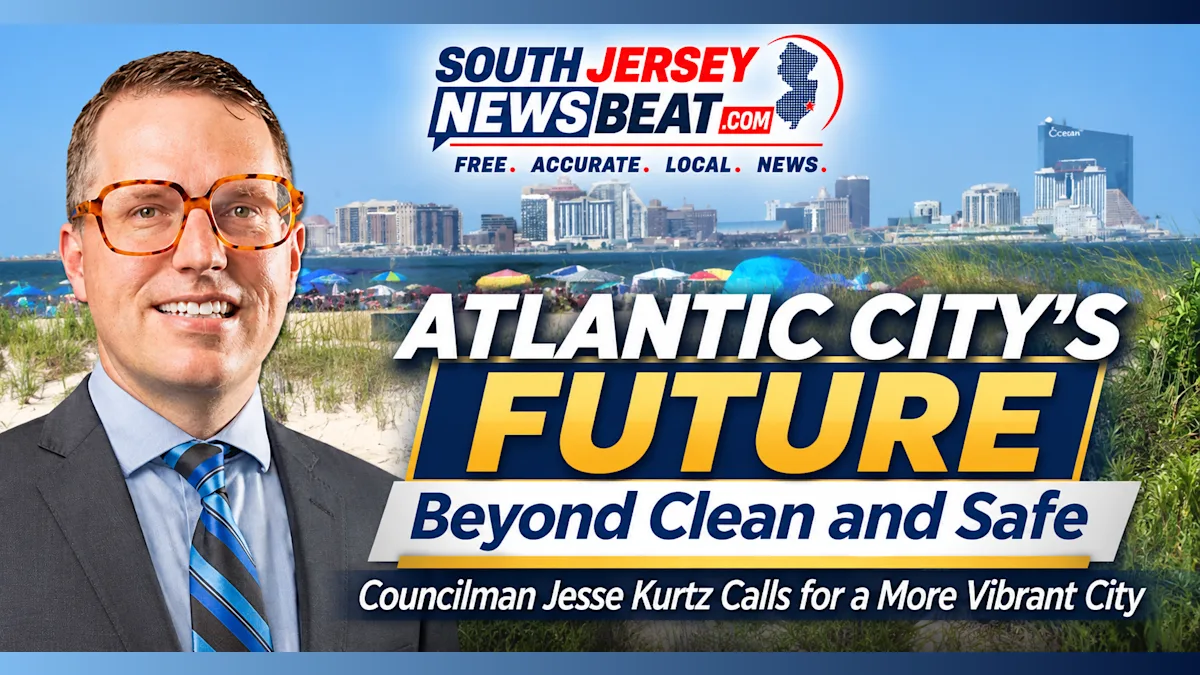
Councilman calls for better infrastructure, a more compelling visitor experience and a community where residents can build careers, raise families and remain throughout their lives.
ATLANTIC CITY — Keeping Atlantic City clean and safe may no longer be enough to ensure the resort's long-term economic success, according to Sixth Ward Councilman Jesse Kurtz.
As Atlantic City confronts growing competition from other casino destinations and internet gambling, Kurtz believes the city must do more to improve its appearance, strengthen its neighborhoods and create an experience that gives visitors compelling reasons to return.
During a November 24 interview on Talking With Anne with Anne Baker on News Talk 1400 & 92.3 WOND, Kurtz outlined his vision for Atlantic City's future, emphasizing the importance of infrastructure improvements, tourism, residential stability and stronger support from political and business leaders.
His comments come as discussions about the city's economic future have intensified following the acquisition of the former Trump Plaza property by South Jersey businessman George Norcross and his investment partners.
Taking 'Clean and Safe' to the Next Level
Asked why decades of casino gambling have not produced more visible improvements throughout Atlantic City, Kurtz acknowledged that substantial work remains to be done.
“There's still a lot of work that has to be done to make the curb appeal, as it's referred to, to make the infrastructure first rate, to make things where you come in, it looks not only clean and safe, but shiny and exciting,” Kurtz said.
The councilman said maintaining public safety and cleanliness should be viewed as a foundation for economic growth rather than the final objective.
“We have to take clean and safe to the next level in Atlantic City,” he said.
For Kurtz, creating a more attractive environment involves improving the experience visitors have throughout the city, including areas outside the casino properties.
His remarks come as business and government leaders continue discussing how Atlantic City can attract additional investment, revitalize underutilized properties and expand its appeal beyond traditional casino gambling.
Competing With the Convenience of Online Gambling
Kurtz identified changing consumer habits as one of the most significant challenges facing Atlantic City.
With casino games available through smartphones and computers, the resort must increasingly compete not only with other physical casino destinations but also with entertainment options that do not require people to leave their homes.
Kurtz said that makes the quality of the in-person experience increasingly important.
“In order to draw people in person, everybody shares this challenge, especially Atlantic City, that we have to make that in-person experience just phenomenal,” Kurtz said.
He believes investments that make the city more attractive and exciting could help sustain its tourism economy despite changes in the gaming industry.
“And I do think that that shiny and exciting dynamic to it will ensure our success for years to come,” Kurtz said.
The councilman's comments come amid growing concerns about the financial performance of Atlantic City's physical casino properties.
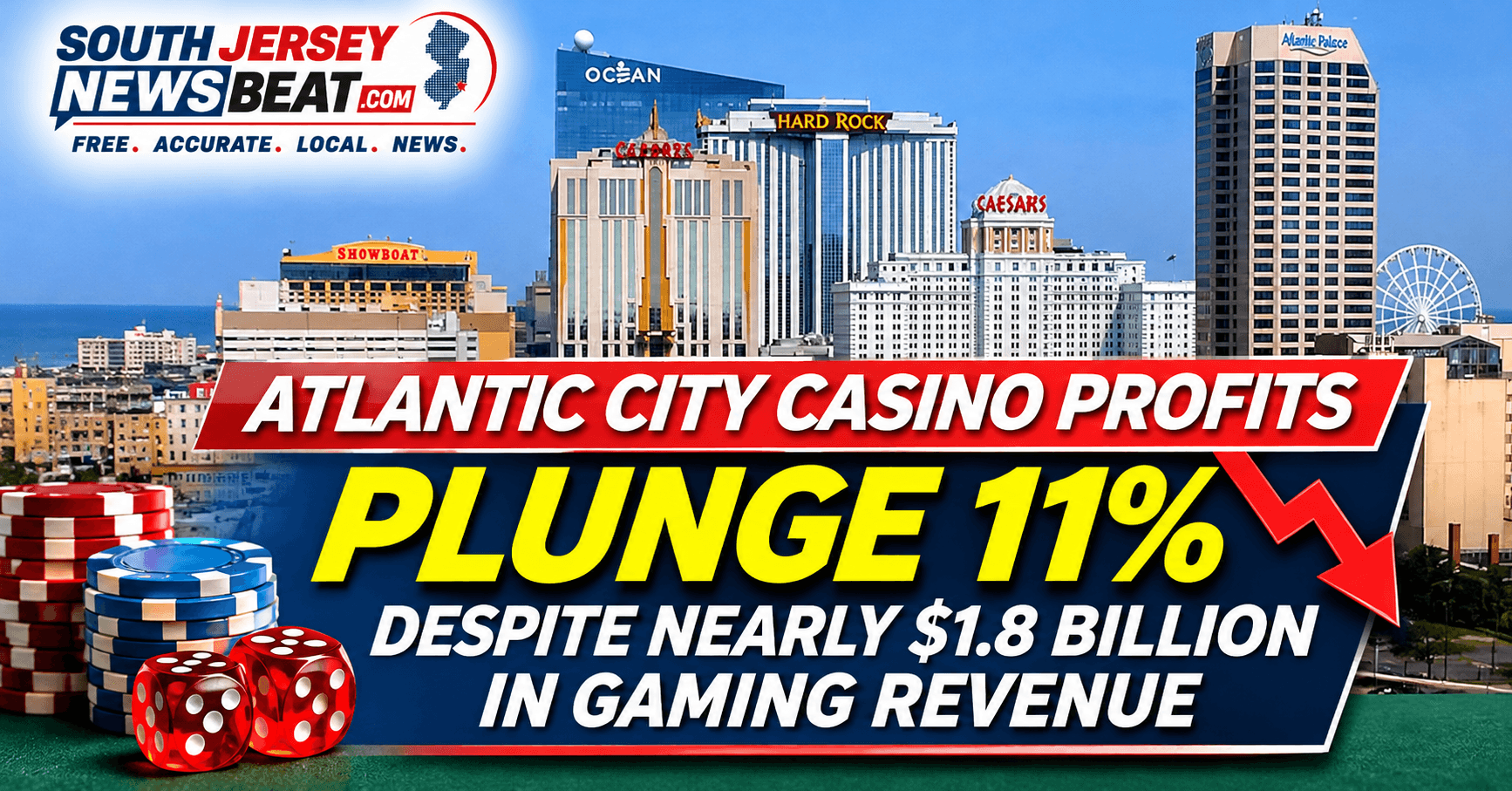
Figures released November 23 by the New Jersey Division of Gaming Enforcement showed that the city's casino operators experienced an 11% decline in third-quarter gross operating profit, even as net revenue increased slightly.
The results illustrate the financial pressures operators face in maintaining large casino hotels, employing thousands of workers and providing entertainment, dining and other amenities.
Attracting visitors who spend money on accommodations, restaurants, shopping and entertainment remains an important part of the resort's economic strategy.
Building a City Where People Want to Remain
While much of Atlantic City's economic development discussion centers on tourism, Kurtz said the city's success should also be measured by its ability to retain residents.
He noted that casino gambling has provided economic opportunities for generations of local families, including many who eventually moved elsewhere.
“I do think that it's important to realize that the measure of success over the years of Atlantic City casino gambling includes all of the people who, you know, did well for themselves and moved out of town,” Kurtz said.
He pointed to casino employees whose careers helped provide educational and professional opportunities for their children.
However, Kurtz believes Atlantic City would benefit if more residents who achieve economic success chose to remain in the community.
“And where I think we would see a better dynamic in town is if we were to find a way to kind of keep folks here through each phase of life,” he said.
That includes retaining recent graduates beginning professional careers, families raising young children and older residents whose children have moved away.
Kurtz said Atlantic City's residential patterns differ from those of many traditional suburban communities.
He believes addressing those differences could help establish stronger connections among generations of residents and contribute to the city's long-term stability.
Although Kurtz did not outline specific housing or economic development proposals during the interview, his comments raise broader questions about housing availability, educational opportunities, neighborhood amenities and the types of employment available to residents.
Capitalizing on Atlantic City's Unique Identity
Kurtz also emphasized that Atlantic City possesses a combination of history, culture, architecture, entertainment and residential neighborhoods that distinguishes it from many competing destinations.
“It's just amazing, like, how many identities Atlantic City has in such a small geographic space,” he said.
Kurtz noted that Atlantic City occupies only a portion of Absecon Island but contains a remarkably diverse collection of communities and attractions.
“Both our current reality and the years of history that are here in this city are just oversized, absolutely incredible,” he said.
Those characteristics could provide opportunities for economic development that does not rely exclusively on casino gambling.
The city's beaches, Boardwalk, cultural history, entertainment venues, restaurants and distinctive neighborhoods offer potential attractions for visitors with a wide range of interests.
The challenge is connecting those assets in a way that encourages visitors to explore more of the city and supports businesses beyond the casino industry.
Redevelopment Discussions Gain Momentum
Kurtz's comments come as several significant economic development issues have converged in Atlantic City.
Norcross and his investment partners recently acquired the former Trump Plaza site, one of the city's most prominent redevelopment properties.
Norcross has expressed interest in creating a year-round entertainment attraction that could provide families with additional reasons to visit Atlantic City.
In recent interviews, he has cited the Las Vegas Sphere as an example of the scale and ambition he envisions.
However, no formal development proposal for the property has been publicly announced.
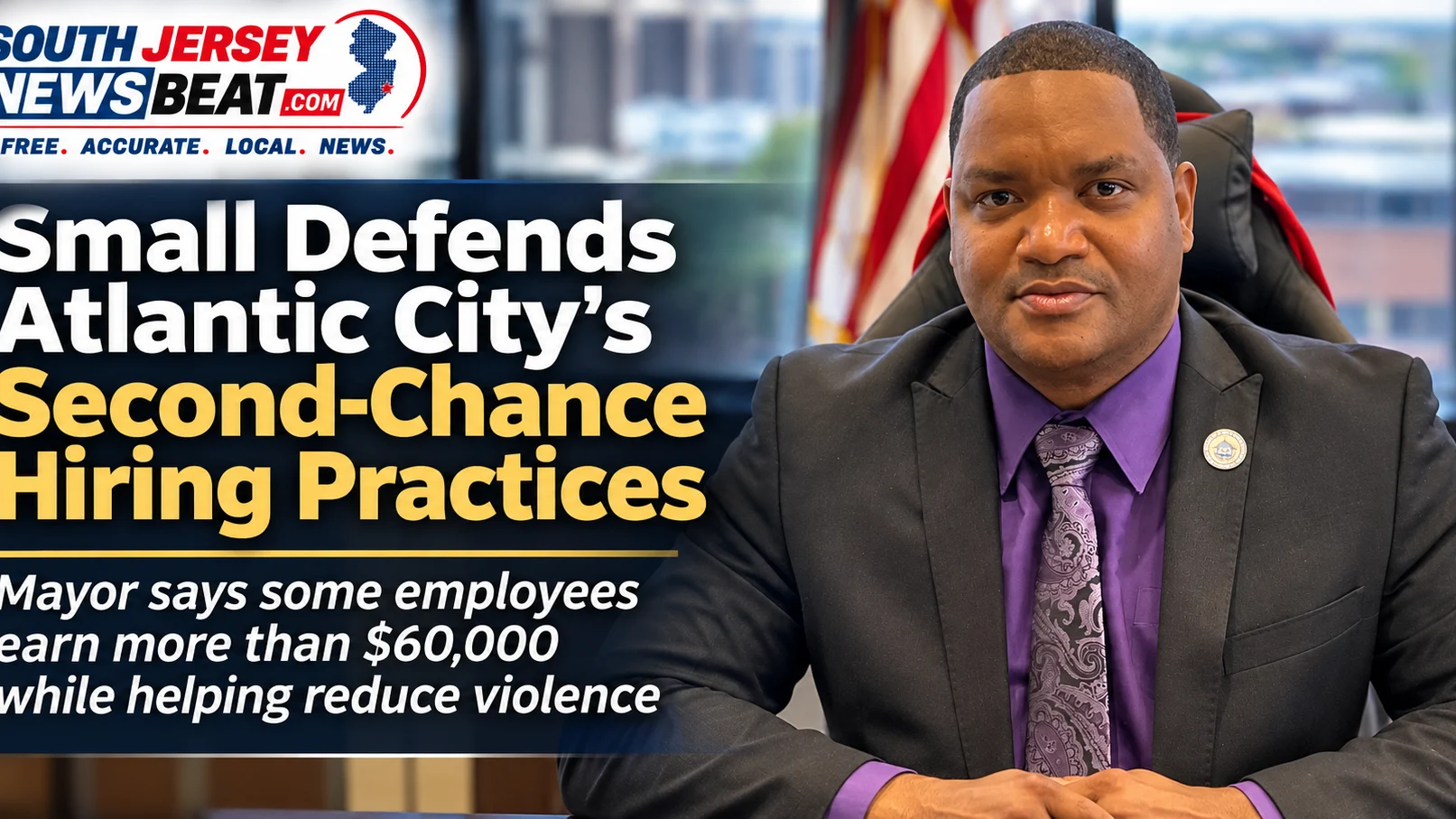
Mayor Marty Small Sr. has welcomed Norcross' investment and has indicated that additional development announcements are expected during his 2027 State of the City address.
The mayor has also called for extensive modernization of Atlantic City's convention facilities as the resort seeks to remain competitive in attracting meetings, trade shows and other large events.
Meanwhile, Atlantic City's casino industry faces the prospect of additional competition from developments in New York and continuing proposals to expand casino gambling elsewhere in New Jersey.
Together, those developments have renewed discussions about how Atlantic City can diversify its economy and improve its appeal as a year-round destination.
Kurtz Calls for Unqualified Support of Atlantic City
One of Kurtz's strongest criticisms during the interview concerned what he described as conditional support for Atlantic City among some influential political and business leaders.
He expressed frustration with individuals and organizations that benefit from Atlantic City's economy while, in his view, supporting policies that could divert resources or economic opportunities elsewhere.
“The people with power up the food chain who do benefit from Atlantic City always seem to have, like, qualified support,” Kurtz said.
He cited efforts to expand casino gambling elsewhere in the state, redirect resources and concentrate social services within Atlantic City as examples of competing interests that concern him.
Those comments reflected Kurtz's assessment of the city's political and economic challenges rather than allegations against specific individuals or organizations.
The councilman said Atlantic City would benefit from stronger commitments from stakeholders at every level.
“I would just like more people, strong, weak, everything in between, to be unqualified in their support of Atlantic City,” Kurtz said.
“And I think that would make a huge difference.”
Looking Beyond Casino Revenue
Nearly five decades after New Jersey voters authorized casino gambling exclusively in Atlantic City, the resort continues to confront questions about how gaming revenues and tourism can translate into broader economic opportunity.
The casino industry remains a major source of employment and economic activity, but changing technology and increasing competition have created challenges that extend beyond the gaming floor.
Kurtz's vision emphasizes the importance of combining economic development with infrastructure improvements, neighborhood stability and a more compelling visitor experience.
His comments also suggest that Atlantic City's future should be measured not only by the number of people who visit the resort, but also by the number who choose to build their lives there.
As plans for major redevelopment projects continue to take shape, those competing priorities will remain central to discussions about what Atlantic City can become in the years ahead.
Atlantic City Councilman Jesse Kurtz shared his perspectives during an appearance on Talking With Anne with Anne Baker, heard Monday through Friday from 10 a.m. to noon on News Talk 1400 & 92.3 WOND
About the Author
Scott Stephens
Scott has been an on-air personality, producer and newscaster for 30+ years. He has been a mainstay in the South Jersey Community and on the air across many different area stations. Scott can currently be heard on Kool 98.3 and News Talk 1400 & 92.3 WOND.