Atlantic County executive says the nation must remember those sickened after the attacks as well as those killed
ATLANTIC COUNTY, N.J. — As the nation prepares to mark 25 years since the Sept. 11 terrorist attacks, Atlantic County Executive Dennis Levinson says Americans should remember not only the nearly 3,000 people killed that day, but also the enormous human toll that continued for years afterward.
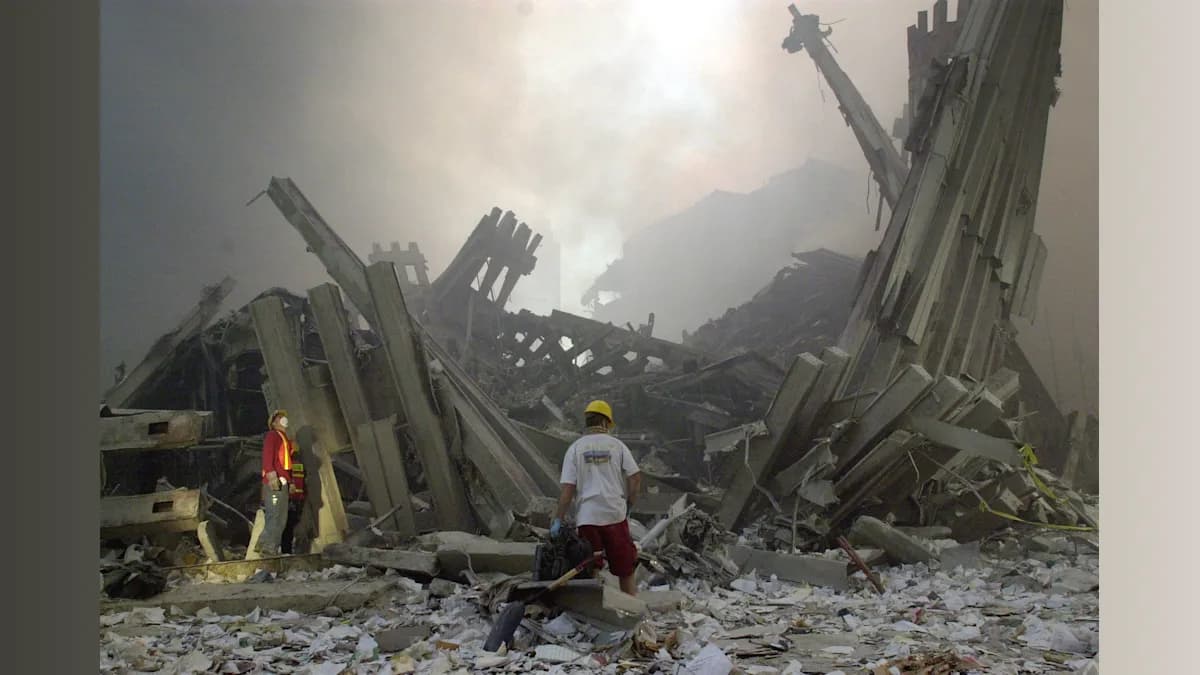
Speaking Wednesday morning on The Don Williams Show on WOND, Levinson focused much of his attention on the first responders, recovery workers and others exposed to toxic dust and debris following the collapse of the World Trade Center.
“The aftermath of tragedies are something we all seem to forget or sweep under the rug,” Levinson said. “But it was more than the 3,000 people that were killed.”
His comments come as new attention is being focused on the long-term health consequences of the attacks ahead of Thursday's 25th anniversary.
Levinson criticizes post-9/11 air assurances
Levinson singled out former New Jersey Gov. Christine Todd Whitman, who was administrator of the U.S. Environmental Protection Agency at the time of the attacks.
“It took 15 years for the EPA director, who was Christine Todd Whitman, the former governor of New Jersey, to apologize that she was wrong about inhaling the dust and everything else after the 9/11 debacle,” Levinson said.
Whitman and the EPA provided public assurances about air quality in lower Manhattan in the days following the attacks. On Sept. 18, 2001, Whitman said she was glad to reassure New Yorkers that the air was safe to breathe and the water safe to drink.
Fifteen years later, Whitman publicly apologized for those assurances, saying in 2016 that she was sorry and acknowledging that information available in the immediate aftermath of the attacks had proved incorrect.
Levinson said the length of time before that acknowledgment troubled him.
“She was the EPA director,” Levinson said. “Under the circumstances, the buck has to stop somewhere.”
“It was silence for 15 years until she admitted that she was wrong,” he added. “There’s too many people that are still suffering from incredibly debilitating diseases and going through that pile of rubble.”
The continuing health toll is substantial. More than 100,000 people now rely on the federal World Trade Center Health Program, which provides monitoring and treatment for responders and survivors with 9/11-related conditions.
A new FDNY report released ahead of the anniversary found 10,562 department members have at least one certified 9/11-related physical health condition, while 4,257 have a cancer certification and 4,496 have at least one certified mental health condition.
New records put toxic-air issue back in spotlight
Levinson's comments come during renewed scrutiny of what government officials knew about environmental conditions following the attacks.
More than 170,000 pages of New York City records concerning post-9/11 air quality and the government's response were released this week following a transparency lawsuit and settlement. The massive document release comes almost exactly 25 years after residents and workers were told it was safe to return to lower Manhattan.
The continuing consequences were precisely what Levinson said should not be lost amid remembrances of the attack itself.
“People in elected and appointed positions have an obligation,” Levinson said.
‘It’s embedded in my brain’
Levinson also recalled where he was when he learned what was happening on Sept. 11, 2001.
“I knew exactly where I was, Don,” he told Williams. “It’s embedded in my brain.”
Levinson compared the memory to another defining national tragedy from his lifetime — the assassination of President John F. Kennedy.
“There’s two things that I remember, you know, as far as John Kennedy’s death and the Twin Towers,” Levinson said. “Those two events ... had a great effect on me.”
Williams recalled watching television as the attacks unfolded and initially wondering whether footage of the first plane was being replayed when the second plane struck the South Tower.
Levinson recalls FBI connection
The discussion then turned to the intelligence and law-enforcement failures preceding the attacks.
Levinson recalled knowing former senior FBI official James Kallstrom, who headed the FBI's New York office during the 1990s.
“Kallstrom told me too, and he says, you know, we knew they were going to try again,” Levinson said. “They always do.”
Levinson was referring to the threat that remained after the 1993 World Trade Center bombing, when terrorists detonated a truck bomb in the underground parking garage beneath the complex. Six people were killed and more than 1,000 were injured.
The FBI has described the 1993 attack as a precursor to what would occur eight years later.
“There was an explosion there in ’93,” Levinson said. “Six people were killed when they put that van full of explosives in the parking garage at the Twin Towers, and we were asleep at the switch.”
“It’s a shame because that’s what the job of government is, to keep people safe,” he added. “That’s job one.”
During the interview, Levinson also struggled momentarily to recall the name of a counterterrorism figure he remembered through his connections with the FBI.
His recollection appears consistent with John O'Neill, the former FBI counterterrorism expert who spent years investigating Osama bin Laden and al Qaeda before leaving the bureau shortly before the attacks. O'Neill became security chief at the World Trade Center and was killed there on Sept. 11.
O'Neill worked closely with Kallstrom during his FBI career and is among those specifically remembered by the Atlantic City 9/11 Memorial.
‘Eternal vigilance’
Twenty-five years later, Levinson said the lesson he takes from the attacks extends beyond remembering what happened on one September morning.
He said government has an enduring responsibility to recognize threats, communicate information and protect the public.
“You would think that we would have been a little more diligent,” Levinson said.
He ended the discussion with a warning that he believes remains relevant a quarter-century later.
“It’s eternal vigilance that we have to do as a country. And we kind of fell short of the mark.”
About the Author
Scott Stephens
Scott has been an on-air personality, producer and newscaster for 30+ years. He has been a mainstay in the South Jersey Community and on the air across many different area stations. Scott can currently be heard on Kool 98.3 and News Talk 1400 & 92.3 WOND.