In an unprecedented experiment that challenges conventional business wisdom, a Minneapolis café has eliminated prices from its menu entirely — and the results are defying expectations.
Dylan Alverson, owner of Post Modern Times, made the radical decision in February 2026 to convert his establishment into a donation-only restaurant. The transformation was not driven by marketing strategy or profit motives, but rather emerged as a response to profound community loss. Alverson had witnessed a series of deaths in the community firsthand, prompting him to reimagine his business as an act of social activism.
The model operates on trust and generosity rather than fixed transactions. Customers receive their meals and contribute what they can — or nothing at all. According to data from the restaurant, between 40 percent and 50 percent of diners pay nothing for their food. Yet rather than collapsing under financial strain, the business has not only survived but thrived.
"I have succeeded more than I ever did when I was running a conventional business employing 22 people," Alverson told The New York Times. The success he references extends beyond mere financial metrics. The restaurant now operates with volunteer staff, fundamentally restructuring the traditional employer-employee relationship. A former violence interrupter maintains a quiet presence outside the establishment, contributing to community safety in an unconventional role.
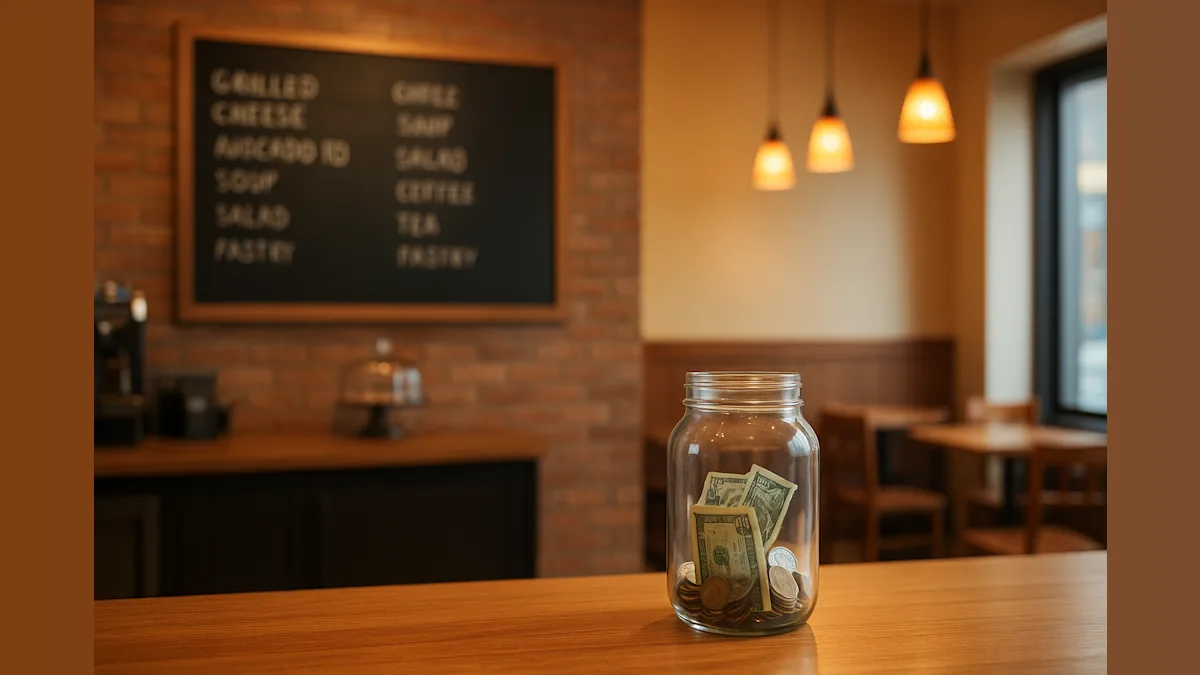
The shift has transformed the very nature of what the menu represents. Rather than functioning as a catalog of transactions, it now serves as what Alverson describes as an invitation — a gesture of welcome rather than a barrier to entry. This philosophical reframing addresses fundamental questions about access, dignity, and community care.
Alverson characterizes Post Modern Times as "a place of economic equality that doesn't really exist in a business setting." The statement acknowledges the rarity of such an approach in contemporary commerce, where profit margins and pricing strategies typically dominate operational decisions. His experiment suggests that alternative models may be more viable than conventional business wisdom suggests.
The owner frames his endeavor not as a definitive answer but as an ongoing inquiry. "What can we learn from this?" he asks, inviting broader reflection on economic structures, community support systems, and the possibilities that emerge when businesses prioritize access over profit.
The success of Post Modern Times raises provocative questions for other business owners and community leaders. If a restaurant can sustain itself while serving half its customers for free, what assumptions about scarcity and sustainability might warrant reexamination? The Minneapolis café offers no prescriptive answers, but its continued operation provides compelling evidence that generosity-based models deserve serious consideration as viable alternatives to traditional commerce.