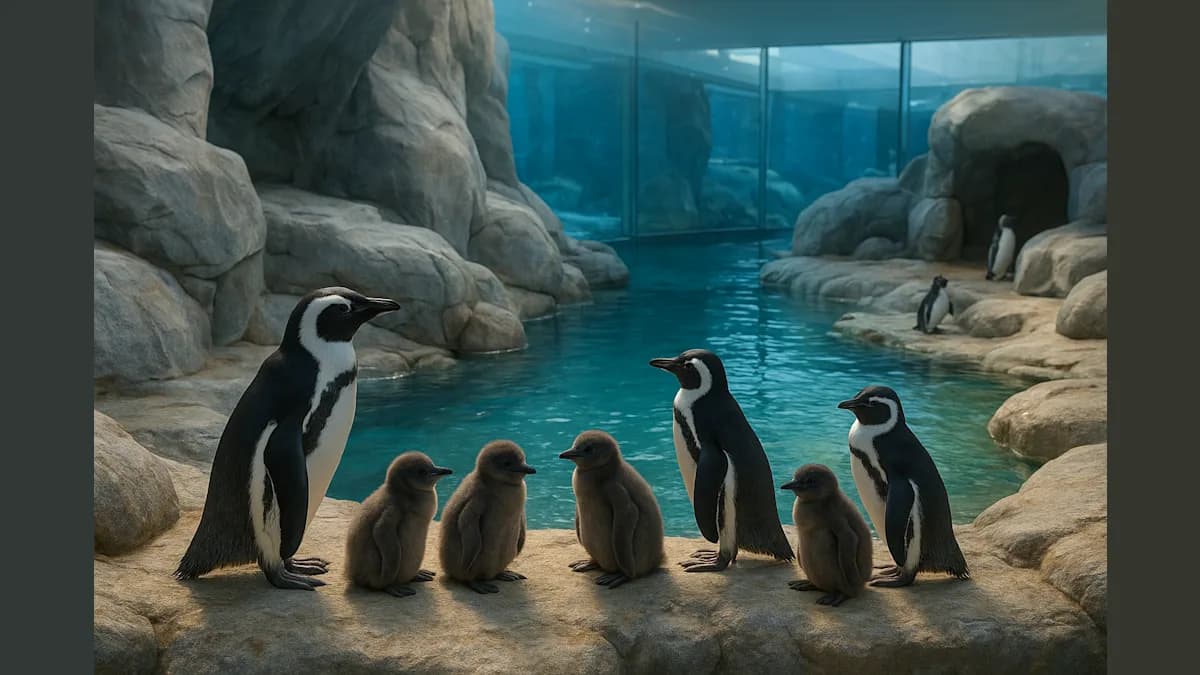
Ripley's Aquarium of Myrtle Beach has achieved a milestone for conservation efforts with the hatching of seven African penguin chicks this year, marking the facility's most successful breeding season on record for the critically-endangered species.
Five chicks recently emerged from their eggs at the aquarium, joining two siblings that hatched in May. The arrivals represent significant progress for a species facing the threat of extinction, with aquarium staff describing the wave of new life as a "baby boom."
"We thought we were lucky with our first two chicks, but welcoming five more has made this an unforgettable year," Courtnie Barnett, the aquarium's general manager, said in a news release.
Barnett credited the facility's animal care team for making the achievement possible. "This incredible milestone would not be possible without our amazing animal care team," she said in the release. "Their dedication, expertise, and passion for these animals is truly what makes moments like this possible, and we are so proud to celebrate the Lucky Seven with our guests."
The two chicks that hatched in May have been named Chel and Vic, while the five newest additions have not yet received names.
African penguins inhabit coastal regions of South Africa and Namibia, representing the only species of their kind found throughout the Old World. Population numbers have declined steadily during the 21st century, with earlier projections suggesting the species could have already disappeared.
Conservation efforts received a boost in March of 2025 when environmental groups reached a settlement with South African environment and fishing authorities during litigation. The agreement established substantially expanded no-fishing zones around six key penguin breeding colonies, representing the first legal action of its kind in South Africa, according to the BBC.
The successful hatching season at Ripley's Aquarium demonstrates the potential for captive breeding programs to support species recovery while wild populations face ongoing challenges from food supply shortages and habitat pressures.