ATLANTIC CITY, N.J. — Nearly one woman a day is diagnosed with invasive breast cancer in Atlantic and Cape May counties, a sobering statistic that underscores the importance of prevention, early detection and access to treatment during Breast Cancer Awareness Month.
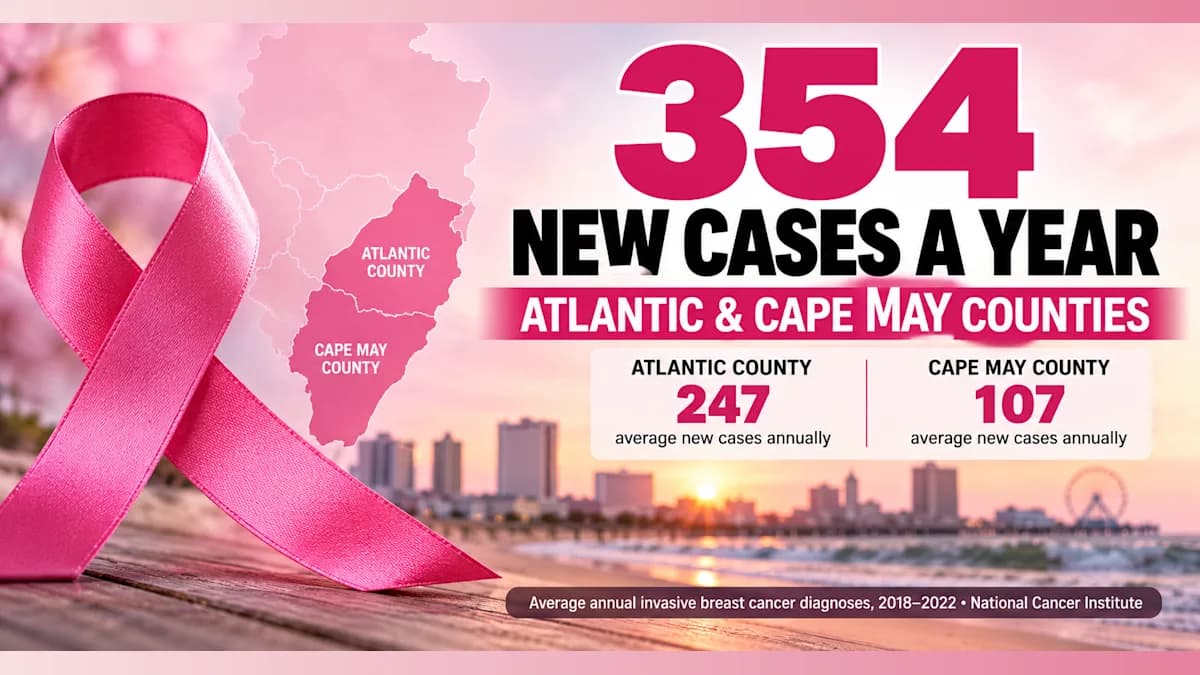
According to the National Cancer Institute's State Cancer Profiles, Atlantic County averaged 247 new cases of invasive breast cancer annually between 2018 and 2022, while Cape May County averaged 107.
That's approximately 354 new diagnoses each year across the two counties.
Of particular concern, an average of 78 women in Atlantic County and 29 in Cape May County were diagnosed annually with late-stage breast cancer during the same period.
Those figures represent more than 100 women each year whose cancers had already spread beyond the breast to nearby lymph nodes or more distant parts of the body when diagnosed.
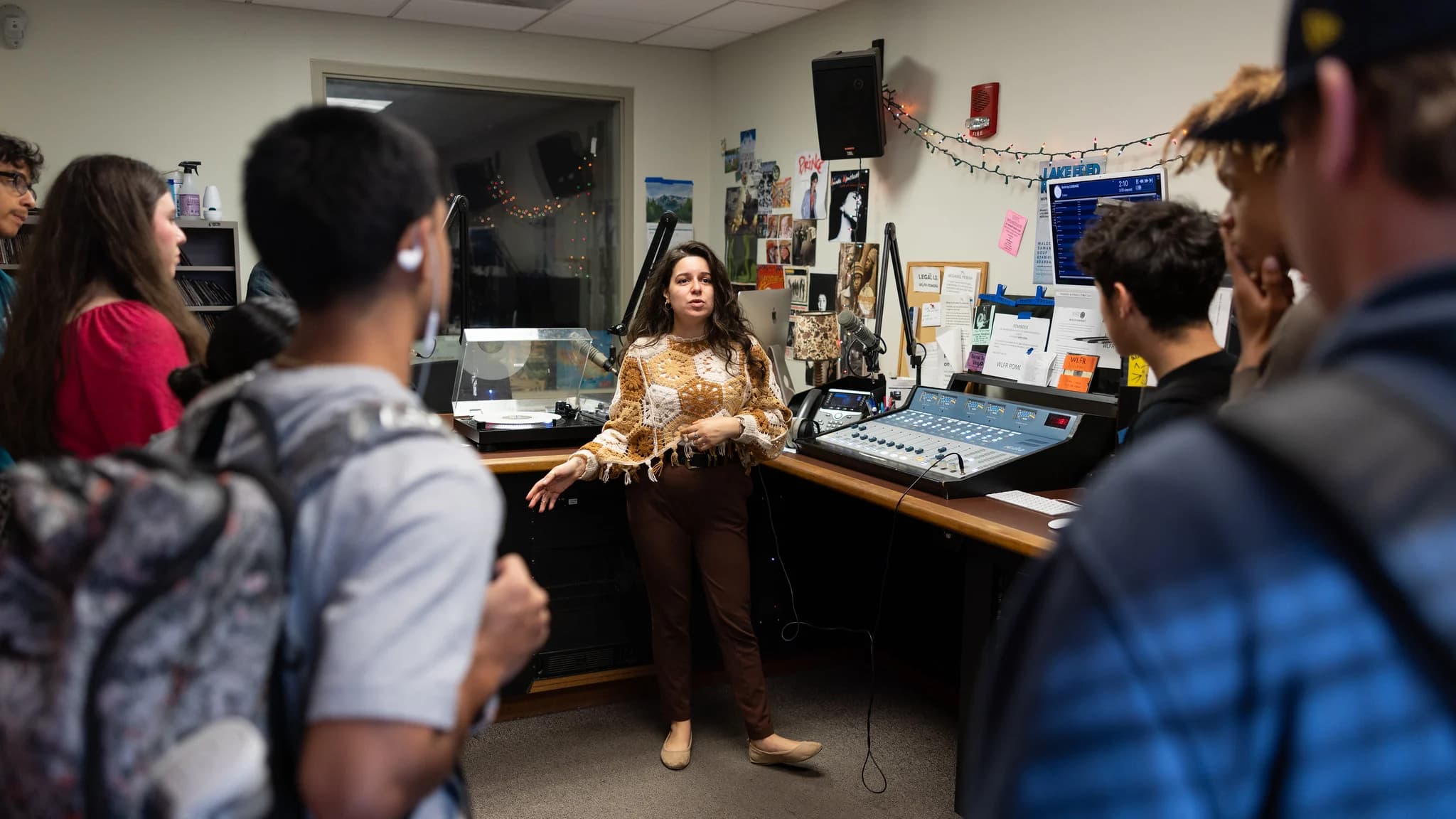
The statistics provide important context for an Oct. 9 discussion on The Lorry Young Show on News Talk 1400 & 92.3 WOND, where Somers Point wellness adviser Ruth Kendall explored the relationship between nutrition, breast cancer risk and recovery.
Kendall, associated with The Honey Tree and Just Organics, encouraged listeners to examine their eating habits and consider changes that could benefit their overall health.
"We should really make the attempt to move towards that," Kendall said of eating more whole foods. "Or even partially, if you don't want to do the entire 100%."
While medical research supports many of the broader principles discussed during the interview, cancer experts caution that no particular diet, food or supplement has been proven to prevent breast cancer.
South Jersey's Breast Cancer Numbers
The National Cancer Institute's figures show that breast cancer remains a significant health concern in both counties, even though their overall incidence rates were somewhat below New Jersey's statewide average.
Atlantic County recorded an age-adjusted incidence rate of 130.8 cases per 100,000 women, while Cape May County's rate was 130.6. The statewide rate was 138.
However, the proportion of cases diagnosed at a late stage differed.
In Atlantic County, 31.6% of breast cancers were diagnosed at a late stage, compared with 26.7% in Cape May County and 30.7% statewide.
The differences do not necessarily indicate that screening services are less effective in one county than another, but they reinforce the importance of detecting breast cancer before it advances.
Local Oncologist Emphasizes Progress in Treatment
Dr. Julianne W. Childs, a medical oncologist with Regional Cancer Care Associates who practices in Cape May Court House and Marmora, has emphasized that advances in breast cancer treatment are providing patients with more individualized options.
In previously published comments from the oncology practice, Childs said physicians now have an unprecedented ability to tailor treatment to each patient's circumstances.
"We have never had a greater ability to individualize care to treat a woman's breast cancer in a way that offers the best possible outcomes while taking into consideration her overall health, her preferences for treatment and her quality of life," Childs said.
She pointed to advances in breast-conserving surgery, immunotherapy, targeted treatments, chemotherapy and hormonal therapies.
"The last several years have seen a dramatic expansion of treatment options," Childs said.
Those advances make early detection especially important because treatment decisions depend on the type of cancer, how far it has progressed and the patient's overall health.
At AtlantiCare, Dr. Kay Yoon-Flannery, chief of women's oncology, has similarly emphasized helping patients understand their options.
"My mission is to empower every patient with knowledge, compassion and the confidence to face breast cancer head-on—with dignity and hope," Yoon-Flannery said in a statement published by AtlantiCare.
What Should Women Be Eating?
During her WOND interview, Kendall repeatedly encouraged listeners to eat more vegetables, fruits and minimally processed foods.
She expressed particular concern about the prevalence of heavily processed products in the American diet.
"Most of our food supply is processed food," Kendall said.
She encouraged people to make gradual improvements rather than abandoning healthier eating because they cannot follow a particular diet perfectly.
The American Cancer Society generally supports that approach.
Its cancer-prevention guidelines recommend a dietary pattern emphasizing vegetables, fruits, beans, whole grains and other nutrient-rich foods while limiting processed meats, sugar-sweetened beverages and highly processed products.
The organization also recommends regular physical activity and maintaining a healthy weight.
For adults, its guidelines call for 150 to 300 minutes of moderate physical activity each week, or 75 to 150 minutes of vigorous activity.
However, the National Cancer Institute cautions that studies have not conclusively demonstrated that individual foods or nutrients prevent cancer.
The distinction is important: A healthy overall diet may help reduce cancer risk, but eating broccoli, berries or any other particular food cannot guarantee protection against breast cancer.
Healthy Eating Comes With a Price Tag
Kendall also acknowledged a challenge familiar to South Jersey shoppers: the rising cost of fresh food.
"I bought broccoli the other day. It was $7 for two heads," she said.
The cost of groceries can make healthier eating difficult for families trying to balance nutrition with household expenses.
Kendall favors organic produce and expressed concerns about pesticide exposure.
However, while organic foods may reduce exposure to certain pesticide residues, research has not established that eating organic food prevents breast cancer.
Cancer-prevention recommendations emphasize eating a variety of fruits and vegetables, whether organically or conventionally grown.
Frozen and canned vegetables and fruits can also be practical, nutritious options, particularly when they contain little added salt or sugar.
Does Sugar Really Feed Cancer?
One of the topics raised during the interview was the belief that sugar feeds cancer.
Kendall and Young discussed limiting sugar, particularly for people undergoing cancer treatment.
The National Cancer Institute says the issue is more complicated.
Although cancer cells use glucose for energy, there is no evidence that eating sugar causes an existing cancer to grow faster or that eliminating sugar will cause tumors to shrink.
Excessive sugar consumption can contribute to weight gain, and obesity is associated with an increased risk of several cancers.
But patients undergoing treatment should not assume that eliminating carbohydrates or sugar will improve their outcomes.
In fact, some patients require additional calories and protein to maintain their strength during chemotherapy, radiation or other treatments.
The National Cancer Institute recommends that patients work with their medical team to develop an eating plan appropriate for their individual needs.
Soy Foods and Breast Cancer: What Research Shows
Another topic that generated discussion was soy.
Kendall expressed concern about soy's estrogen-like properties and suggested limiting its consumption, particularly for people with breast cancer.
That advice requires an important distinction between whole soy foods and concentrated supplements.
The American Cancer Society says eating soy foods does not appear to increase the risk of breast cancer recurrence. Some research suggests soy consumption may even be associated with a reduced risk, although additional studies are needed.
Christie Siebel, a senior clinical dietitian at MD Anderson Cancer Center and a breast cancer survivor, has addressed the misconception directly.
"There's no reason to avoid eating soy," Siebel said in an article published by the cancer center.
Foods such as tofu, edamame and soy milk can provide protein and other nutrients.
Concentrated soy supplements are a different matter because they may contain much higher doses of certain compounds. Patients should discuss those products with their oncology team.
Supplements Require Extra Caution
Kendall and Young also discussed vitamin D, omega-3 fatty acids, multivitamins, probiotics and antioxidants.
Kendall emphasized the need to consider supplements carefully during active cancer treatment.
"It's not a one-size-fits-all," she said.
That is consistent with the broader medical principle that nutritional needs vary among patients.
However, the American Cancer Society says no dietary supplement has been clearly shown to reduce the risk of breast cancer progressing or returning.
Some supplements may also interfere with medications or cancer treatments.
Patients receiving chemotherapy, radiation, hormonal therapy or other cancer treatments should tell their medical team about all vitamins, herbal products and supplements they take.
A supplement that is appropriate for one person may be unnecessary or potentially harmful for another.
Alcohol Is an Established Risk Factor
One dietary issue with particularly strong scientific evidence is alcohol consumption.
Alcohol increases the risk of breast cancer, and the American Cancer Society recommends that people avoid drinking alcohol for cancer prevention.
For those who choose to drink, the organization advises limiting consumption.
The recommendation applies to beer, wine and liquor.
Although some studies have examined potentially beneficial compounds in wine, drinking alcohol is not recommended as a way to improve health or prevent cancer.
Mammograms Remain Essential
Nutrition and lifestyle changes are only part of the breast cancer prevention conversation.
Regular mammograms remain one of the most important tools for detecting breast cancer early, sometimes before symptoms appear.
The U.S. Preventive Services Task Force recommends screening mammograms every two years for women ages 40 through 74 who are at average risk.
The American Cancer Society recommends a somewhat different schedule, offering women ages 40 to 44 the option of annual screening, recommending annual mammograms from ages 45 through 54, and allowing women 55 and older to continue annually or switch to every other year.
Women with strong family histories, certain inherited genetic mutations or other elevated risk factors may need earlier or additional screening.
Patients should discuss their personal risk and appropriate screening schedule with a healthcare professional.
Free Screening Resources Available in South Jersey
For residents who have delayed a mammogram because of cost or lack of insurance, local assistance is available.
The New Jersey Cancer Education and Early Detection Program provides free cancer screening services to eligible uninsured and underinsured residents.
Atlantic County residents can call 609-653-3484, while Cape May County residents can call 609-465-1047 to inquire about eligibility and services.
In addition, Shore Medical Center in Somers Point is scheduled to host a breast cancer screening event Saturday, Oct. 24, from 8 a.m. to noon.
Registration is required. Appointments can be scheduled by calling 609-653-3440.
The event is promoted by the Cape Atlantic Coalition for Health, a regional organization working to improve cancer prevention and early detection in Atlantic and Cape May counties.
For Kendall, the central message of her radio appearance was that people should take a more active role in their health through their everyday choices.
Medical experts agree that healthier habits can make a difference, while emphasizing that diet alone cannot eliminate cancer risk.
With hundreds of women diagnosed across Atlantic and Cape May counties every year, the most important message this October may be a combination of both: Make healthy choices where possible, understand your individual risk and do not put off recommended screening.
Ruth Kendall appeared on The Lorry Young Show on News Talk 1400 & 92.3 WOND. The program airs weekdays from 1 to 2 p.m. Comments from Dr. Julianne Childs, Dr. Kay Yoon-Flannery and Christie Siebel were drawn from previously published statements and were not made during the WOND interview.
About the Author
Karen Johnson
With over 30 years of news experience in major markets like Los Angeles, Denver, and Columbus, Karen now covers our area for South Jersey NewsBeat. She also brings her articulate and conversational news delivery to WOND radio listeners every weekday. Her background includes work with the NBC Radio Network, and she thrives in fast-paced news environments.