
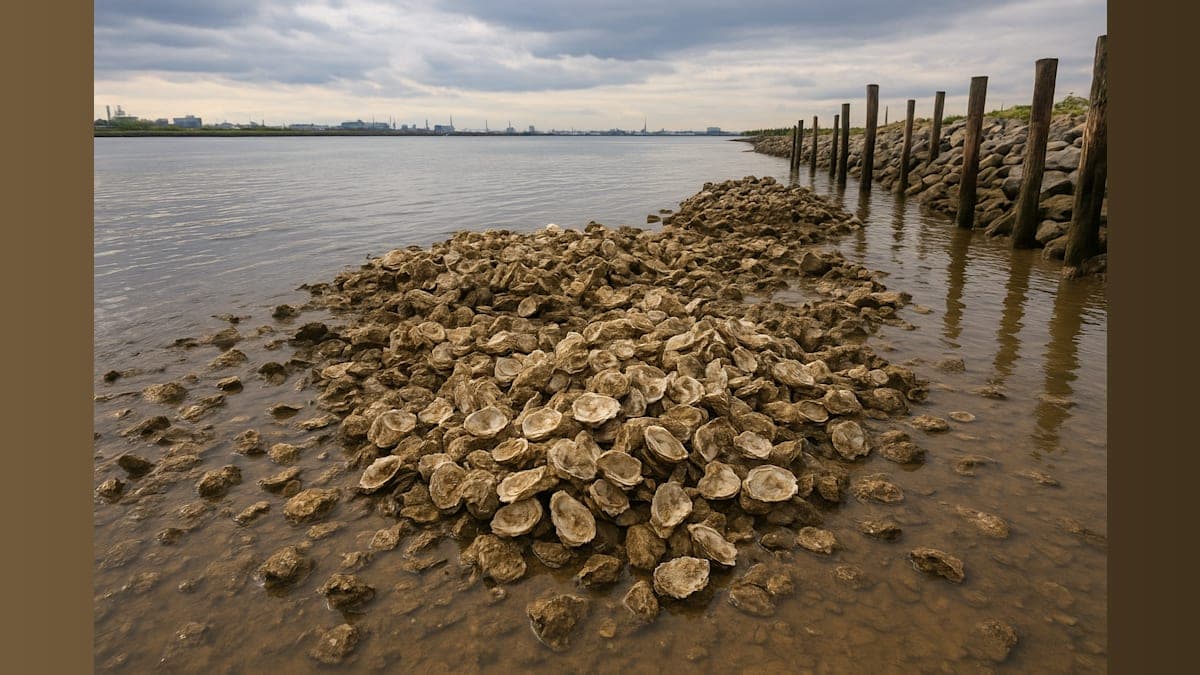
A groundbreaking environmental initiative on Governor's Island is converting discarded oyster shells from New York City restaurants into living reefs that clean harbor waters, protect against storm surges, and support marine biodiversity.
The Billion Oyster Project operates a hatchery facility where waste shells become the foundation for new reef ecosystems. Since launching in 2008, the organization has cultivated 200 million live oysters across 19 acres of restored reef using 3.2 million pounds of shells that would otherwise fill landfills.
Approximately 75 restaurants throughout the city participate in the shell collection program, diverting their oyster waste to the project's processing site on the southern portion of Governor's Island. The operation has reached 20 percent of its ambitious goal to restore 100 acres of historic oyster habitat by 2035.
"We take the oyster shells from restaurants and bring them to our shell pile," Agata Poniatowski, education outreach coordinator for the project, told ABC News. The shells undergo a curing process to eliminate bacteria, invasive species, and disease before entering the hatchery system.
Once sanitized, the shells provide attachment surfaces for oyster larvae. The hatchery can raise 10 million baby oysters simultaneously, allowing them to feed, mature, and adapt to local water conditions before deployment. Workers then transport the populated shells by bag to designated reef sites throughout the harbor.
The ecological benefits extend far beyond waste reduction. Staff estimates indicate the 200 million oysters have filtered tens of trillions of gallons of harbor water, removing pollutants and improving water quality throughout the ecosystem.
"Oysters are what we call a keystone species, meaning if the oysters are thriving in an environment all other biodiversity is thriving in that environment," Bela Altman, Volunteer Coordinator for the Billion Oyster Project, told Reuters.
The reefs also provide critical infrastructure protection. Oyster colonies absorb wave energy, which could prove essential as climate change potentially intensifies storm systems. When the project reaches its full 100-acre target, the expanded reef network would cycle the entire water volume of New York Harbor every three days.
The initiative represents a circular economy model where the restaurant industry's waste stream becomes raw material for environmental restoration. As reef acreage expands, the increased oyster population could eventually reduce market prices, benefiting both the dining public and the harbor ecosystem that supports the city.