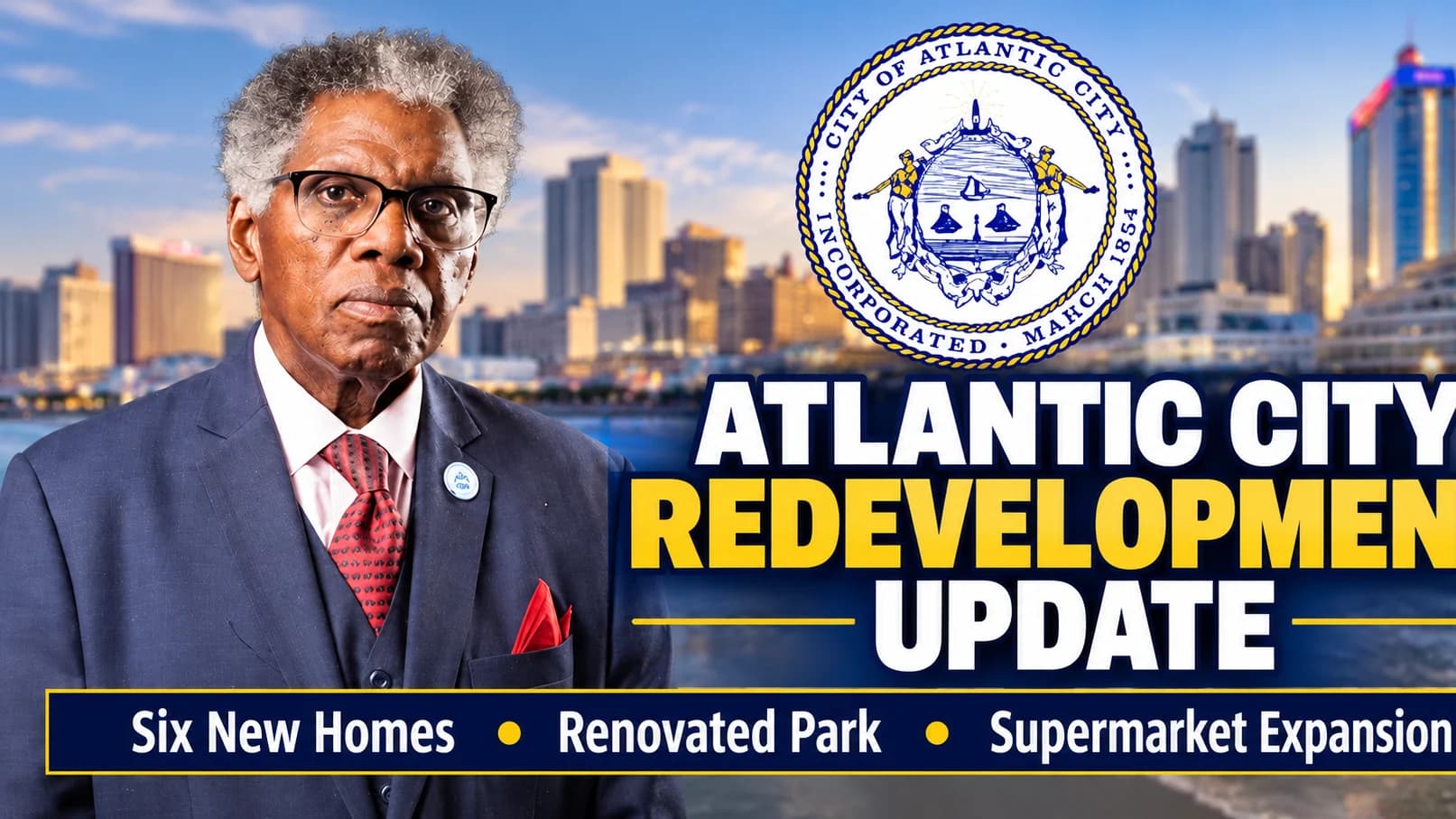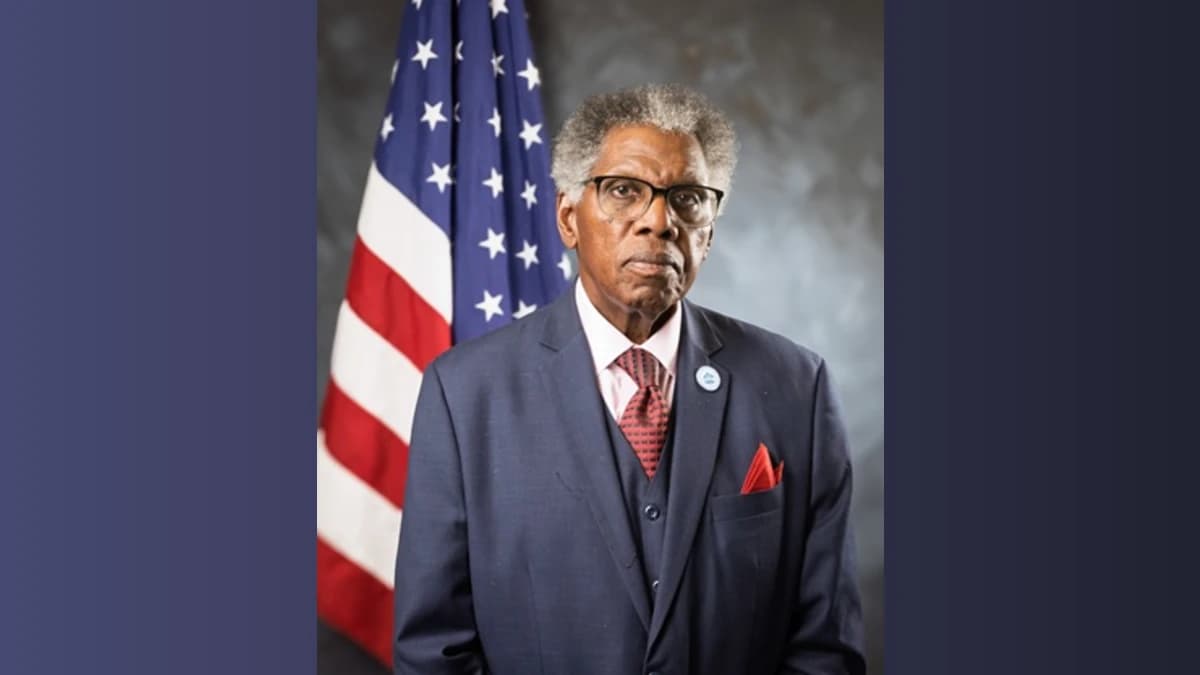
ATLANTIC CITY — Atlantic City Council Vice President Kaleem Shabazz says Muslim leaders in the local community unequivocally reject Holocaust denial and are working with Jewish and Christian leaders to build relationships at a time when religious tensions remain high around the world.
Shabazz, who is president of the Atlantic City NAACP and the interfaith Bridge of Faith organization, discussed the issue Thursday on The Don Williams Show on WOND, one morning after helping lead a Jewish-Muslim dialogue about the Holocaust at Stockton University's Atlantic City campus.
“Unfortunately, as you know, Don, there are some people who deny the existence of the Holocaust,” Shabazz said.
He said that is not the position of the Muslim community he represents.
“We don't subscribe to that belief that the Holocaust did not happen,” Shabazz said.
He called the Holocaust “one of the low points in human history” and said its lessons must not be forgotten or repeated.
Jewish-Muslim dialogue at Stockton
The Wednesday evening program, “Remembering Together: Honoring Differences — Jewish-Muslim Dialogue on the Holocaust,” was presented at Stockton's John F. Scarpa Academic Center in Atlantic City.
It was organized by the American Jewish Committee's Philadelphia/Southern New Jersey office in partnership with Bridge of Faith, Stockton University, the Jewish Federation of Atlantic & Cape May Counties and the Board of Jewish Education of Atlantic & Cape May Counties.
The program featured Shabazz in conversation with Dr. Ari Gordon, director of Muslim-Jewish relations for the American Jewish Committee. Published event information said the discussion was intended to explore how historical understanding, honest dialogue and shared values can strengthen Jewish-Muslim relationships while confronting prejudice, antisemitism and Holocaust denial.
Stockton has a longstanding record of hosting Holocaust education and interfaith programming through its Sara and Sam Schoffer Holocaust Resource Center, including partnerships with AJC and the Jewish Federation.
Who is Ari Gordon?
Gordon's work centers specifically on relationships between Muslims and Jews.
AJC says he holds a doctorate in Islamic Studies from the University of Pennsylvania, where his research focused on sacred geography and interreligious relations during Islam's formative period. He also studied Islamic Studies at Harvard Divinity School and is fluent in Arabic and Hebrew.
Earlier this year, Gordon co-authored an article examining Holocaust education in the Muslim world.
In it, Gordon and Moroccan Muslim scholar Omar Lamghibchi argued that Jewish-Muslim partnerships can help preserve Holocaust memory and combat hatred, while acknowledging that Holocaust denial and minimization remain problems in parts of the Arab and Muslim world.
That made Wednesday's Atlantic City discussion part of a much broader conversation.
Shabazz draws distinction
Shabazz acknowledged Thursday that individual Muslims can hold views that conflict with those expressed by local Muslim organizations and leaders.
But he drew a sharp distinction between individual beliefs and what he described as the position of the community with which he works.
“If a person identifies himself or herself as a Muslim and they take that position, that's not our position,” Shabazz said. “That's not our community position, especially in the United States.”
He said Gordon's experience working with Muslims in the United States and abroad contributed an important perspective to the Stockton conversation.
Bridge of Faith emphasizes continuing contact
For Shabazz, the answer to religious mistrust is not simply holding occasional public forums.
Bridge of Faith attempts to create continuing contact among members of different religions.
“We are continuously communicating and interacting — Jewish, Muslim, Christian leaders and lay people,” Shabazz said.
The organization regularly moves its meetings among different houses of worship so participants can learn about one another's beliefs.
Shabazz said the group has met at Christian churches and Masjid Muhammad and was scheduled Thursday to meet at Absecon Presbyterian Church.
“That's how the Bridge of Faith gets a broad view of different faith groups and understanding of what different members of the Bridge of Faith believe,” he said.
Muslims breaking fast at a synagogue
Shabazz pointed to the group's annual interfaith iftar as another example.
An iftar is the meal at which Muslims break their daily fast during Ramadan.
Shabazz said Bridge of Faith has been holding an interfaith iftar for roughly 12 years and recalled that about a decade ago, one was hosted at a local synagogue.
“We had an iftar in Rabbi Krauss' synagogue and actually the prayer there and fellowship with people in his synagogue,” Shabazz said.
The annual event is expected to return during Ramadan next year.
‘More alike than we are different’
The Rev. Vicki Ney of Margate Community Church said Bridge of Faith has influenced her own congregation.
Her church has welcomed an imam, Shabazz and rabbis as speakers, she said, because hearing perspectives outside one's own religious tradition is valuable.
“It is very important for us to hear another point of view,” Ney said.
She said Bridge of Faith has helped participants discover “that we are more alike than we are different.”
Shabazz said that remains the central purpose of the organization.
“One of the things that we suffer from in our communities is the lack of access to information and to understanding people and to respecting the views of others,” he said.
The goal, he said, is “to get to know each other better.”
Bridge of Faith's next major public event is its Good Neighbor Walk, scheduled for 3 p.m. Oct. 18 in front of Stockton University's Atlantic City campus. Shabazz said the organization is encouraging people of different faiths — and those without a religious affiliation — to participate.
For Shabazz, Wednesday night's Holocaust discussion and the group's other activities ultimately serve the same purpose: maintaining relationships even when members of different faiths disagree.
The Holocaust, he said, is one subject on which the local Muslim leaders involved in that dialogue want there to be no ambiguity.
“We don't subscribe to that belief that the Holocaust did not happen,” Shabazz said.
About the Author
Scott Stephens
Scott has been an on-air personality, producer and newscaster for 30+ years. He has been a mainstay in the South Jersey Community and on the air across many different area stations. Scott can currently be heard on Kool 98.3 and News Talk 1400 & 92.3 WOND.