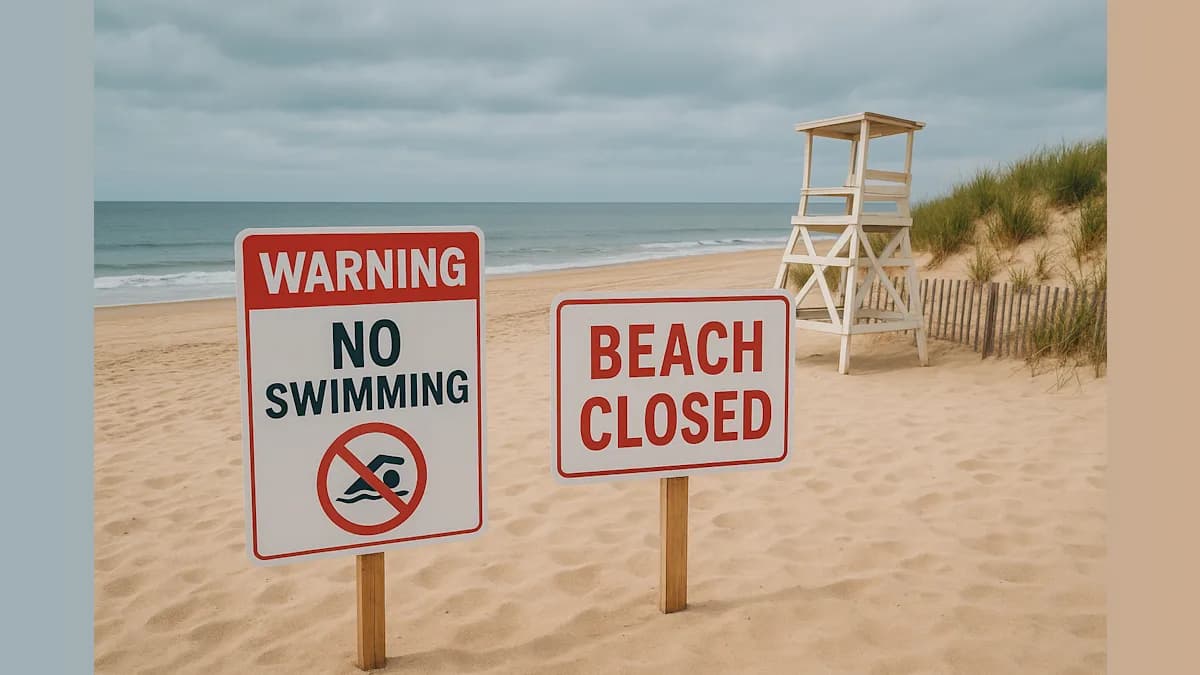
Eight swimming areas in Cape May County were placed under advisories after water samples showed elevated levels of bacteria, with follow-up testing expected to determine whether any swimming restrictions will be necessary.
The advisories stretch from Ocean City to the Wildwoods and include both oceanfront and bay locations.
According to New Jersey beach-monitoring data, the affected locations are:
Avalon: 57th Street ocean beach
Lower Township: Richmond Avenue ocean beach
North Wildwood: Second Street and JFK Boulevard ocean beach
Ocean City: West Eighth Street bayfront
Sea Isle City: 42nd Place lagoon
Stone Harbor: 104th Street bayfront
Wildwood: Bennett Avenue ocean beach
Wildwood Crest: Miami and Jefferson avenues ocean beaches
The advisories were issued after samples collected Monday showed elevated levels of enterococcus bacteria.
Enterococcus is found in the digestive systems of humans and animals and is used by health officials as an indicator of possible contamination. The bacteria itself is generally not considered harmful, but elevated levels can indicate that disease-causing bacteria, viruses or other organisms could also be present in the water.
New Jersey's recreational bathing standard is fewer than 104 colonies of enterococci per 100 milliliters of water.
When a sample exceeds that level, an advisory is issued and additional samples are collected. If subsequent testing again exceeds the standard, the affected swimming area can be closed until bacteria levels return to an acceptable level.
The Cape May County Health Department says elevated readings frequently occur following rainfall, when pollution can wash into coastal waters through storm drains.
"Many of the high readings recorded in southern New Jersey are temporary fluctuations caused by pollution that washes into the ocean through storm drains after a heavy rainfall," the county says on its Cooperative Coastal Monitoring Program website.
The county also notes that in many cases bacteria levels return to normal the following day and a beach closure is not necessary.
Other potential sources of enterococcus include waste from wildlife and domestic animals and sewage discharged from recreational boats.
Swimming in water with elevated bacteria levels can increase the risk of gastrointestinal illness, low-grade fever and infections, according to the New Jersey Department of Health.
Young children, older adults and people with weakened immune systems can be particularly vulnerable.
Cape May County's beach-monitoring program is operated jointly by the county Health Department and the New Jersey Department of Environmental Protection.
During the bathing season, the county says 61 ocean monitoring stations and one bay station are routinely tested for enterococcus. Samples are analyzed at the Cape May County Health Department laboratory.
When a sample comes back above the state standard, health officials take another sample at the affected location as well as at nearby beaches to determine how widespread the elevated bacteria levels may be.
The state also conducts aerial surveillance of the coastline six times a week to look for possible problems including broken sewer lines, marine debris, surface slicks and other signs of pollution.
The advisories do not mean that all beaches in the affected municipalities are unsafe. They apply only to the specific monitoring locations where elevated bacteria levels were detected.
Follow-up testing will determine whether the advisories can be lifted or whether additional action is required.
South Jersey NewsBeat will update the status of the affected swimming areas when the latest test results become available.

About the Author
Karen Johnson
With over 30 years of news experience in major markets like Los Angeles, Denver, and Columbus, Karen now covers our area for South Jersey NewsBeat. She also brings her articulate and conversational news delivery to WOND radio listeners every weekday. Her background includes work with the NBC Radio Network, and she thrives in fast-paced news environments.