The United States Environmental Protection Agency has issued its first cleanup permit under landmark legislation designed to address the environmental damage caused by thousands of abandoned mines across the American West.
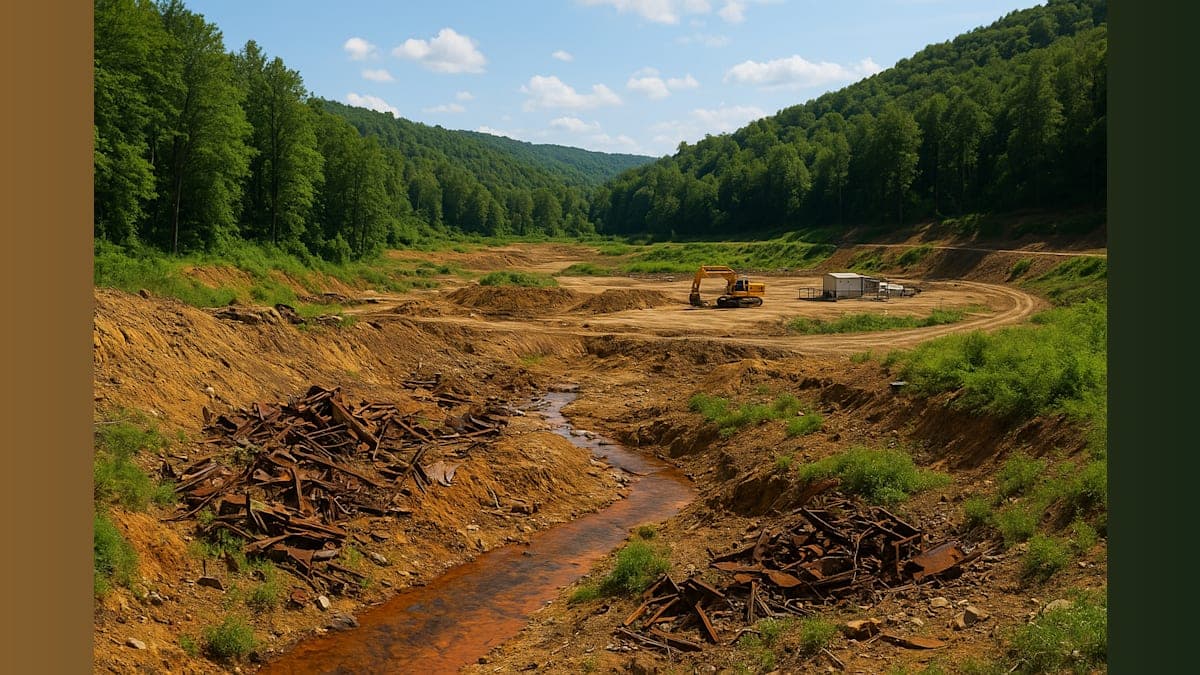
Trout Unlimited, a conservation nonprofit focused on protecting rivers and streams, received authorization to remediate the Bodie Mine site in Okanogan County, Washington, located approximately 140 miles northwest of Spokane. The historic mining operation has contaminated Toroda Creek with arsenic, cadmium, lead, mercury, and other heavy metals for generations.
The permit represents the first practical application of the Good Samaritan Remediation of Abandoned Hardrock Mines Act of 2024, which passed with bipartisan support after two decades of advocacy. United States Senators Martin Heinrich, a Democrat from New Mexico, and Jim Risch, a Republican from Idaho, championed the legislation alongside House Representatives Celeste Maloy of Utah, Mary Peltola of Alaska, and Susie Lee of Nevada.
The new law addresses a longstanding legal paradox that has prevented cleanup efforts at tens of thousands of abandoned mine sites nationwide. Under previous federal regulations, organizations volunteering to remediate contamination faced the same legal liability as the original polluters, effectively discouraging cleanup initiatives even when conducted by state agencies or conservation groups.
"Hardrock abandoned mines are a scourge on the landscape. No one is required to clean them up, so every day they release their toxic brew of zinc, cadmium, lead, and arsenic into our drinking water and trout streams," Chris Wood, president and chief executive officer of Trout Unlimited, said in a statement.
Many of these mining sites date back a century or more, with original owners deceased or untraceable. The absence of responsible parties has left communities and ecosystems to bear the environmental consequences without recourse.
The pilot program established by the legislation provides limited liability protections for up to 15 low-risk remediation projects undertaken by state agencies or third-party organizations. This framework enables cleanup work to proceed without exposing volunteers to perpetual legal and financial responsibility for any residual contamination.
At the Bodie Mine location, Trout Unlimited will remove historic mine tailings and restore streambanks to reduce the flow of toxins into Toroda Creek. The project aims to improve water quality throughout the broader watershed, which feeds into the Columbia River Basin.
Mine tailings consist of the crushed rock and soil byproducts left after valuable minerals are extracted from ore. While ore bodies may contain desirable metals such as zinc, gold, or silver, they frequently also harbor toxic elements including arsenic and lead. The grinding and separation processes used to extract valuable minerals simultaneously release these hazardous substances. When stored in abandoned piles rather than contained underground, tailings present significantly elevated contamination risks to surrounding soil and water.
Wood praised the regulatory milestone, stating in a release that the EPA's authorization of the first abandoned mine cleanup under the 2024 act represents progress toward healthier waterways. He expressed hope that the initiative would encourage states, communities, nonprofits, and mining companies to participate in making waters more suitable for fishing and recreation.
Trout Unlimited has established a track record of watershed restoration projects across the western United States. The organization has worked to remove barriers in California river systems and has contributed to salmon recovery efforts along the Mendocino coast through contracts with the National Oceanic and Atmospheric Administration.
The Toroda Creek remediation project marks the beginning of what advocates hope will become a systematic approach to addressing the legacy of abandoned mining operations throughout the region. With thousands of contaminated sites awaiting attention, the success of this inaugural permit could establish a template for future cleanup efforts nationwide.