Statewide initiative offers emergency equipment and training to religious organizations, including those in Atlantic and Cape May counties.
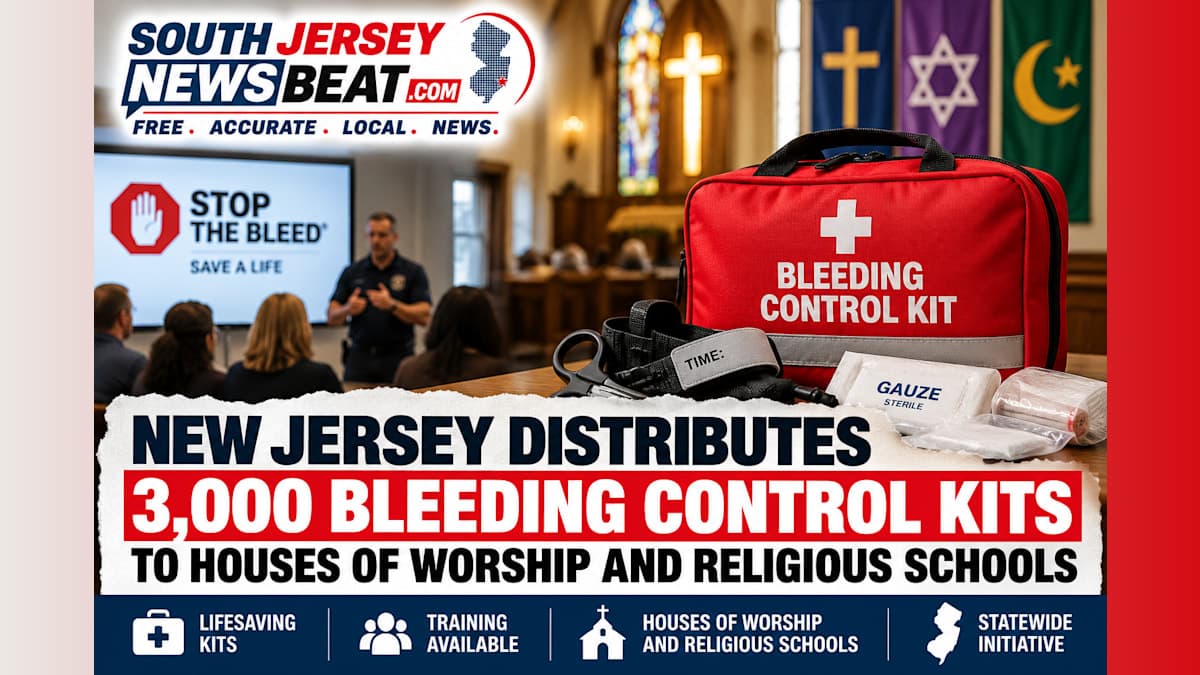
HAMILTON, N.J. — Houses of worship and religious schools throughout South Jersey have an opportunity to receive potentially lifesaving emergency equipment and training through a statewide initiative that has now distributed more than 3,000 bleeding control kits.
The New Jersey Office of Homeland Security and Preparedness (NJOHSP) announced the milestone as part of its ongoing Bleeding Control Kit Initiative, designed to help religious communities respond to life-threatening injuries before emergency medical personnel arrive.
The program, launched in March 2024, provides bleeding control kits and access to STOP THE BLEED training to participating organizations.
More than 6,000 kits were made available when the initiative began, and more than 3,000 have now been distributed statewide.
In January 2026, the state expanded eligibility to include religious schools.
That means churches, synagogues, mosques, temples and religious schools in Atlantic and Cape May counties can explore participating in the program.
Helping Save Lives Before First Responders Arrive
The initiative is intended to prepare ordinary people to respond during the critical minutes following a traumatic injury.
Severe bleeding can become life-threatening quickly, making immediate action essential while emergency medical services are on the way.
STOP THE BLEED training teaches participants how to recognize dangerous bleeding and use appropriate techniques and equipment to control it.
Although the program is administered by New Jersey's homeland security agency, the training is useful for emergencies beyond acts of violence.
Serious accidents, falls and other traumatic injuries can also result in dangerous bleeding.
"Getting these lifesaving resources into communities across New Jersey is an important step in ensuring people are prepared to act in the critical moments before first responder teams arrive," said NJOHSP Director Thomas Hauck.
"This milestone reflects the strength of our partnerships and our shared commitment to keeping New Jersey communities safe and resilient."
More Than 60 Training Courses Conducted
According to NJOHSP, more than 60 STOP THE BLEED training courses have been conducted across New Jersey as part of the initiative.
The agency has worked with county prosecutors, law enforcement agencies, religious organizations and other community partners to distribute the kits.
It has also collaborated with the New Jersey Trauma Injury Prevention Council and county emergency management offices to promote training and outreach.
State officials emphasize that providing the equipment is only one part of emergency preparedness.
"Providing the kits is only part of the effort," said NJOHSP Preparedness Division Director Charlie Ambio.
"Houses of worship and religious schools receiving these kits should ensure their staff is properly trained in its usage so they have the practical skills needed to respond to a bleeding emergency which can happen without warning."
Ambio stressed the importance of responding quickly.
"The actions taken in those first few minutes can be critical," he said. "Knowing how to recognize life-threatening bleeding and take immediate action can make a critical difference in the moments before emergency medical services arrive."
What It Means for South Jersey
New Jersey has more than 6,000 houses of worship, creating a substantial opportunity to expand emergency preparedness throughout the state.
For Atlantic and Cape May counties, the program could provide another layer of protection for religious congregations, school communities, volunteers and visitors.
Houses of worship frequently host activities beyond religious services, including community meals, youth programs, educational activities, charitable events and public gatherings.
Having trained individuals and bleeding control equipment available could help organizations respond more effectively if someone suffers a traumatic injury.
The expansion to religious schools also creates opportunities to improve emergency preparedness in educational settings.
NJOHSP has not provided a county-by-county breakdown in its announcement, so it is not yet known how many kits have been distributed specifically in Atlantic or Cape May counties.
The agency also did not identify which local religious organizations have already received equipment or participated in training.
How Local Organizations Can Participate
Religious organizations interested in receiving bleeding control kits or arranging training can register through NJOHSP's online distribution survey.
The program is intended for houses of worship and religious schools throughout New Jersey.
Organizations can learn more and submit their information using the following resources:
Bleeding Control Kit Program Information:
Registration Survey:
Questions or Additional Information:
Additional information about STOP THE BLEED training is available at:
https://www.stopthebleed.org/get-trained/
Organizations should contact NJOHSP to confirm current availability, eligibility and training arrangements.
Preparedness That Can Make a Difference
NJOHSP officials say the initiative reflects the importance of preparing community members to take immediate action during an emergency.
By combining emergency equipment with hands-on instruction, the program aims to give people the confidence and practical skills needed to assist someone experiencing severe bleeding.
For South Jersey's religious communities, the program offers an opportunity to strengthen safety measures and prepare staff and volunteers for situations in which every minute matters.
With more than 3,000 kits already distributed and additional organizations eligible to participate, state officials are encouraging houses of worship and religious schools to take advantage of the initiative.
South Jersey NewsBeat encourages eligible organizations in Atlantic and Cape May counties to review the program and contact NJOHSP for participation details.